The Ultimate Guide to Capybaras: Unveiling the World’s Largest and Most Laid-Back Rodent
March 11, 2026
Are Capybaras Legal in California? The Definitive Guide to Exotic Pet Laws and Ownership Insights
March 17, 2026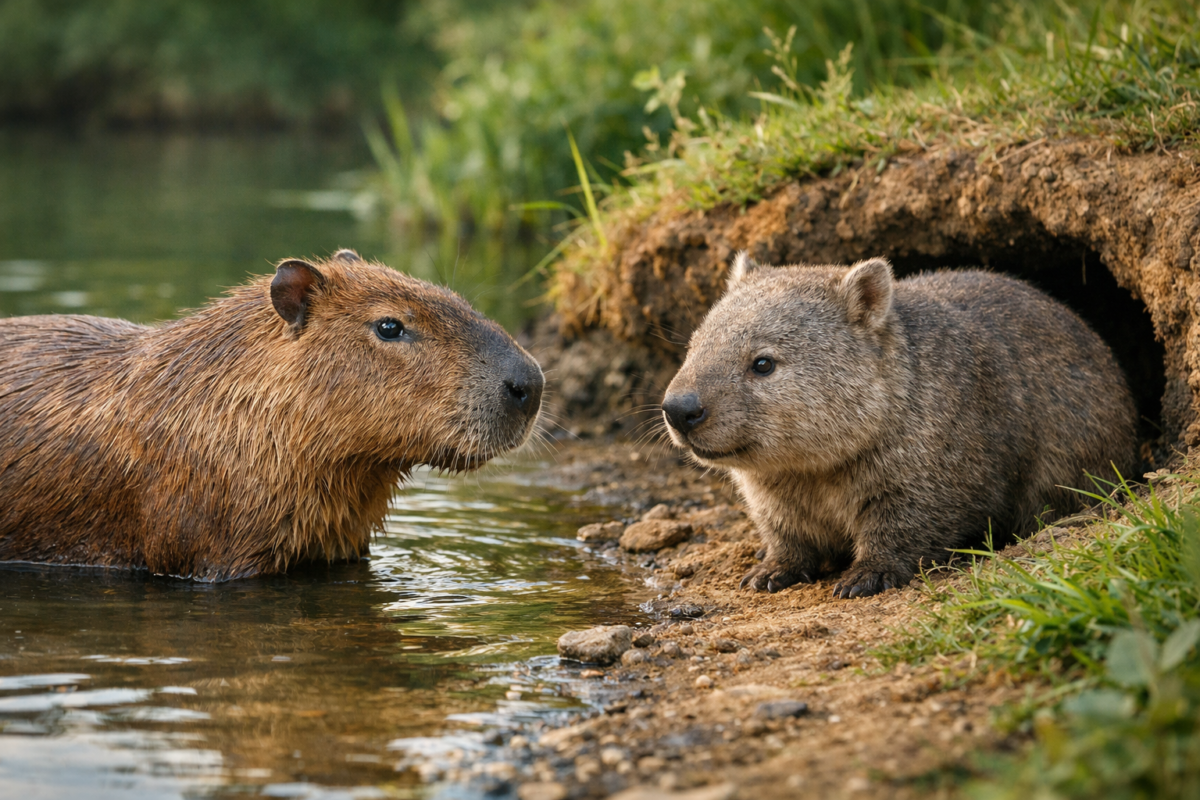
Introduction: The Unlikely Duo
Have you ever come across a capybara calmly soaking in hot springs or a wombat waddling through the Australian bush and wondered what makes these two animals so fascinating? Despite their growing popularity online, many people only know them through cute photos, short videos, or memes. What often gets missed is that capybaras and wombats are far more than lovable internet favorites. They are highly specialized animals shaped by very different environments, survival needs, and evolutionary histories.
At first glance, they may seem oddly comparable. Both are round-bodied, plant-eating mammals with a calm but sturdy appearance. Yet that surface-level similarity hides two completely different worlds. The capybara is the largest rodent on Earth, built for life in and around water across South America. The wombat, on the other hand, is a powerful marsupial from Australia, designed for digging, sheltering underground, and thriving in rugged landscapes. Their bodies, behaviors, and lifestyles reflect the demands of these very different habitats.
This guide explores those differences in depth while also highlighting the surprising ways these animals have each become masters of survival in their own environments. By the end, you will have a much clearer understanding of how capybaras and wombats differ in biology, behavior, habitat, and ecological role. More importantly, you will gain a deeper appreciation for how evolution creates extraordinary solutions in completely different corners of the natural world.
Capybara Overview: The World’s Largest Rodent
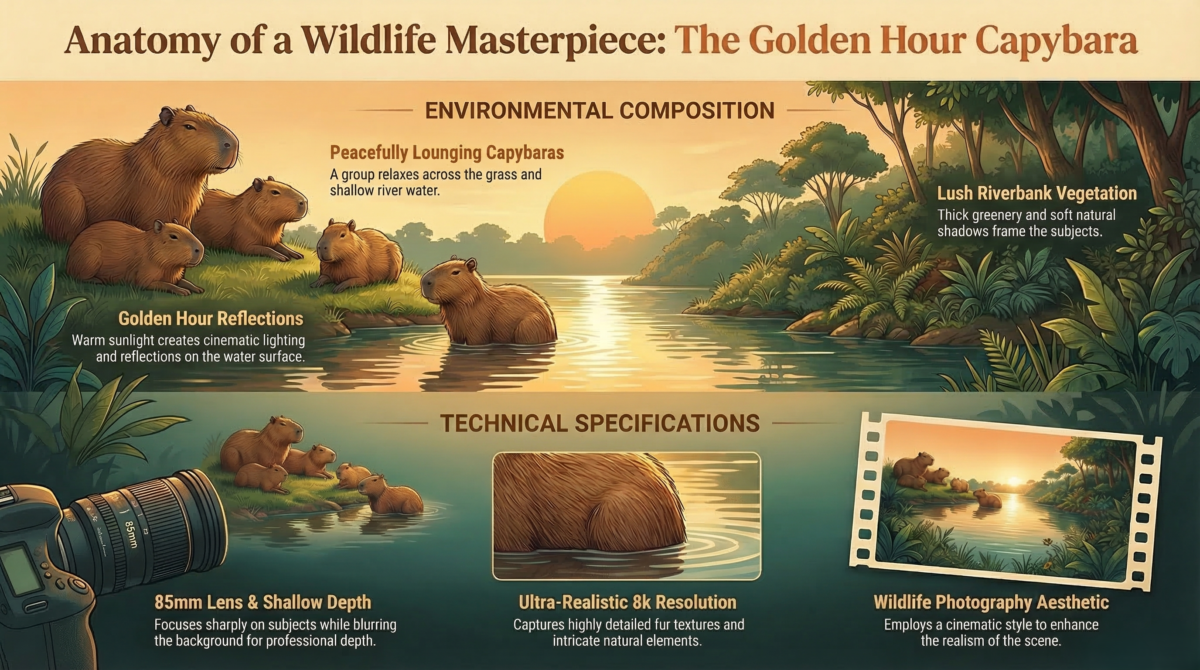
- The capybara (Hydrochoerus hydrochaeris) holds the remarkable title of being the largest rodent in the world. Native to South America, this gentle herbivore has become widely admired for its calm temperament, social nature, and unusual lifestyle centered around water. Unlike many people’s image of a rodent, the capybara is not small, quick, or secretive. Instead, it is a substantial, barrel-bodied mammal that moves with a quiet confidence through wetlands, riverbanks, flooded grasslands, and forest edges.
- One of the most fascinating things about capybaras is their peaceful reputation. They are often observed resting or moving alongside a surprising variety of other animals, including birds, monkeys, turtles, and even larger mammals. This relaxed social presence has helped make them especially popular among wildlife enthusiasts, but their appeal goes far beyond internet charm. Their behavior reflects a highly social species that depends on group living, environmental awareness, and access to water for safety and comfort.
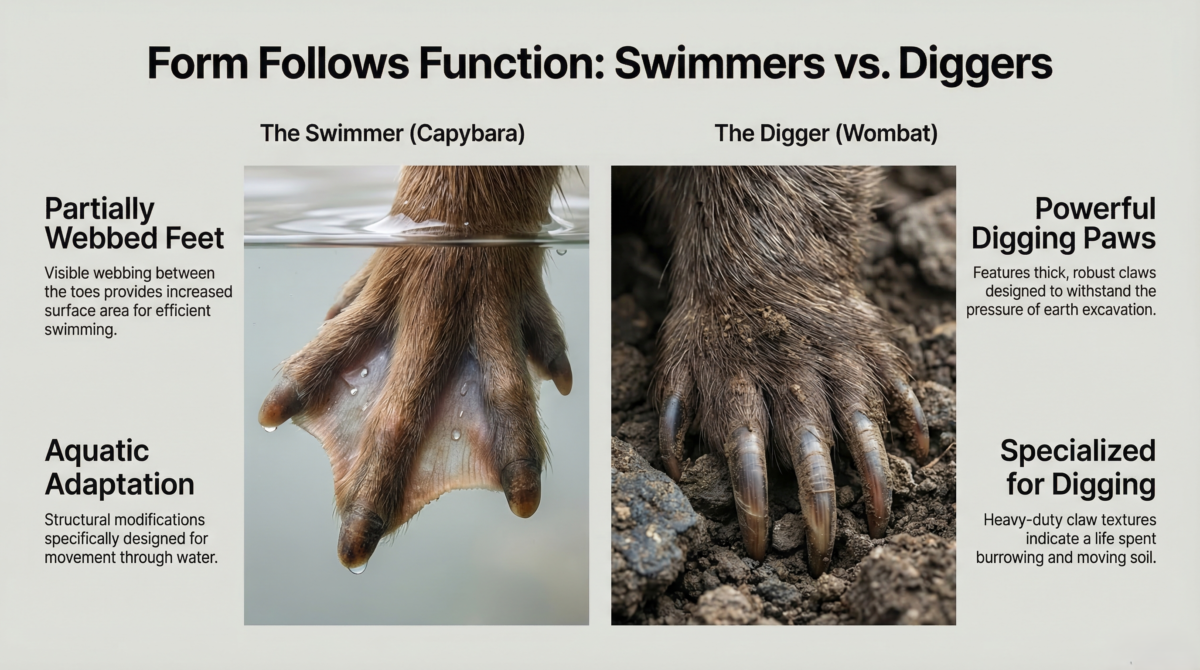
- Physically, the capybara is easy to recognize. It has a heavy, barrel-shaped body, short but strong limbs, a blunt snout, and coarse brownish fur. These features are not random. They are part of a body plan that supports a semi-aquatic way of life. Its eyes, ears, and nostrils sit high on its head, allowing it to stay mostly submerged while still seeing, hearing, and breathing. This adaptation is especially useful for avoiding predators and staying cool in warm climates. Its slightly webbed feet also help it move efficiently through water, making it an excellent swimmer.
- What makes the capybara especially interesting from a biological perspective is how perfectly its body and behavior match its environment. It is not merely an animal that happens to like water. It is a species deeply shaped by it. From escaping danger by diving into rivers to feeding on vegetation near marshes and lakes, the capybara’s entire lifestyle reflects adaptation to life in and around freshwater habitats. Understanding this semi-aquatic specialization is key to appreciating why the capybara stands apart not only from other rodents, but from many mammals as a whole.
Wombat Overview: Australia’s Burrowing Marsupial
- The wombat, a member of the Vombatidae family, is one of Australia’s most distinctive native mammals. Stocky, muscular, and built close to the ground, the wombat is a marsupial specially adapted for a life centered on digging and burrowing. While it may appear slow and heavy at first glance, this sturdy animal is an impressive excavator capable of creating complex underground tunnel systems that provide shelter from predators, harsh weather, and extreme temperatures. Its entire body reflects the demands of this underground lifestyle.
- Wombats are instantly recognizable for their compact, powerful build. They have broad heads, thick bodies, short tails, and short but extremely strong legs equipped for moving soil with force and efficiency. This robust frame is not simply a visual trait. It is a survival tool. Their low center of gravity and muscular structure help them push through dirt, expand burrows, and navigate rugged terrain with surprising determination. In many ways, the wombat is a specialist, shaped by evolution to thrive in environments where shelter, protection, and energy conservation are essential.
- Among the wombat’s most unusual and widely discussed traits is its cuboid scat. This rare characteristic has attracted scientific interest because it is not just a curiosity. It is believed to help the scat remain stable on uneven surfaces, which may support territorial marking in the wombat’s habitat. This is a perfect example of how even seemingly strange biological features can serve a practical purpose in the natural world. It also shows why wombats are so fascinating to researchers and wildlife enthusiasts alike.
- Another remarkable adaptation is the wombat’s backward-facing pouch. Unlike many marsupials, a female wombat carries her young in a pouch that opens toward the rear. This design is especially important for a digging animal because it helps prevent soil from entering the pouch while the mother burrows. It is a clear and elegant evolutionary solution to the demands of an underground lifestyle. When paired with its exceptional digging strength, this feature highlights just how specialized the wombat truly is.
- Endemic to Australia, wombats represent a unique branch of mammalian evolution that differs greatly from placental mammals found elsewhere in the world. Their burrowing behavior, protective anatomy, and highly functional body design make them far more than simply cute, sturdy animals. They are expert engineers of the underground, and understanding their adaptations offers a deeper appreciation of how animals evolve in direct response to the environments they call home.
A Tale of Two Continents: Classification & Evolutionary Paths
Although capybaras and wombats may appear loosely similar at a glance, they come from entirely different branches of the mammalian family tree. Their resemblance is only superficial. One is a rodent shaped by the wetlands and river systems of South America, while the other is a marsupial molded by Australia’s dry landscapes and underground way of life. To truly understand these animals, it helps to begin with their classification and then look at the evolutionary journeys that made them so different.
Capybara Classification
The capybara belongs to the following taxonomic group:
Kingdom: Animalia
Phylum: Chordata
Class: Mammalia
Order: Rodentia
Family: Caviidae, though some classifications place it in Hydrochoeridae
Genus: Hydrochoerus
Species: Hydrochoerus hydrochaeris
There is also a closely related species known as the lesser capybara, Hydrochoerus isthmius. As a member of the rodent order, the capybara is related more closely to guinea pigs, rock cavies, and other South American rodents than to any marsupial. However, it differs dramatically from the small rodents most people imagine. Its size, social behavior, and semi-aquatic lifestyle make it one of the most specialized members of its group.
Wombat Classification
The wombat belongs to a completely different lineage:
Kingdom: Animalia
Phylum: Chordata
Class: Mammalia
Order: Diprotodontia
Family: Vombatidae
Genera: Vombatus and Lasiorhinus
Modern wombats include three living species:
Common wombat (Vombatus ursinus)
Southern hairy-nosed wombat (Lasiorhinus latifrons)
Northern hairy-nosed wombat (Lasiorhinus krefftii)
Unlike capybaras, wombats are marsupials. That means they belong to the same broader reproductive group as kangaroos, koalas, and wallabies. Marsupials give birth to underdeveloped young that continue developing in a pouch, and wombats have evolved a pouch uniquely suited to digging. This single feature already shows how distant their evolutionary path is from that of rodents.
Rodent vs Marsupial: A Crucial Difference
One of the most important distinctions in this comparison is that capybaras and wombats are not variations of the same type of animal. Capybaras are placental mammals within the rodent order, while wombats are marsupials, a group that evolved separately for millions of years. This means their similarities in body shape or diet do not point to close relation. Instead, they reflect how different species can sometimes develop practical solutions to similar ecological challenges.
This is why it is misleading to think of a capybara as simply an oversized rat or a wombat as a small bear-like kangaroo. Both animals are far more specialized than those comparisons suggest. The capybara represents an advanced adaptation to life near water, while the wombat represents an equally impressive adaptation to digging, burrowing, and surviving on land.
The Role of Geography in Their Evolution
Geography played a defining role in shaping both species. Capybaras evolved in South America, where wetlands, floodplains, grasslands, and river systems created strong pressure for a semi-aquatic herbivore that could graze efficiently, stay cool in hot climates, and escape danger through water. Over time, this favored features such as webbed feet, a heavy but buoyant body, and eyes, ears, and nostrils positioned high on the head.
Wombats, by contrast, evolved in Australia, a continent known for its long history of isolation and its distinctive marsupial fauna. The Australian environment placed pressure on animals to cope with dry conditions, harsh terrain, and the need for protective shelter. Wombats responded to these demands through muscular limbs, strong claws, dense bodies, and a lifestyle built around burrow construction. Their evolution reflects the advantages of living underground, where temperature is more stable and predators are easier to avoid.
Because these continents were separated and hosted very different ecosystems, capybaras and wombats followed entirely different evolutionary routes. Their anatomy, reproductive systems, and survival strategies all reflect that separation.
Superficial Similarities, Different Solutions
Capybaras and wombats do share one broad ecological trait: both are herbivorous mammals with sturdy bodies adapted for grazing on plant material. But even here, they did not arrive at the same solution in the same way. This is where a brief idea of convergent evolution becomes useful. Convergent evolution happens when unrelated species develop traits that seem similar because they face comparable survival challenges, not because they share a close common ancestor.
In this case, both animals evolved as plant-eaters with strong bodies and efficient digestive adaptations, yet their lifestyles remain very different. The capybara relies on water, group vigilance, and open habitat movement. The wombat depends on burrows, physical strength, and solitary resilience. Their herbivory may look like a point of overlap, but the mechanisms behind their survival are distinct.
Why Their Differences Matter
Understanding the classification and evolutionary history of capybaras and wombats helps explain why they behave, move, reproduce, and survive so differently. Their bodies are not just interesting shapes. They are living records of millions of years of adaptation to very different worlds. The capybara reflects the opportunities and threats of South American aquatic landscapes. The wombat reflects the demands of Australia’s isolated and often unforgiving terrain.
This contrast is what makes the comparison so compelling. These animals may both appear charming, rounded, and calm, but beneath that shared visual appeal lies a story of two continents, two evolutionary paths, and two highly specialized ways of surviving in nature.
Physical Characteristics: A Head-to-Tail Comparison
Capybara:
Length: 100-130 cm (3.3-4.3 ft)
Height (at shoulder): 50-62 cm (20-24 in)
Weight: 35-66 kg (77-146 lbs), with females often larger than males.
Wombat:
Length: 70-120 cm (2.3-3.9 ft)
Height (at shoulder): Around 30 cm (12 in)
Weight: 20-35 kg (44-77 lbs), depending on species.
****Audience Pain Point Addressed:** Clearly delineate true size to dispel confusion from misleading internet content.
Capybara Fur: Sparse, coarse, reddish-brown to greyish fur, designed to dry quickly.
Wombat Fur: Thick, coarse, and typically grey, brown, or black, providing insulation and protection against burrows and elements.
Capybara Dentition: Prominent, ever-growing incisors for gnawing on tough vegetation; powerful molars.
Wombat Dentition: Strong, rootless, continuously growing teeth, adapted for grinding abrasive plant material; unique skull structure.
Capybara Feet: Partially webbed feet with short, blunt claws, perfect for swimming and navigating muddy terrain.
Wombat Feet: Powerful, broad feet with long, strong claws, specifically adapted for digging extensive burrow systems.
- Capybara: High-set eyes, ears, and nostrils allowing them to see, hear, and breathe while mostly submerged; virtually no tail.
Wombat: Short, stubby tail; unique hardened cartilage plate (pelvic shield) on their rump for defense in burrows.
Habitat & Geographical Distribution: Worlds Apart
Capybaras and wombats may both be sturdy herbivorous mammals, but the landscapes they inhabit could hardly be more different. Their habitats reveal one of the clearest contrasts between them. The capybara is a semi-aquatic mammal of South America, deeply tied to wetlands and freshwater systems, while the wombat is a terrestrial marsupial of Australia, adapted to life on land and, more specifically, below it in burrows. These very different settings help explain many of their physical and behavioral differences.
Where Capybaras Live
- Capybaras are widespread across much of South America. Their native range includes countries such as Venezuela, Colombia, Brazil, Uruguay, and Argentina, with populations extending across a broad sweep of tropical and subtropical habitats. Despite this wide distribution, one requirement remains constant: reliable access to water.
- They are most commonly found near rivers, lakes, marshes, swamps, and flooded grasslands. These wet environments are not just convenient places to live. They are essential to capybara survival. Water helps regulate body temperature, offers escape routes from predators, and supports the vegetation they feed on. Even their body design reflects this habitat dependence, from partially webbed feet to sensory features positioned high on the head for movement and awareness while mostly submerged. In ecological terms, wetlands are not simply part of the capybara’s range. They are the foundation of its lifestyle.
Where Wombats Live
- Wombats, by contrast, are endemic to Australia. All living wombat species are found there, but they are distributed across different regions depending on the species. The common, or bare-nosed, wombat is most associated with southeastern Australia and Tasmania, especially in temperate forested and high-country areas. Hairy-nosed wombats are more closely tied to drier and more open environments, including semi-arid grasslands, woodlands, and shrublands. The critically endangered northern hairy-nosed wombat now survives only in a very limited area of Queensland.
- Unlike capybaras, wombats do not depend on standing water for daily survival. Their key habitat requirements are suitable soil for digging and enough vegetation for grazing. Forest edges, grasslands, woodlands, and mountainous terrain can all support wombats if the ground allows them to build and maintain burrows. These burrows are vital because they provide protection from predators, shelter from extreme heat, and a stable microclimate in often challenging environments. In this sense, the wombat’s true habitat is not just the landscape above ground, but also the engineered world it creates below it.
Why Habitat Matters So Much
For both animals, habitat is not merely a backdrop. It directly shapes how they move, feed, rest, and avoid danger. Capybaras thrive where wetlands provide food, drinking water, and safe retreat. Wombats thrive where the land itself can be excavated into protective shelter and where hardy vegetation supports steady grazing. This is why habitat loss affects each species differently. Damage to wetlands can severely disrupt capybara populations, while soil degradation, land clearing, and changes in vegetation can undermine wombat survival.
A Tale of Two Continents
- Their habitats also reflect the broader story of continental isolation. South America’s river systems, floodplains, and seasonally wet landscapes encouraged the evolution of a social, semi-aquatic grazer that uses water as both refuge and resource. Australia’s often dry, variable environments favored a muscular burrower that could escape harsh surface conditions by retreating underground. In other words, capybaras and wombats did not simply end up in different habitats. Their continents helped shape what kind of animals they became.
- Map suggestion: Include one map showing the native distribution of capybaras across South America, and a second map showing wombat distribution across Australia, ideally separating the common wombat, southern hairy-nosed wombat, and northern hairy-nosed wombat for added clarity.
Diet & Feeding Behavior: Herbivorous Lifestyles
At a basic level, both capybaras and wombats are herbivores, but the way they feed reveals how differently they are adapted to their environments. Each is a primary consumer, meaning it feeds directly on plant material and helps shape the vegetation structure of its ecosystem. That role may sound simple, but it has major ecological consequences. By grazing, selecting certain plants, and processing large amounts of fibrous material, both animals influence plant communities and nutrient movement in the habitats they occupy.
What Capybaras Eat
- Capybaras are almost entirely herbivorous and feed mainly on grasses and aquatic plants. Their diet is closely tied to the wetland habitats they depend on, and they spend much of their time grazing near water. When conditions change, especially in drier periods, they can also broaden their plant intake to include reeds and other available vegetation. This flexible but still plant-based diet allows them to thrive in seasonally changing environments across South America.
- Their feeding behavior reflects their semi-aquatic lifestyle. Capybaras typically graze on land close to rivers, marshes, and lakes, but they are also able to enter the water and consume aquatic vegetation. This gives them access to food sources that many land herbivores cannot use as easily. In practical terms, water is not just a place for safety or cooling. It is also part of their feeding landscape.
- One of the most important digestive strategies capybaras use is coprophagy, which means eating their own feces. This behavior may seem unusual, but it serves a very practical function. Because their diet is rich in coarse plant fiber, the first pass through the digestive system does not extract all available nutrients. By re-ingesting specially produced fecal matter, capybaras gain another opportunity to absorb nutrients and support the microbes that help break down fibrous food. It is an efficient adaptation for surviving on plant material that is bulky but not always easy to digest.
What Wombats Eat
- Wombats are also herbivores, but their diet is more firmly tied to terrestrial foraging. Their main foods are fibrous native grasses, sedges, and rushes, though they may also eat roots, bark, shrubs, herbs, and fungi depending on species, habitat, and seasonal availability. In dry or more difficult conditions, some wombats dig for below-ground plant parts such as roots and tubers, which can provide food when surface vegetation is limited.
- Their feeding techniques match their powerful build. Wombats use strong claws, muscular forelimbs, and continuously growing teeth to handle tough vegetation and, when needed, dig for underground food sources. This is especially valuable in drier landscapes, where edible plant matter may not always be abundant above ground. Rather than relying on water-edge grazing like capybaras, wombats are adapted to extract nutrition from the harder, rougher plant resources available in Australian habitats.
Beyond the Cute Factor: Their Ecological Role
- Looking past their charming appearance, both animals occupy important ecological niches. As plant-eaters, they help regulate vegetation by selectively grazing and consuming large amounts of plant matter. Capybaras influence wetland and grassland plant communities through repeated grazing near water, while wombats affect Australian landscapes not only through feeding but also through digging, which can alter soil structure and nutrient dynamics. Researchers have even described wombats as ecological engineers because their burrowing can improve soil turnover and create habitat opportunities for other species.
- This is what makes their comparison so interesting. Both are herbivorous mammals living on fibrous diets, yet each has evolved a different strategy for finding, processing, and surviving on plant food. The capybara is a grazer of wet environments, with digestive behaviors suited to aquatic and semi-aquatic living. The wombat is a ground-focused forager, built to extract value from coarse, low-quality vegetation in often demanding landscapes. Together, they show that even when two animals fill a similar broad role as herbivores, nature can produce very different solutions depending on the world each species inhabits.
Behavior & Social Structure: Solitary Diggers vs. Social Swimmers
One of the most striking differences between capybaras and wombats appears in how they organize their lives. Capybaras are deeply social animals that depend on group living, shared vigilance, and constant communication. Wombats, by contrast, are far more solitary, spending much of their time alone and relying on territory, burrows, and individual space rather than group cohesion. This contrast shapes nearly every part of their daily routine, from how they avoid danger to how they rest, feed, and move through their habitat.
The Capybara’s Social World
- Capybaras are highly social and typically live in groups of around 10 to 20 individuals, though group size can vary and may become much larger during dry seasons when animals gather around limited water sources. Group living is not just a preference. It is a survival strategy. A group offers more eyes and ears to detect danger, and it helps maintain access to feeding and resting areas. Solitary capybaras are uncommon because social structure plays a major role in safety and reproduction.
- Communication is central to this lifestyle. Capybaras use a variety of vocalizations, including barks and other calls, to stay connected and warn one another of threats. Alarm barking is especially important because it can trigger the entire group to rush toward water, which serves as a refuge from predators. Scent also matters. Males have a specialized gland on the top of the snout, often called the morrillo gland, which produces scent used in marking and social signaling. Both males and females also use anal glands, helping individuals recognize group members and mark territory. These cues show that capybara society depends not only on being physically together, but also on a rich system of sound and scent.
- Capybaras are often described as primarily diurnal, but their activity pattern is flexible. In many places they are most active around dawn and dusk, and they may shift more toward evening or nighttime in response to heat or human disturbance. This flexibility helps them conserve energy and avoid stress in warmer or more exposed conditions.
- Their semi-aquatic behavior is another defining part of daily life. Capybaras spend considerable time in water for cooling, safety, rest, and sometimes feeding. They are strong swimmers and comfortable divers, and they can slip into rivers or marshes quickly when threatened. Their relaxed social scenes, such as group resting, shared grazing, and collective movement into water, are key behavioral cues. A calm, closely gathered group usually signals security, while a sudden bark or rapid movement toward water often signals alarm.
The Wombat’s Solitary Routine
- Wombats live very differently. They are generally classed as solitary animals, even though their home ranges may overlap and different individuals may sometimes use the same burrow systems at different times. Rather than forming stable social groups like capybaras, wombats tend to maintain personal space and individual routines. Males in particular can be territorial, and communication often involves scent and signs left in the environment rather than constant direct interaction.
- They are primarily nocturnal, usually emerging around dusk to forage and moving back to shelter before the heat and activity of the day increase. This pattern helps reduce water loss, avoid daytime heat, and lower exposure to threats. While a capybara’s world is built around visible group behavior, a wombat’s world is quieter and more private, with much of its important activity happening after dark.
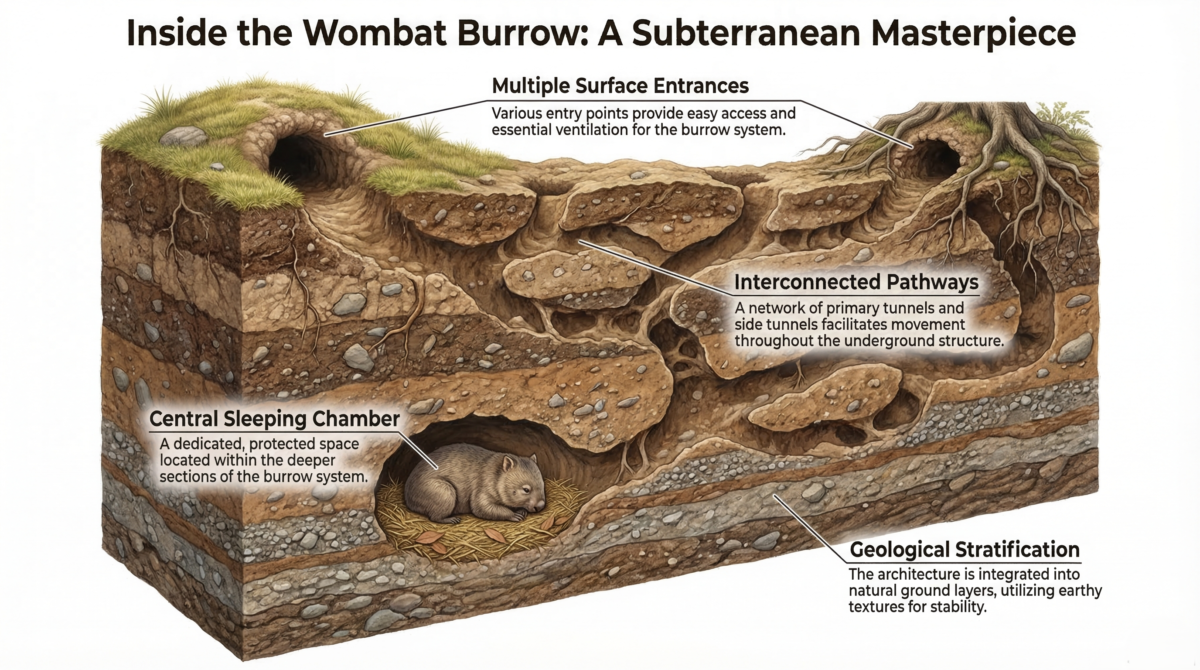
- Burrows are the center of wombat life. These underground systems provide protection from predators, extreme temperatures, and rough weather, and they also serve as secure places for resting and raising young. Burrows can be extensive, with multiple entrances, connecting tunnels, and nesting areas. In some cases, wombats may visit more than one burrow in a night, and different wombats may use the same burrow at different times, but that does not make them truly social in the way capybaras are. The burrow is more like a personal shelter network than a communal home.
- Behavioral cues in wombats are subtler than in capybaras. Signs of territorial presence may include scat placement and scent-related marking in the landscape. Defensive behavior often centers on retreating into a burrow, where the wombat can use its sturdy body to block the entrance and protect itself. This reflects a survival style based more on structural defense and isolation than on social alarm systems.
A Day in Their Very Different Lives
- A capybara’s day often revolves around shared activity. It may begin with grazing near water, continue with swimming or resting in a group, and include long periods of lying close to other capybaras while remaining alert to calls and movement. Water, companionship, and group awareness define the rhythm of its life.
- A wombat’s day is almost the opposite. Much of it is spent hidden in a cool burrow. As evening arrives, the wombat emerges alone to forage, move through its range, inspect scent marks, and return to shelter before daylight fully returns. Its rhythm is built around burrow security, nighttime feeding, and quiet territorial independence.
- That contrast is what makes this comparison so compelling. The capybara survives through social connection and mastery of water. The wombat survives through solitude and mastery of the ground beneath its feet. Both are highly successful in their own worlds, but the worlds they have built could hardly be more different.
- Video concept: A short clip showing capybaras grazing together, slipping into water, swimming, and responding to one another’s calls would work well here.
- Screenshot suggestion: A labeled diagram of a wombat burrow system with multiple entrances, tunnels, and nesting chambers would help readers visualize how central burrows are to wombat behavior.
Reproduction & Life Cycle: Bringing New Life
Capybaras and wombats follow very different reproductive strategies, and those differences reflect the broader divide between rodents and marsupials. Capybaras breed more frequently, produce larger litters, and give birth to relatively well-developed young. Wombats invest heavily in a single joey, which is born at a far earlier developmental stage and completes much of its growth inside the mother’s pouch. These contrasting life cycles reveal two very different approaches to survival and parental investment.
Capybara Reproduction and Early Development
- Capybara breeding can occur throughout the year, although it often peaks during the rainy season, when food and water conditions are especially favorable. The gestation period is about 150 days, and females typically give birth to litters ranging from 1 to 8 pups, with 4 to 5 being common. This relatively large litter size makes sense for a social herbivore living in environments where early mobility and group integration are important.
- Capybara pups are precocial, which means they are born in an advanced state of development. They arrive with fur, open eyes, and the ability to stand and move shortly after birth. They can begin sampling grass within days to about a week, even though they continue nursing for longer. This early readiness is a major advantage in open habitats, where vulnerable young benefit from being able to move with the group rather than remaining hidden and helpless.
- Another important feature of capybara family life is communal care. Females in the group may nurse and help watch over the young, creating a more cooperative system of raising pups. This fits their broader social structure, where living in groups improves vigilance and survival. Instead of parenting in isolation, capybaras raise their offspring in a community setting, which gives the young both protection and access to multiple caregiving adults.
- In terms of longevity, capybaras generally live around 8 to 10 years in the wild and can reach about 12 years in expert care or captivity. Their life span is shaped by predation pressure, environmental conditions, and access to stable resources.
Wombat Reproduction and Joey Development
- Wombats reproduce on a very different timetable. They usually produce just one joey at a time, and in some species or conditions breeding may be less frequent, often roughly every two years rather than annually. Their gestation period is very short by mammalian standards, roughly 20 to 30 days, because wombats are marsupials. Instead of completing most development in the womb, the tiny, underdeveloped newborn crawls into the mother’s pouch soon after birth.
- Once inside the pouch, the joey continues developing for many months. Depending on species, wombat young typically remain in the pouch for about 7 to 9 months, with some references placing the broader range at roughly 6 to 10 months. After leaving the pouch, the joey still depends on the mother and usually continues spending additional time in or around the burrow before becoming more independent. This long protected phase reflects the wombat’s slower, high-investment reproductive strategy.
- This life cycle is tightly connected to wombat anatomy and behavior. The backward-facing pouch protects the developing joey from dirt while the mother digs, and the burrow provides a safe, climate-buffered place for the young after pouch life. In other words, the wombat does not just raise its young with maternal care. It raises them within a highly specialized protective system built from anatomy and architecture together.
- Wombat lifespan varies more across sources and species, but a reasonable general range is about 5 to 15 years in the wild, with many captive individuals reaching around 20 years or more. Some sources for common wombats note wild life spans up to around 11 to 15 years, while captive wombats can live well into their twenties.
Two Different Strategies for Survival
Taken together, these life cycles show two very different evolutionary solutions. Capybaras produce multiple, mobile young that can quickly join a social group and benefit from communal care. Wombats produce a single highly dependent joey and invest in long-term protection through the pouch and burrow. Neither approach is better in absolute terms. Each is matched to the demands of the animal’s environment, social structure, and evolutionary history.
Unique Adaptations & Fun Facts: Nature’s Ingenuity
Capybaras and wombats are both easy to love at first sight, but their real fascination lies in how precisely their bodies solve the problems of survival. What may look like quirky trivia at first is usually a functional biological adaptation. In both animals, the unusual trait exists for a reason. It helps them avoid predators, regulate body temperature, protect their young, defend territory, or survive in habitats that demand highly specialized behavior.
Capybara Adaptations: Built for Life Near Water
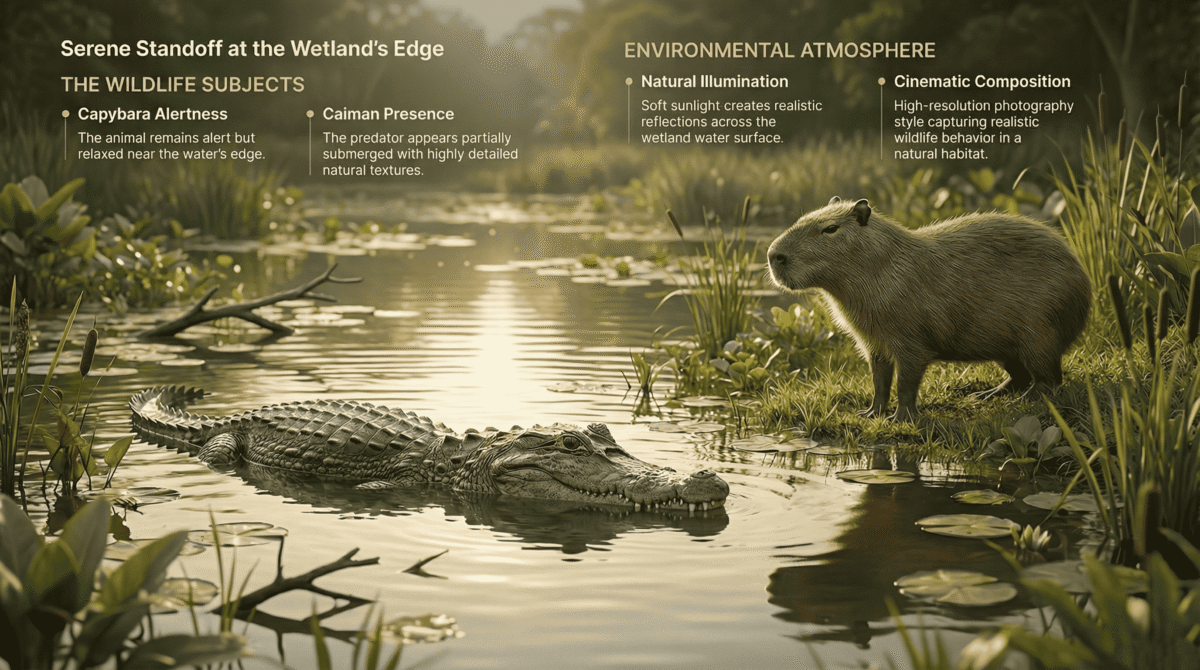
One of the capybara’s most important adaptations is the placement of its eyes, ears, and nostrils high on the head. This allows the animal to stay almost completely submerged while still seeing, hearing, and breathing. It is a highly effective design for a semi-aquatic mammal because it lets the capybara monitor its surroundings without exposing most of its body. In practical terms, this helps with predator avoidance and allows the animal to remain cool in hot, tropical environments where access to water is essential.
Capybaras are also strong swimmers, and their association with water goes beyond casual wading. They may rest or sleep in shallow water while keeping only the nostrils above the surface for air. This behavior is closely tied to thermoregulation and safety. Water helps them avoid overheating, and it also provides a rapid escape route from predators. Their semi-aquatic lifestyle is not a side trait. It is one of the defining features of their biology.
A common internet misconception is that capybaras are simply “giant guinea pigs.” While they are related to guinea pigs within the broader cavy lineage, capybaras are their own highly specialized genus, Hydrochoerus, and represent a distinct evolutionary path shaped by wetland living. Another misconception is that their calm appearance means they are easy pets. In reality, they are large, social, semi-aquatic wild animals with complex environmental and welfare needs, which makes them unsuitable for most private homes. That relaxed expression should not be mistaken for domestication.
Wombat Adaptations: Engineered for Burrowing
The wombat’s backward-facing pouch is one of the clearest examples of form following function. Because wombats dig extensively, a forward-opening pouch would risk filling with dirt and debris. The backward orientation protects the developing joey while the mother burrows, making it a crucial adaptation for a marsupial whose life revolves around underground shelter.
Then there is the wombat’s famous cuboid scat. Wombats are widely known for producing cube-shaped feces, a trait that is genuinely unusual in the animal kingdom. Scientists have investigated this feature and suggest that the shape may help the scat stay in place on logs, rocks, or uneven ground, which is useful for territorial marking because it is less likely to roll away. What sounds like a bizarre novelty is actually tied to communication and spatial behavior.
Another remarkable adaptation is the wombat’s defensive rump, often described as a pelvic or rear shield. Wombats have a very tough backside reinforced by thick cartilage, skin, and bone-rich structure. When threatened, they can retreat into a burrow and use this hardened rump to block the entrance, making it difficult for a predator to reach them. This is a powerful survival strategy, especially in a tunnel system where turning around quickly may not be possible.
A popular misconception about wombats is that they are slow, clumsy, or simple animals because of their heavy build. In reality, that compact body is part of an extremely effective survival design. Wombats are specialized diggers, efficient grazers, and strong defenders of their burrow space. Their sturdy form is not a sign of laziness. It is an adaptation for power, endurance, and protection.
More Than Cute: Why These Traits Matter
What makes both animals so interesting is that their unusual features are not decorative oddities. The capybara’s high-set facial features support a life spent partly in water, balancing vigilance, cooling, and escape. The wombat’s backward-facing pouch, cube-shaped scat, and armored rump support digging, reproduction, territory marking, and defense. These are elegant examples of biology solving real environmental problems.
That is what turns fun facts into something much more meaningful. The capybara is not just a peaceful meme animal, and the wombat is not just the creature with square poop. Both are highly specialized mammals whose strange and memorable traits make perfect sense once you understand the pressures of the worlds they evolved in.
Photo Gallery: Life in Their Natural Habitat
Capybara Gallery
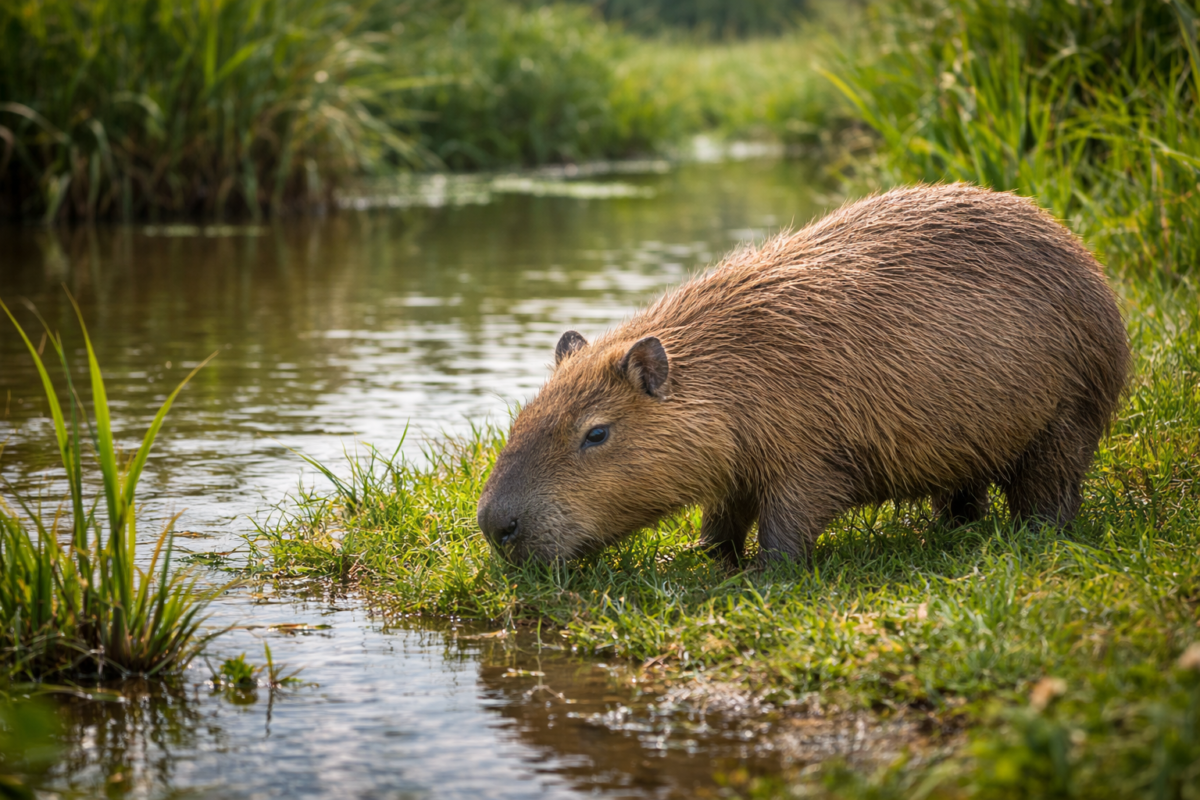
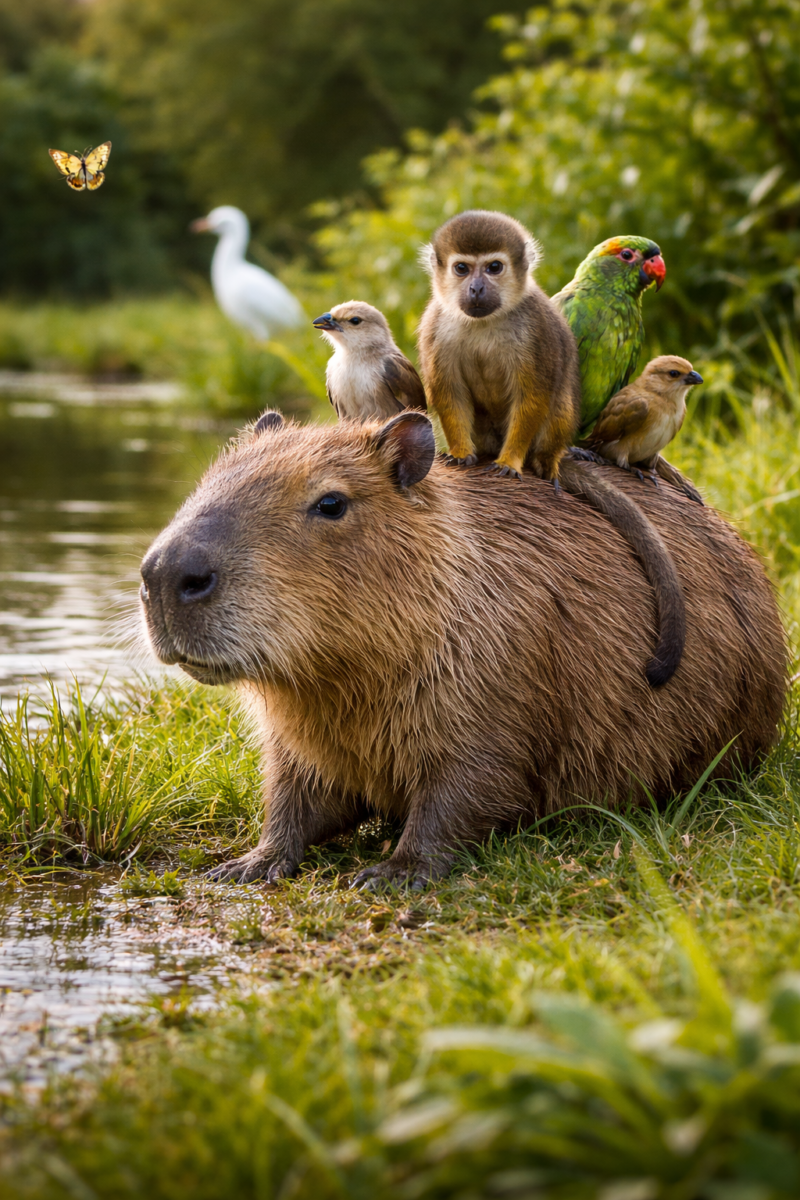
The capybara gallery should emphasize water, group behavior, and peaceful coexistence with its surroundings.
A strong photo gallery does more than make the article visually appealing. It helps readers see how anatomy, behavior, and habitat connect in the real world. For this comparison, the best gallery approach is not to rely only on side-by-side comparison shots, but to show each animal in the environment that shaped it. That means highlighting capybaras in wetlands and waterways, and wombats in burrows, grasslands, and low-light Australian landscapes. A habitat-first gallery adds educational value because it reinforces the adaptations discussed throughout the article.
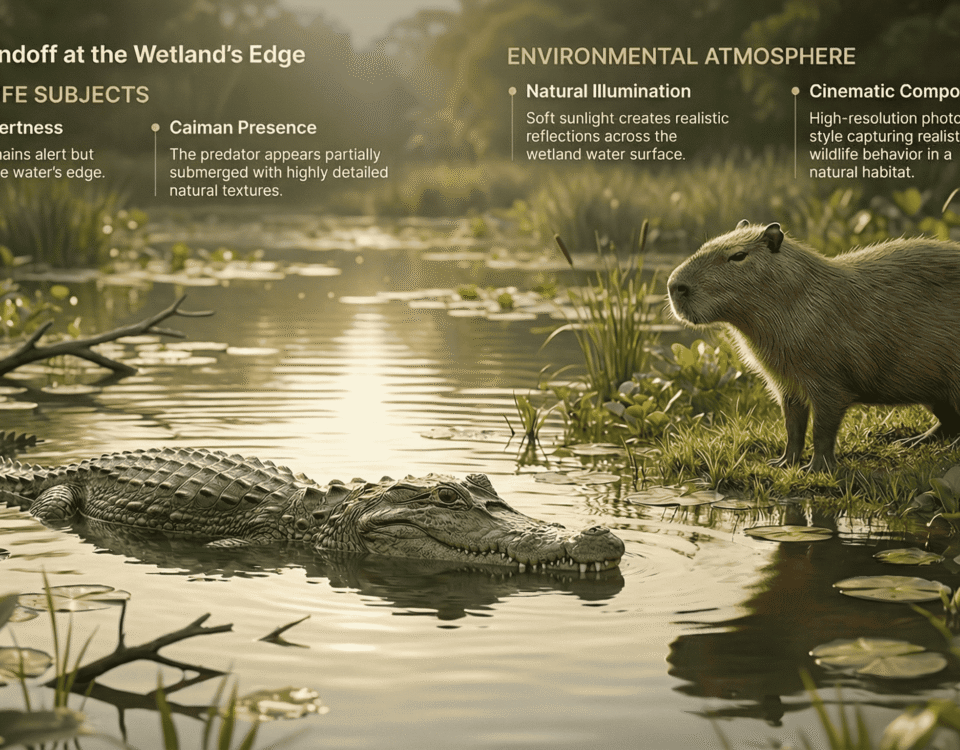
A capybara swimming gracefully is one of the most important images to include because it instantly shows its semi-aquatic lifestyle and highlights how its eyes, ears, and nostrils sit high on the head. An image of a capybara grazing in a lush wetland helps connect its feeding behavior to its habitat and shows how dependent the species is on vegetation-rich, water-linked ecosystems. A third standout image would be a capybara resting near or alongside other animals, such as birds, which visually supports its calm reputation and helps readers understand why it is so often described as placid and socially tolerant.
Wombat Gallery
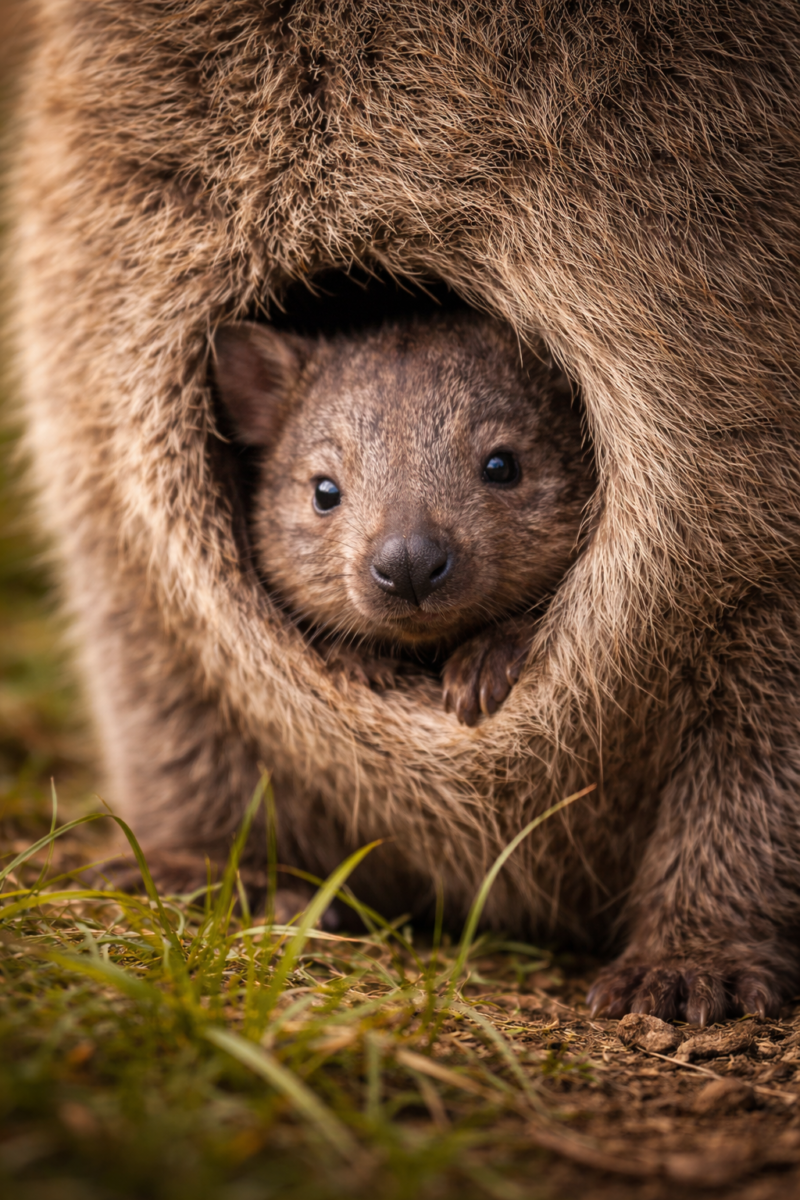
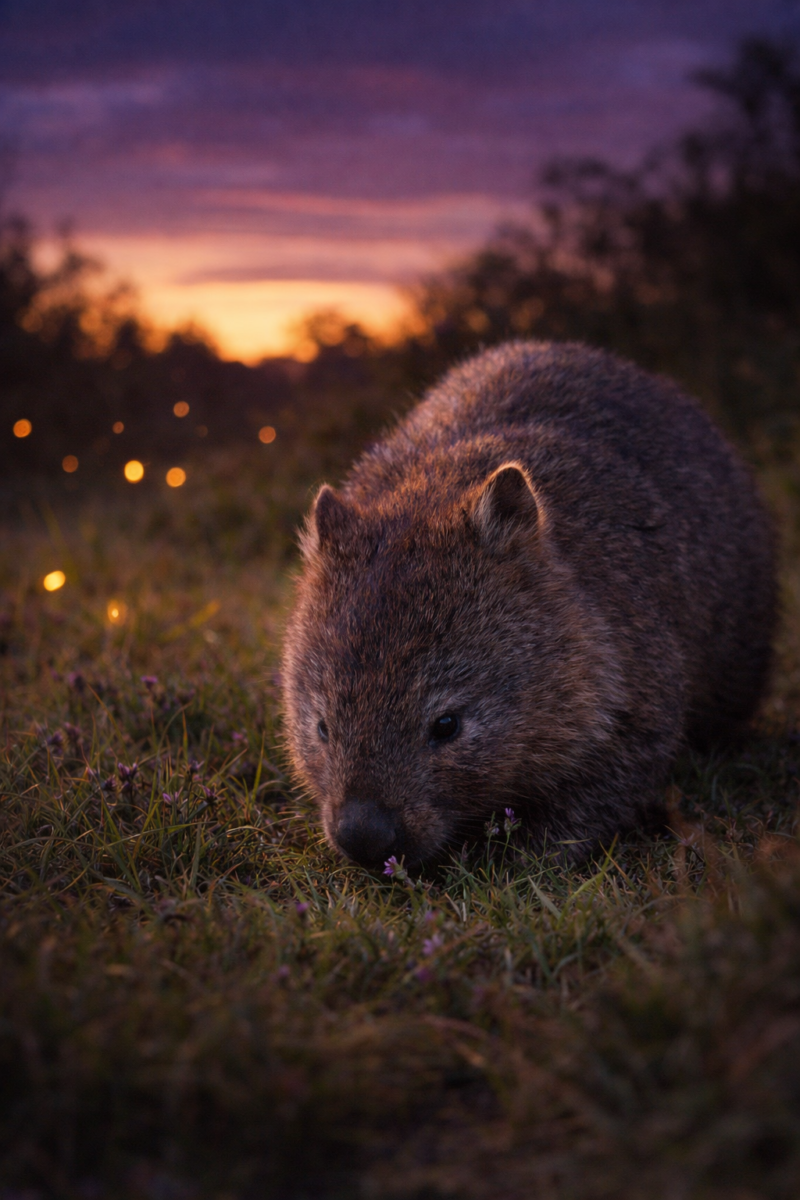
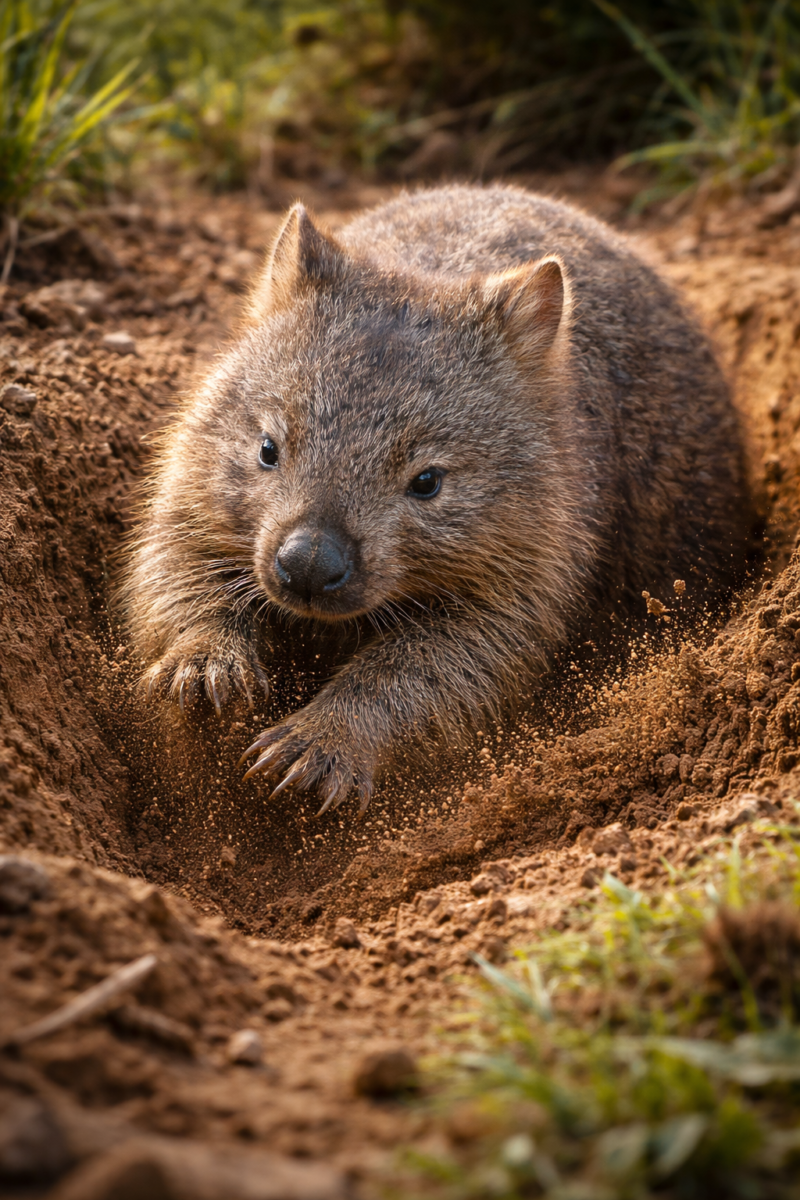
The wombat gallery should focus on strength, burrowing, and life on land rather than surface-level cuteness alone.
A photo of a wombat digging or emerging from a burrow is ideal because it captures the species’ muscular build and makes its underground lifestyle immediately understandable. A second image of a wombat foraging at twilight would reinforce its mostly nocturnal routine and show it in the quieter, low-light conditions where it is often most active. A third image featuring a wombat joey peeking from the mother’s pouch, or a young wombat near a burrow, adds emotional appeal while also illustrating one of the species’ most important reproductive adaptations.
Why This Gallery Matters
This kind of gallery strengthens the entire article because it turns abstract facts into visible evidence. Readers can better understand capybara thermoregulation, predator avoidance, and social behavior when they see the animal in water or among other species. In the same way, they can better appreciate the wombat’s burrowing specialization, defensive design, and maternal adaptations when those traits are shown in natural context instead of isolated portrait shots.
Image Sourcing and Attribution Note
For trust and credibility, every image in the final article should be properly licensed and clearly attributed to the photographer, agency, zoo, conservation organization, or publication that owns it. That is especially important for wildlife content, where image context and authenticity matter. If possible, prioritize conservation groups, zoological organizations, museums, national parks, or licensed wildlife photographers over generic meme-style or reposted internet images. This supports stronger credibility and keeps the article aligned with best practices for high-quality educational content.
Capybara vs Wombat: Side-by-Side Comparison Table
| Attribute | Capybara (Hydrochoerus hydrochaeris) | Wombat (Vombatidae family) | ||||
| Taxonomic group | Genus: Hydrochoerus; Order: Rodentia | Family: Vombatidae; Order: Diprotodontia | ||||
| Geographical range | South America, especially around wetlands, floodplains, and savannas | Australia; species occur in southeastern, southern, and some arid inland regions | ||||
| Average weight | 35–66 kg (77–145 lbs), though some sources give a broader upper range | Commonly about 19–39 kg (42–86 lbs), depending on species | ||||
| Average length | About 100–134 cm (3.3–4.4 ft) | About 77–115 cm (2.5–3.8 ft), depending on species | ||||
| Key physical trait | Partially webbed feet, high-set eyes/ears/nostrils, barrel-shaped body, sparse coarse fur | Powerful claws, short muscular legs, backward-facing pouch, cuboid scat | ||||
| Primary habitat | Semi-aquatic habitats such as rivers, lakes, swamps, marshes, and flooded grasslands | Terrestrial and subterranean habitats including forests, woodlands, grasslands, and burrow systems | ||||
| Diet | Herbivore; mainly grasses and aquatic plants | Herbivore; mainly grasses, sedges, roots, tubers, and sometimes fungi | ||||
| Social structure | Highly social; usually 10–20, sometimes much larger aggregations in dry seasons | Generally solitary and territorial, though home ranges may overlap | ||||
| Activity pattern | Often diurnal, but can shift toward crepuscular or nocturnal activity in heat or under disturbance | Primarily nocturnal | ||||
| Unique behavior | Excellent swimmers and divers; often rest in water | Expert burrowers; can use their tough rump to block burrow entrances defensively | ||||
| Lifespan | Around 8–10 years in the wild; up to about 12 years in care | About 11–15 years in the wild depending on species/source; often 20+ years in care | ||||
| Conservation status | Least Concern | Common wombat: Least Concern; Southern hairy-nosed wombat: Least Concern on some current source summaries, though some older references listed Near Threatened; Northern hairy-nosed wombat: Critically Endangered | ||||
| Attribute | Capybara (Hydrochoerus hydrochaeris) | Wombat (Vombatidae Family) | ||||
| Genus/Family | Hydrochoerus (Rodentia) | Vombatidae (Marsupialia) | ||||
| Geographical Range | South America (wetlands, savannas) | Australia (forests, grasslands, mountains) | ||||
| Avg. Weight | 35-66 kg (77-146 lbs) | 20-35 kg (44-77 lbs) | ||||
| Avg. Length | 100-130 cm (3.3-4.3 ft) | 70-120 cm (2.3-3.9 ft) | ||||
| Key Physical Trait | Webbed feet, high-set eyes/ears/nostrils, sparse fur | Powerful claws, short legs, backward pouch, cuboid scat | ||||
| Primary Habitat | Semi-aquatic: rivers, lakes, swamps, floodplains | Terrestrial/Subterranean: extensive burrows in woodlands, grasslands | ||||
| Diet | Herbivore (primarily grasses, aquatic plants) | Herbivore (grasses, roots, tubers, fungi) | ||||
| Social Structure | Highly social, live in groups (up to 100), communicate vocally | Generally solitary, territorial, complex burrow systems | ||||
| Activity Pattern | Diurnal, but can be crepuscular/nocturnal in hot weather | Primarily nocturnal | ||||
| Unique Behavior | Excellent swimmers and divers, often rest in water | Expert burrowers, use hardened rump for defense | ||||
| Conservation Status (approx.) | Least Concern (though local threats exist) | Common Wombat: Least Concern; Southern Hairy-nosed: Near Threatened; Northern Hairy-nosed: Critically Endangered | ||||
The size and lifespan ranges vary a bit by source and by wombat species, so the safest wording is to present wombats as a family-level comparison rather than implying one exact number applies equally to all three living species. Capybara size is also sometimes given with a wider upper range in zoo sources than in academic summaries.
For the conservation row, the cleanest current presentation is: capybara = Least Concern, common wombat = Least Concern, northern hairy-nosed wombat = Critically Endangered. The southern hairy-nosed wombat is the one worth handling carefully because recent IUCN change tables indicate a move to Least Concern, while older references and many secondary sources still show Near Threatened.
Which One Is For You? (As a Spirit Animal)
Not every comparison has to end with biology alone. Sometimes the most enjoyable part is seeing which animal’s energy feels closest to your own. While capybaras and wombats live in very different worlds, each represents a personality style that many people instantly recognize in themselves. One is calm, social, and adaptable. The other is independent, grounded, and quietly strong.
You Might Be a Capybara Spirit
If you are naturally calm, easygoing, and comfortable around different kinds of people, the capybara may feel like your match. Capybara energy suits those who enjoy relaxed social settings without needing to dominate them. You may be the kind of person who brings peace into a room, adapts well to change, and helps others feel comfortable simply through your presence.
Like the capybara, you may value connection without conflict. You probably enjoy companionship, shared experiences, and environments where everyone can coexist with ease. You are likely resilient in a soft but powerful way, choosing steadiness over drama and balance over chaos. If your ideal life includes meaningful company, emotional calm, and the ability to go with the flow, the capybara spirit may describe you perfectly.
You Might Be a Wombat Spirit
If you value independence, resilience, and self-reliance, the wombat may be much closer to your inner nature. Wombat energy fits people who are strong without being loud, dependable without seeking attention, and deeply comfortable building a life on their own terms. You may prefer quiet spaces, solid routines, and the satisfaction of doing things thoroughly and well.
Like the wombat, you may be more private than distant. You protect your peace, work steadily behind the scenes, and create security through patience and effort. You may also be the kind of person who seems quiet on the outside but is incredibly determined underneath. If you are a homebody, a deep thinker, or someone who values strength, boundaries, and inner stability, the wombat spirit may be the one calling to you.
In the end, neither is better. The capybara reminds us of the power of harmony, while the wombat shows the strength of self-reliance. One thrives through connection, the other through independence. Both are beautiful in their own way, and both offer something worth admiring.
Conservation Status & Threats: Protecting These Marvels
Capybaras and wombats may be widely loved for their appearance and personality, but their long-term survival depends on something far more practical: healthy habitats, effective management, and public awareness. Both animals play meaningful ecological roles as herbivores, and in the wombat’s case, also as habitat engineers through burrowing. Protecting them is not only about saving charismatic wildlife. It is about preserving the ecosystems they help shape.
Capybara Conservation Status
The capybara is generally classified as Least Concern, which reflects its broad distribution and overall stable global population. Even so, that headline status can be misleading if it is taken to mean the species faces no pressure. In some areas, local populations are affected by hunting, habitat conversion, and wetland degradation. National Geographic notes that while capybaras remain stable overall, some populations are heavily threatened by hunting for skin and meat, and local declines have occurred.
Their primary threats are closely tied to the habitats they depend on. Wetland destruction, agricultural expansion, and pollution of rivers, lakes, and marshes can reduce food supply, remove refuge from predators, and fragment populations. Because capybaras rely so strongly on access to water, damage to wetland ecosystems affects far more than just where they rest. It can disrupt feeding, thermoregulation, reproduction, and escape behavior all at once.
Conservation efforts for capybaras focus on wetland protection, local management of hunting pressure, and broader ecosystem stewardship. Supporting organizations that protect South American wetlands can indirectly benefit capybaras as well as many other species that depend on the same habitats. For readers, one of the best ways to help is to learn more about freshwater ecosystem conservation rather than thinking only in terms of a single animal species.
Wombat Conservation Status
Wombat conservation is more complex because status varies by species. The common wombat is generally treated as Least Concern, while the northern hairy-nosed wombat remains Critically Endangered. The southern hairy-nosed wombat is the species most likely to cause confusion: many older sources and summaries list it as Near Threatened, but an IUCN status-change table published in 2025 shows it moved from Near Threatened to Least Concern. Because many websites still use the older category, it is worth being explicit about which source and date are being followed.
Across wombat species, major threats include habitat fragmentation, road mortality, disease such as mange, competition with livestock in some areas, and pressure from introduced predators or broader land-use change. The Australian Museum notes introduced predators for the common wombat, while Tasmanian government materials highlight mange and roadkill as important concerns in some populations. These pressures do not affect all wombat species equally, but together they show why species-level conservation matters.
For the northern hairy-nosed wombat, conservation has become one of Australia’s notable species-recovery efforts. Queensland’s environment department reports that the wild population once fell to only 35 individuals, but intensive conservation work, including protected habitat and establishing additional populations, has helped improve its outlook. Translocation and protected-site management are central to that recovery story.
Why Species-Level Distinctions Matter
A key point of confusion in animal comparisons is that “capybara” and “wombat” sound like single neat categories, but the conservation picture is more nuanced. Capybaras include two living species in the genus Hydrochoerus, and wombats include three living species across the family Vombatidae. Those differences matter because species can vary in range, habitat needs, population size, and exposure to threats. When discussing conservation, grouping them too broadly can hide the species that most urgently need protection.
Beyond the Cute Factor
Both animals matter for reasons that go well beyond their charm. Capybaras influence wetland and grassland vegetation through grazing and help shape nutrient flow as large herbivores. Wombats do the same through feeding, but also through burrowing, which can alter soil conditions and create shelter opportunities used by other animals. Protecting them therefore supports broader ecological health, not just the survival of two memorable mammals.
A Reader’s Role in Conservation
For capybaras, supporting wetland conservation and responsible habitat management is one of the most meaningful forms of support. For wombats, backing Australian wildlife organizations, learning about mange-response programs, and supporting habitat protection can make a real difference. The biggest takeaway is simple: these animals are not only internet favorites. They are important parts of living ecosystems, and protecting them means protecting the natural systems that make their extraordinary adaptations possible.
Conclusion: Two Distinct Marvels of Nature
- Capybaras and wombats may both appear round, sturdy, and irresistibly endearing, but they represent two very different stories in mammalian evolution. The capybara is a rodent of South America, shaped by wetlands, social group living, and a semi-aquatic lifestyle. The wombat is an Australian marsupial, shaped by burrowing, territorial independence, and life in often harsher terrestrial environments. Their differences in classification, geography, social structure, and daily behavior show just how many ways nature can solve the challenge of survival.
- At the same time, they do share a few important traits. Both are herbivores, both play meaningful roles in shaping vegetation and nutrient flow in their ecosystems, and both have a quiet kind of charisma that fascinates people around the world. That mix of familiarity and difference is part of what makes comparing them so rewarding. They remind us that animals do not need to be closely related to be equally remarkable.
- What makes this comparison especially memorable is that both animals are, in their own way, unlikely survivalists. The capybara’s calm, water-centered existence and the wombat’s solitary, burrow-centered life may seem worlds apart, yet each reflects a highly successful evolutionary response to the demands of its continent. South America favored a social grazer that could live at the edge of land and water. Australia favored a powerful digger that could create safety underground. Their resilience comes not from sharing the same strategy, but from each being perfectly fitted to a very different one.
- That is also why their ecological importance matters. Capybaras are part of wetland and grassland food webs, while wombats influence both vegetation and soil systems through grazing and burrowing. Protecting biodiversity means protecting animals like these, not just because they are appealing, but because they help sustain the living structure of their environments.
- The best takeaway from this comparison is simple: keep exploring. The natural world is full of animals that seem unrelated on the surface yet reveal extraordinary depth once you look closer. Support wildlife conservation where you can, stay curious, and when learning about unusual animals, cross-check what you read with trusted sources such as zoological institutions, university research, and established wildlife organizations. The more carefully we learn, the more clearly we see how intricate and beautiful life on Earth truly is.