
The True Cost of Capybara Ownership: A Comprehensive Financial & Ethical Guide (2026)
March 19, 2026
The Enigma of the Albino Capybara: Unveiling Nature’s Rare White Wonders
March 28, 2026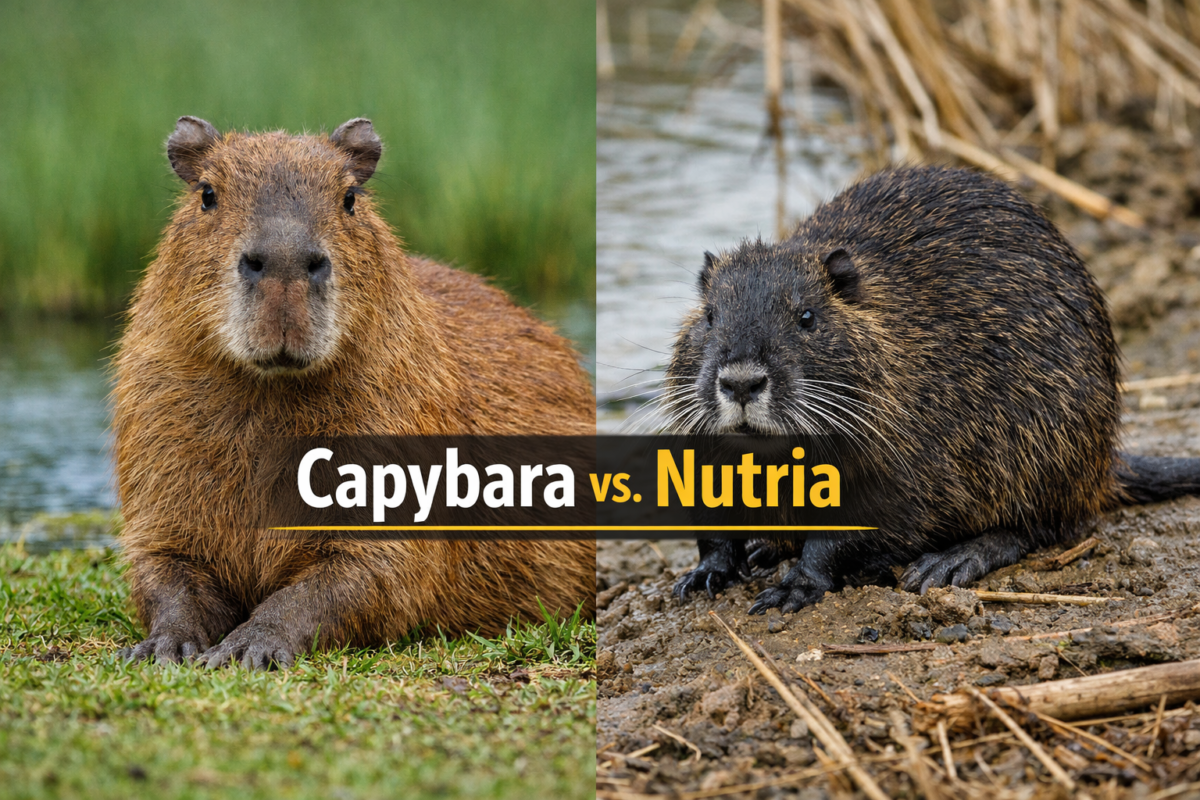
Introduction
Have you ever spotted a large, semi-aquatic rodent near a riverbank or wetland and paused, unsure of what you were looking at? At first glance, it could be a calm, social capybara—or a less-welcome visitor, the nutria. Their similar size, coloring, and watery habitats often lead to confusion, even among experienced wildlife enthusiasts.
This guide is designed to eliminate that uncertainty. By breaking down their physical traits, behaviors, and habitats in a clear and practical way, you’ll gain the confidence to tell these two species apart in real-world situations. Whether you’re observing wildlife, traveling, or simply curious, knowing what to look for makes all the difference.
More importantly, accurate identification isn’t just about curiosity—it has real ecological consequences. While capybaras play a vital role in their native ecosystems, nutrias are considered an invasive species in many parts of the world, causing significant environmental damage. Understanding the difference helps support conservation efforts and promotes responsible wildlife observation.
What is a Capybara?
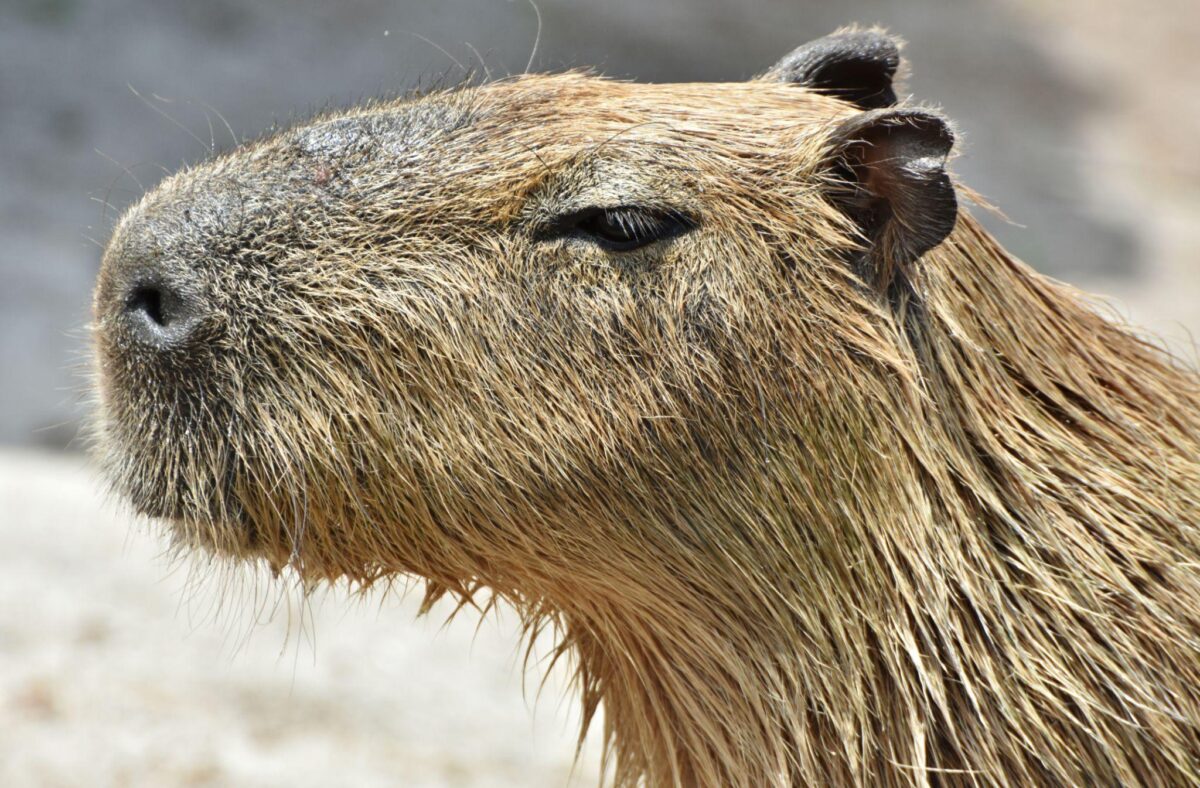
Physical Characteristics
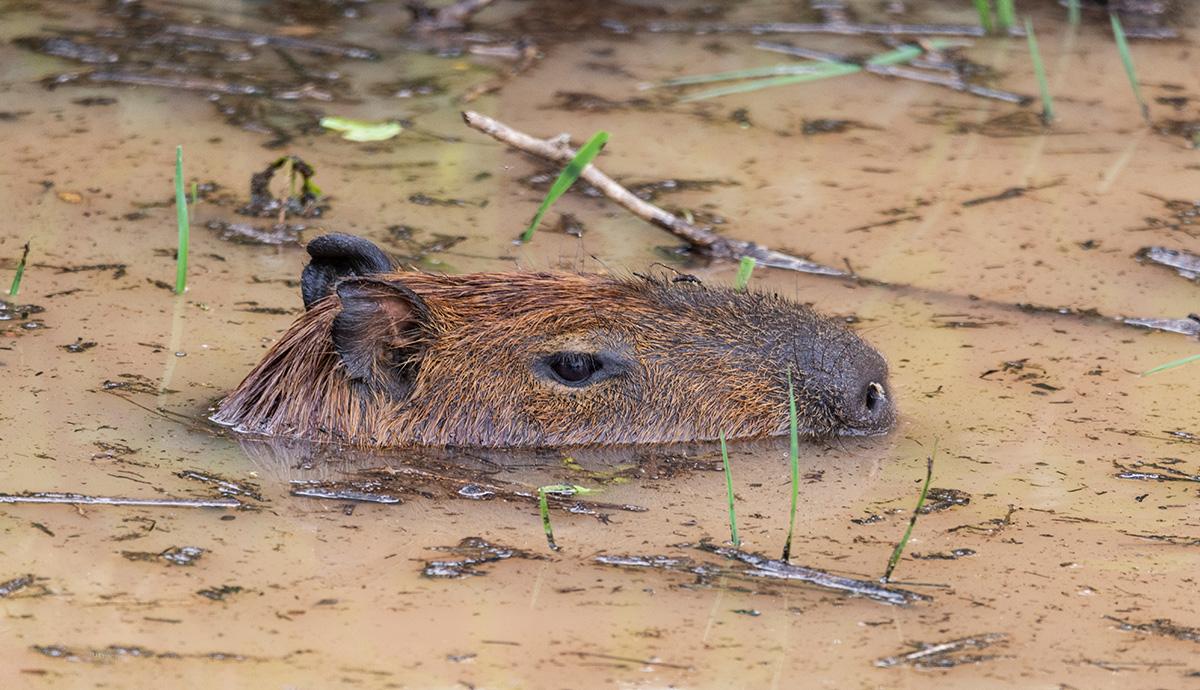
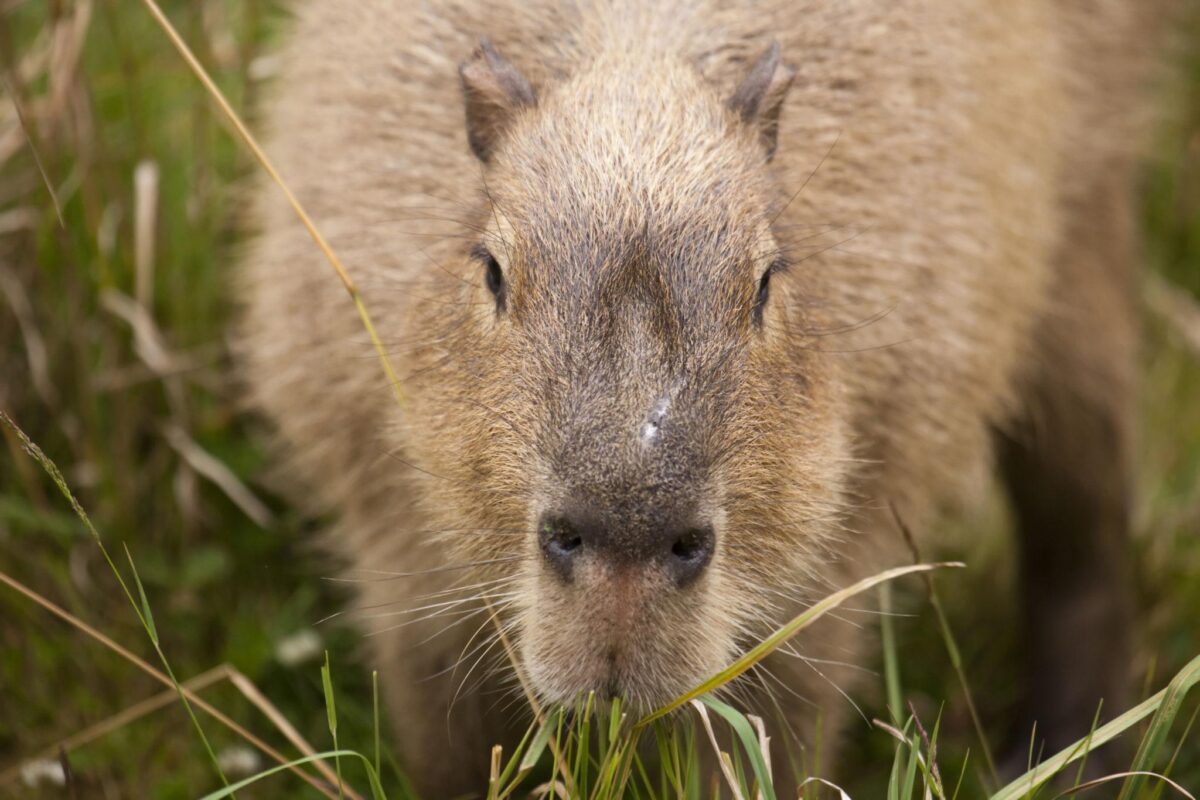
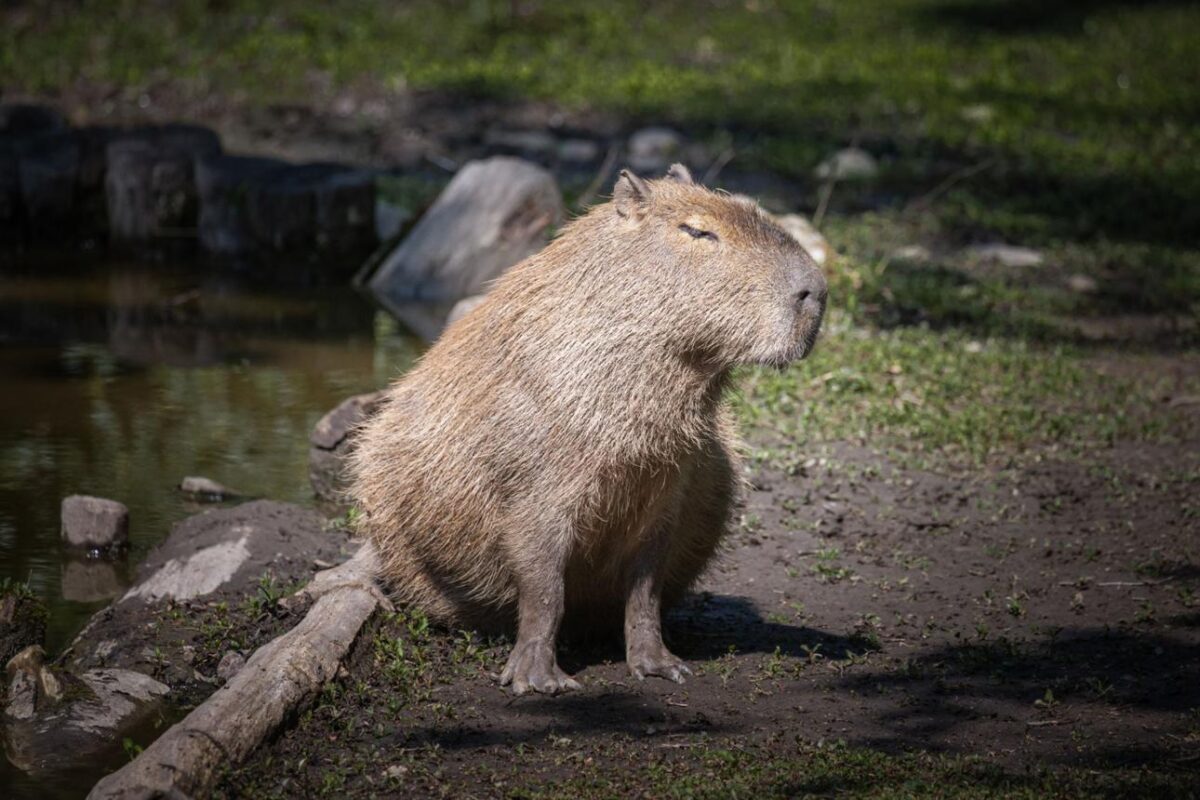
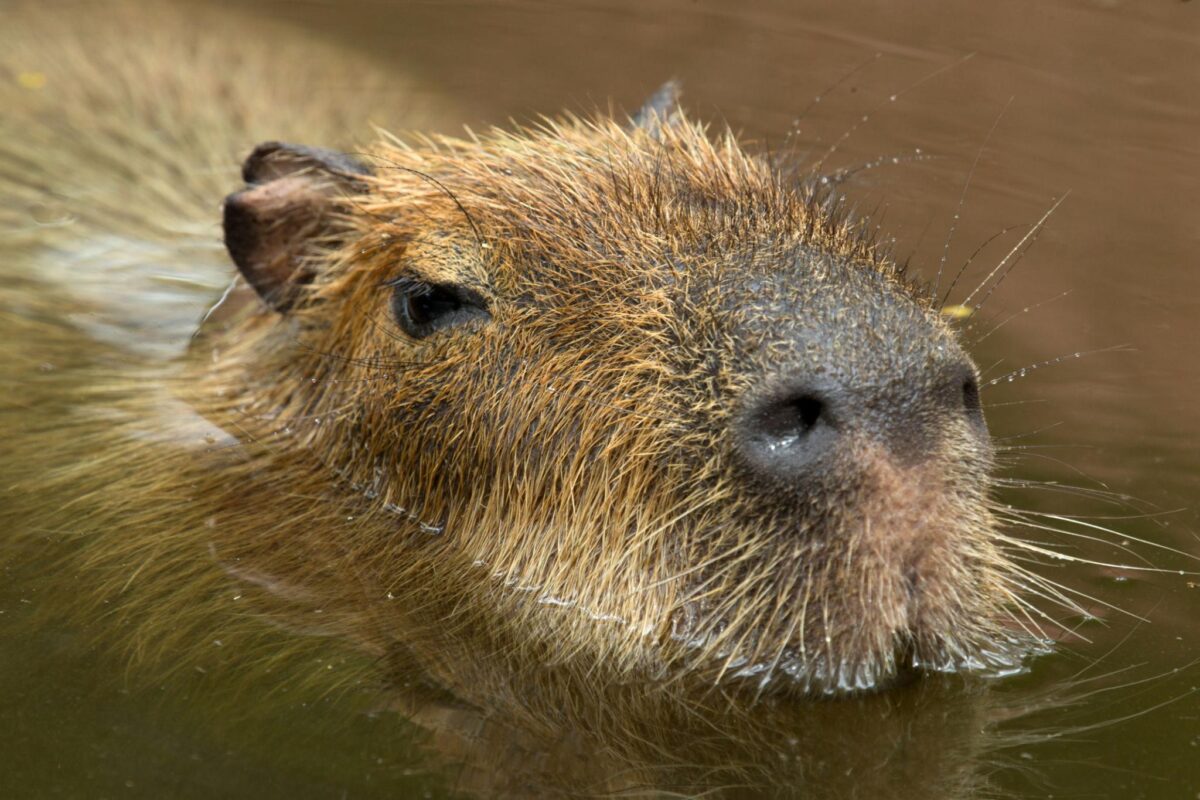
The Capybara is the largest living rodent on Earth, a semi-aquatic mammal uniquely adapted to life around water.
Size & Build:
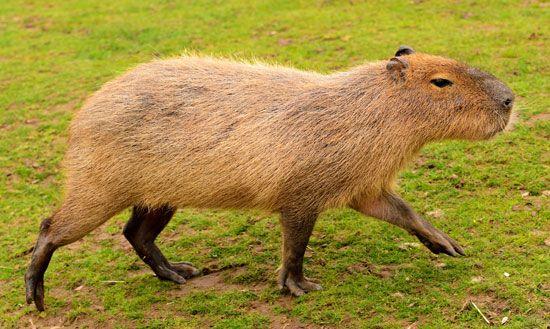
Capybaras are impressively large, often weighing 77–143 pounds (35–65 kg) and standing about 2 feet (60 cm) tall at the shoulder, with a distinctive barrel-shaped body.
Snout Shape (Expert Tip):
A broad, blunt, almost square-shaped snout—one of the easiest ways to distinguish them from similar species.
Ears (Expert Tip):
Small, round ears positioned high on the head.
Eyes (Expert Tip):
Set high and toward the sides, allowing the animal to remain mostly submerged while still seeing its surroundings—a key survival adaptation.
Tail (Expert Tip):
A vestigial, nearly non-existent tail, unlike many other rodents.
Fur (Expert Tip):
Coarse, sparse fur, typically reddish-brown to grayish, designed to dry quickly after swimming.
Feet:
Partially webbed feet, making them strong and efficient swimmers.
Native Habitat & Geographical Range
Capybaras are native to South America, found across countries like Brazil, Venezuela, Colombia, and Argentina.
They thrive in wetland ecosystems, including:
- Rivers and lakes
- Swamps and marshes
- Flooded grasslands and forest edges
Their lives are closely tied to water, which they rely on for cooling, feeding, and predator avoidance.
Behavior & Social Structure
Capybaras are among the most social rodents in the world.
- Typically live in groups of 10–20 individuals, sometimes much larger depending on conditions.
- Activity varies: often diurnal, but may become crepuscular (dawn/dusk) or even nocturnal under pressure.
Expert Tip (Behavior):
They communicate using a wide range of vocalizations—including barks, whistles, clicks, and purrs—especially within social groups.
Other key behaviors:
- Excellent swimmers and divers, often escaping predators by submerging
- Herbivorous grazers, feeding mainly on grasses and aquatic plants
Ecological Role
Capybaras are considered ecosystem engineers in their native habitats.
- Their grazing helps shape vegetation patterns and maintain ecological balance
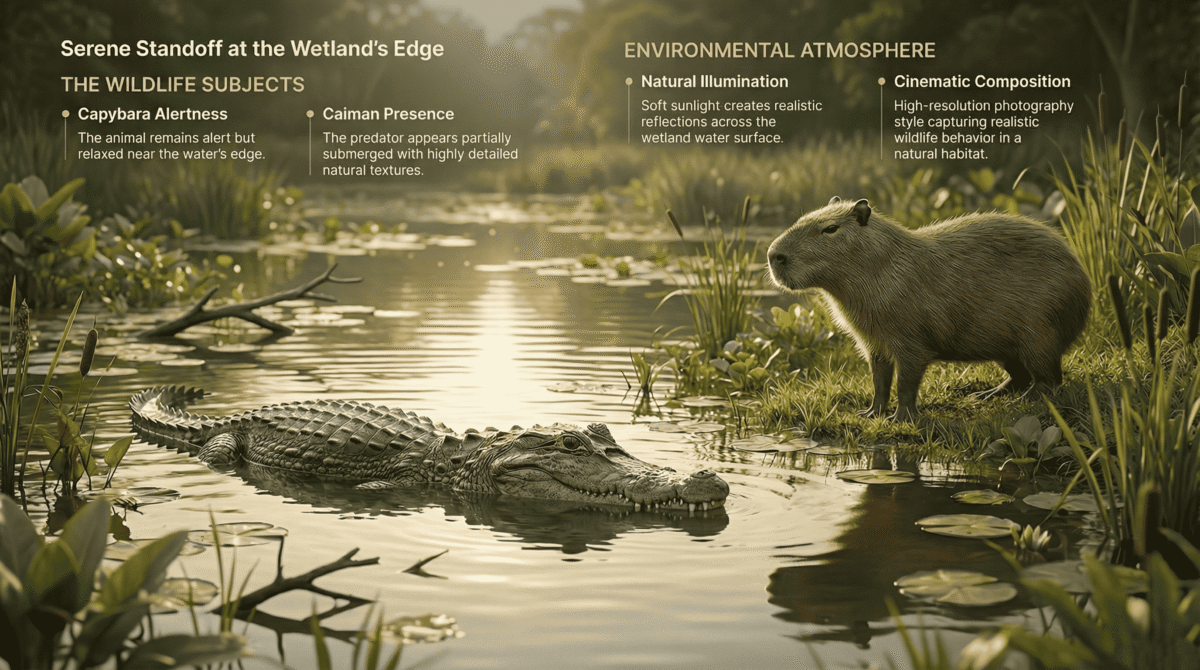
- They are a critical food source for predators like jaguars, caimans, and anacondas
This dual role—both landscape shaper and prey species—makes them an essential part of South American wetland ecosystems.
Why This Matters for Identification
Understanding these traits gives you a clear advantage in the field:
- Large, barrel body + blunt snout + almost no tail = Capybara
- High-set eyes/ears + social group behavior near water = strong confirmation
These practical cues will become even more important when we compare them to nutrias—where small differences make a big ecological impact.
What is a Nutria?
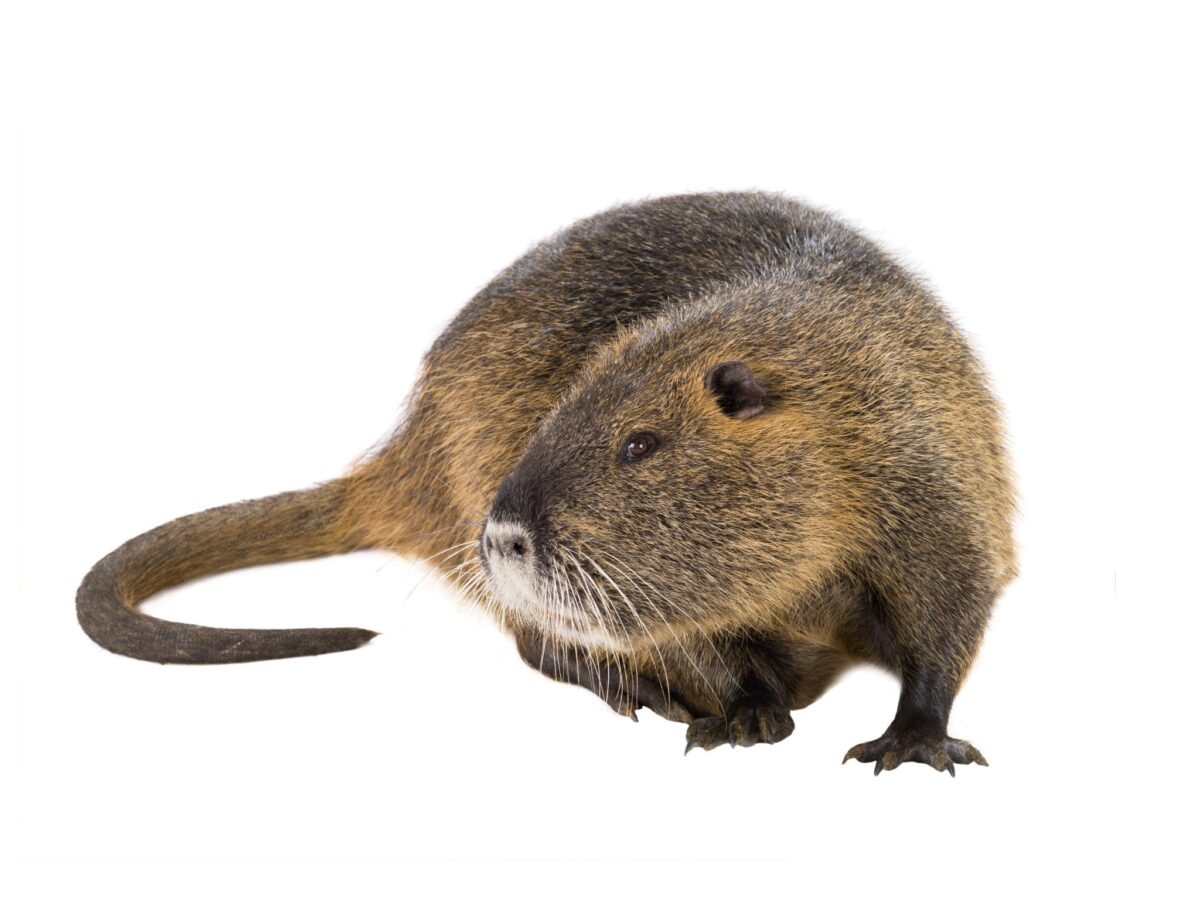
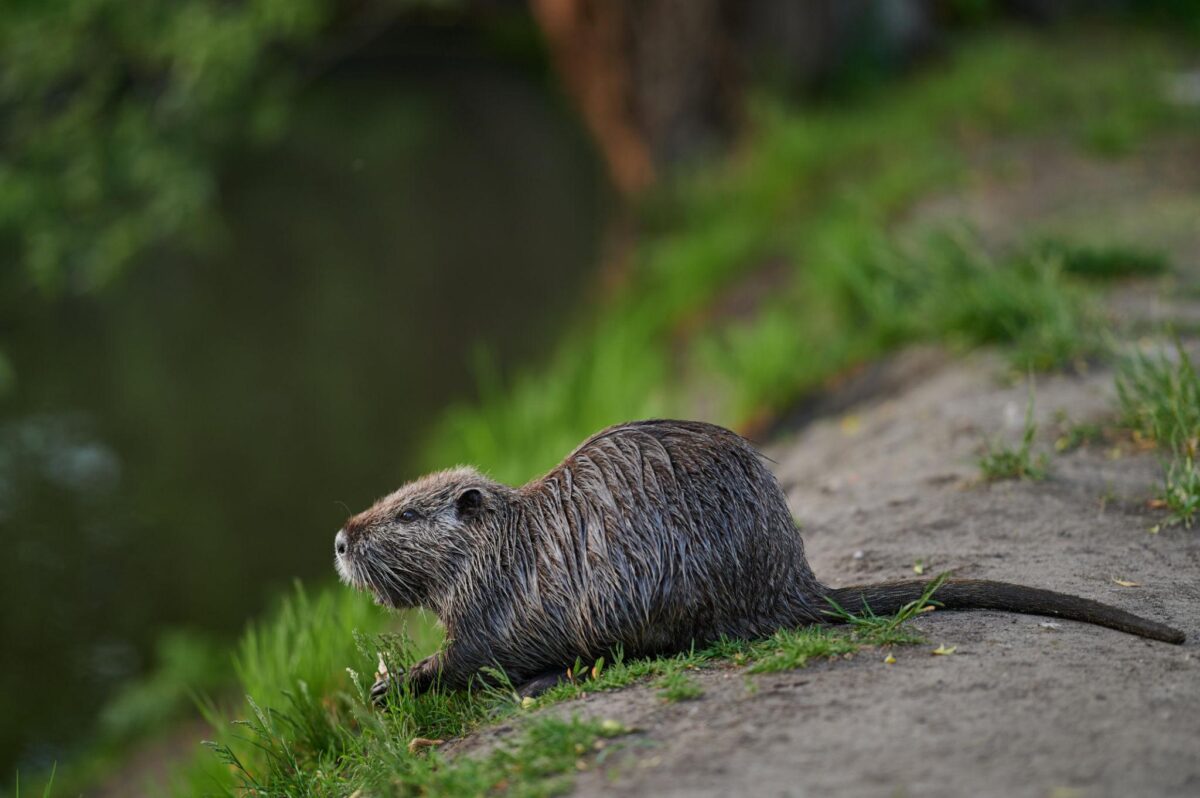
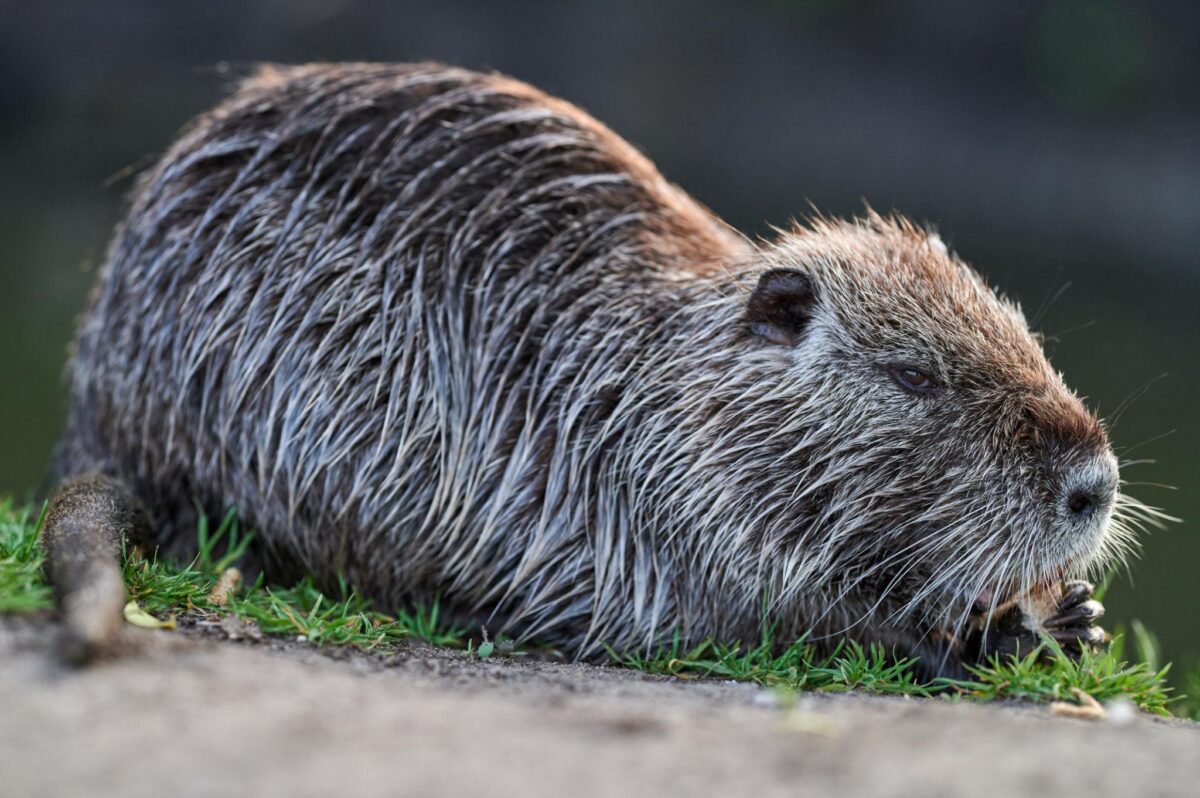
Physical Characteristics
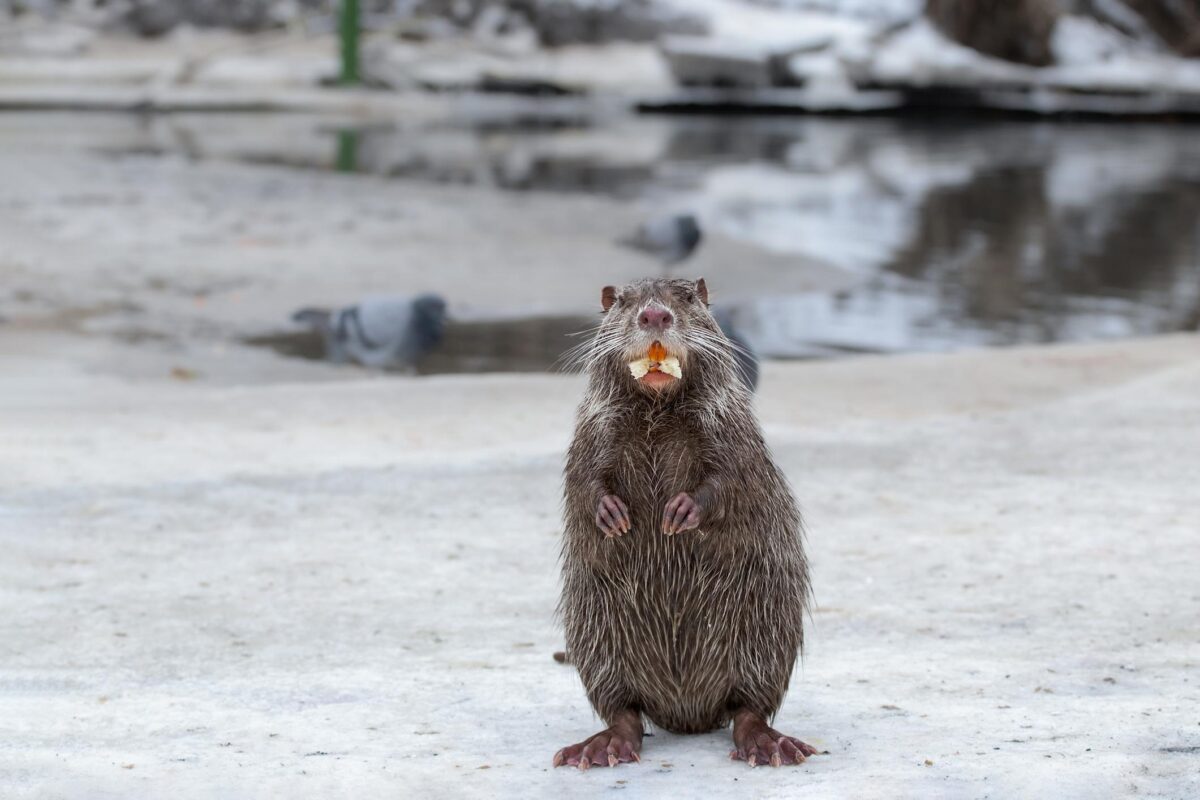
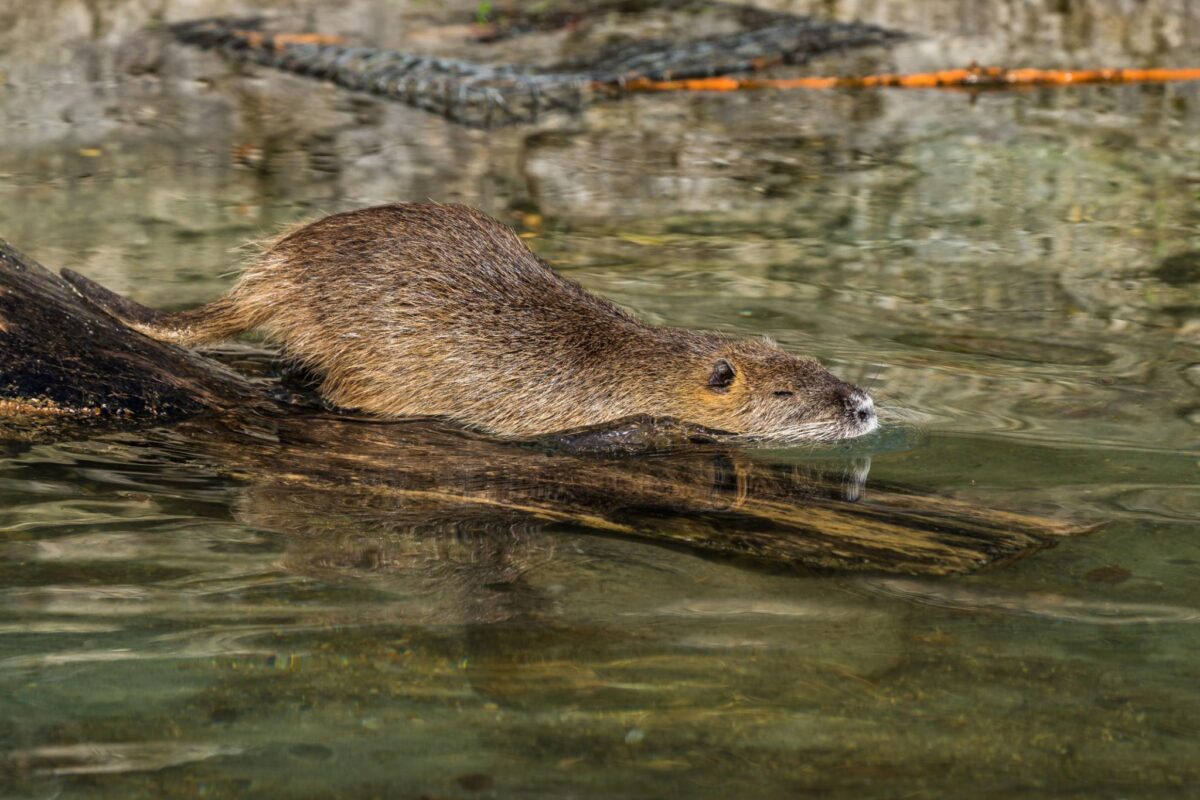
The Nutria (also known as coypu) is a medium-sized, semi-aquatic rodent that is often mistaken for a capybara—but key differences make it easy to identify once you know what to look for.
Size & Build:
Nutrias are much smaller, typically weighing 12–20 lbs (5–9 kg), with a more hunched, compact appearance compared to the barrel-shaped capybara. According to the U.S. Fish and Wildlife Service, they rarely exceed this size range.
Snout Shape (Expert Tip):
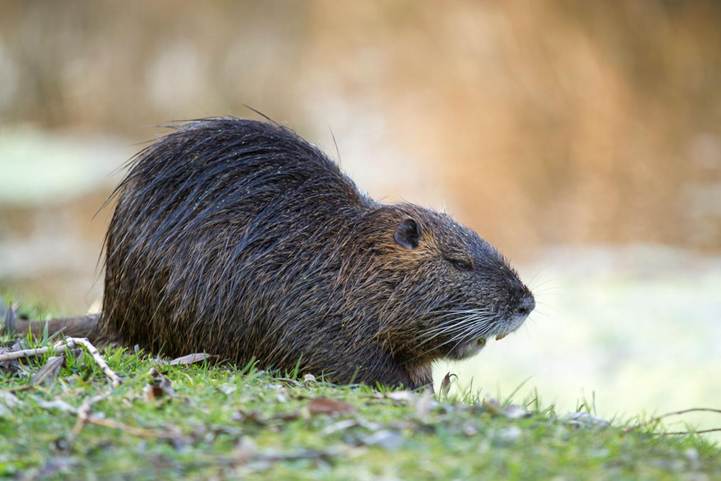
A pointed, triangular snout with prominent white whiskers—a strong visual contrast to the capybara’s blunt face.
Ears (Expert Tip):
Very small and often hard to see, appearing almost embedded in their fur.
Eyes (Expert Tip):
Smaller and more forward-facing, giving them a slightly sharper, more rodent-like expression.
Tail (Expert Tip):
A defining feature: a long, rounded, rat-like tail, sparsely covered with hair—completely different from the nearly invisible tail of a capybara.
Fur (Expert Tip):
Dense and soft, usually dark brown to nearly black, often with a lighter underside. This fur was historically the reason for their global introduction.
Feet:
They have partially webbed hind feet, helping them move efficiently in water.
Native Habitat & Introduced (Invasive) Ranges
Nutrias are native to temperate South America, including countries like Argentina, Bolivia, Chile, Paraguay, and Uruguay.
However, their story doesn’t stop there.
Expert Tip (Range):
They have been widely introduced across the world—including North America, Europe, Asia, and Africa—primarily due to the fur trade.
Organizations like the National Wildlife Federation highlight that nutria populations are now especially established in:
- The Gulf Coast of the United States
- The Pacific Northwest
- Parts of Europe and Asia
In many of these regions, they are classified as an invasive species due to their environmental impact.
Behavior & Diet
Nutrias are generally less social than capybaras.
- They may be solitary or live in small groups
- Most active during dawn/dusk (crepuscular) or at night, though daytime activity is possible
Expert Tip (Behavior):
They are typically quieter than capybaras, but may produce grunts or squeals when threatened or distressed.
Diet:
Nutrias are voracious herbivores, feeding on:
- Roots and tubers
- Rhizomes
- Stems of aquatic plants
According to the U.S. Geological Survey, their feeding habits often involve digging up entire plants, not just grazing—making their impact far more destructive than it may appear.
Impact as an Invasive Species
This is where nutria identification becomes critically important.
Unlike capybaras, nutria are widely known for their damaging ecological effects:
- Destructive burrowing weakens riverbanks, levees, and wetlands
- Overconsumption of vegetation leads to habitat loss and erosion
- Can transform healthy wetlands into open water or degraded land
The U.S. Fish and Wildlife Service reports that nutria have caused millions of dollars in environmental and agricultural damage, particularly in wetland ecosystems.
Capybara vs. Nutria: Side-by-Side Comparison
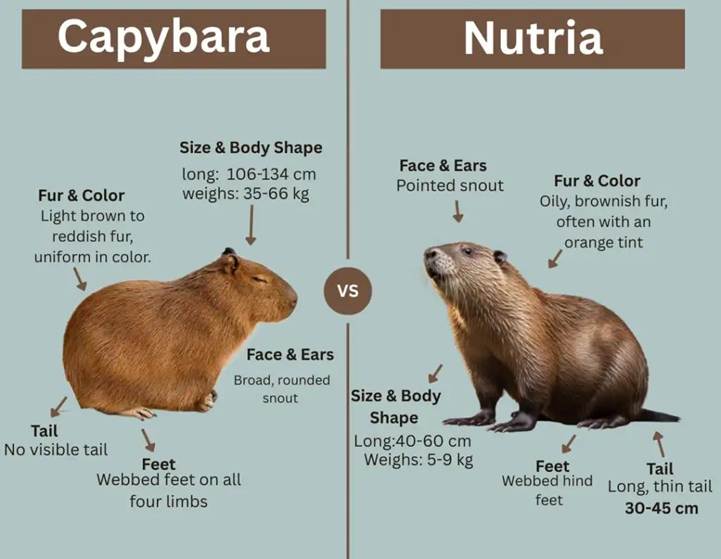
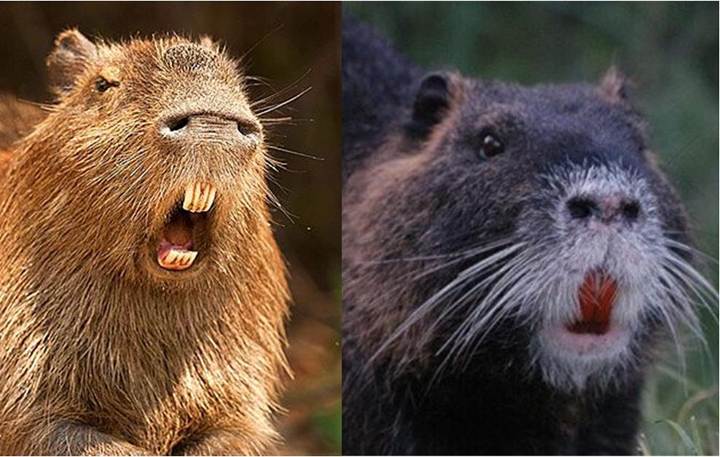
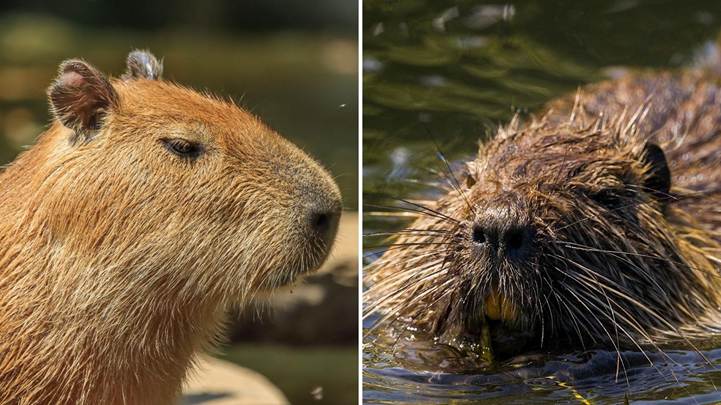
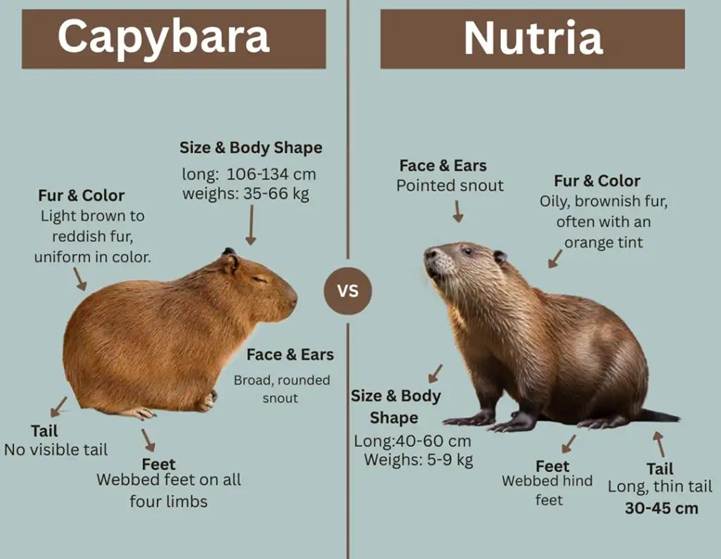
When you’re in the field, quick and accurate identification matters. The table below gives you a clear, at-a-glance comparison of the most important differences—so you can confidently tell a capybara from a nutria in seconds.
Quick Visual Comparison
Detailed Comparison Table
| Feature | Capybara Description | Nutria Description | Quick ID Tip (At-a-Glance) |
| Size | Largest rodent, typically 100+ lbs (45+ kg) | Much smaller, 12–20 lbs (5–9 kg) | Huge = Capybara / Medium = Nutria |
| Snout | Broad, blunt, square-shaped | Pointed, triangular with white whiskers | Blunt = Capybara / Pointy = Nutria |
| Ears | Small, round, set high on head | Very small, თითქმის hidden in fur | Visible = Capybara / Hard to see = Nutria |
| Tail | Almost non-existent (vestigial) | Long (10–18 in), rat-like, sparsely haired | No tail = Capybara / Long tail = Nutria |
| Fur (Color/Texture) | Coarse, sparse, reddish-brown to grayish | Dense, soft, dark brown to black, lighter belly | Rough/light = Capybara / Dark/dense = Nutria |
| Eye Placement | High & side-positioned (for swimming) | Smaller, more forward-facing | High eyes = Capybara |
| Posture | Barrel-chested, less hunched | More hunched, compact look | Rounded = Capybara / Hunched = Nutria |
| Social Behavior | Highly social, groups of 10–20+ | Solitary or small groups | Big group = Capybara |
| Vocalizations | Barks, whistles, purrs, clicks | Grunts, squeals (quieter) | Noisy group = Capybara |
| Native Range | South America | South America | — |
| Introduced Range | None (naturally native only) | Invasive in North America, Europe, Asia, Africa | Outside S. America → likely Nutria |
Why This Comparison Matters
At first glance, both animals can look surprisingly similar—especially from a distance or in water. But small differences, like tail presence, snout shape, and size, are reliable indicators you can use immediately.
Field-Proven Shortcut:
- If you see a large rodent with NO visible tail relaxing in a group → Capybara
- If you spot a smaller rodent with a long rat-like tail, often alone → Nutria
Accurate identification isn’t just about curiosity—it directly impacts environmental awareness. Recognizing a nutria in non-native regions can help flag invasive species presence, while identifying capybaras helps you better understand natural ecosystem balance.
Key Distinguishing Features Explained In-Depth
When you’re faced with a quick wildlife sighting, details matter. This section breaks down the most reliable, field-tested identification features—so you can confidently tell a capybara from a nutria, even at a glance.
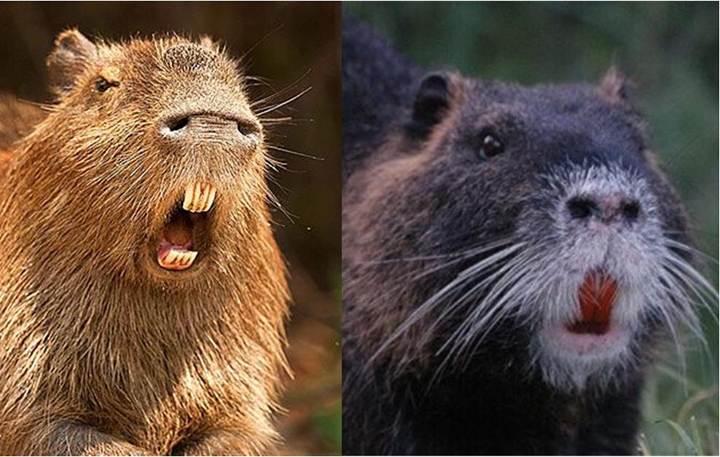
The snout shape is the fastest and most reliable way to distinguish these two species.
- Capybara: Wide, flat, and blocky, often described as square-shaped
- Nutria: Pointed and triangular, often enhanced by prominent white whiskers or a pale patch
Expert Tip:
If the face looks broad and blunt → Capybara
If it looks narrow and pointy with whiskers → Nutria
Ears (Look Closely at the Head)
Capybara and nutria ears differ subtly—but consistently.
- Capybara: Small, round, and clearly visible, set high on the head
- Nutria: Tiny and often hidden, appearing almost embedded in thick fur
Expert Tip:
If you can easily see rounded ears above the head → Capybara
If the ears are hard to spot → likely Nutria
Tail Morphology (The Ultimate Deal-Breaker)
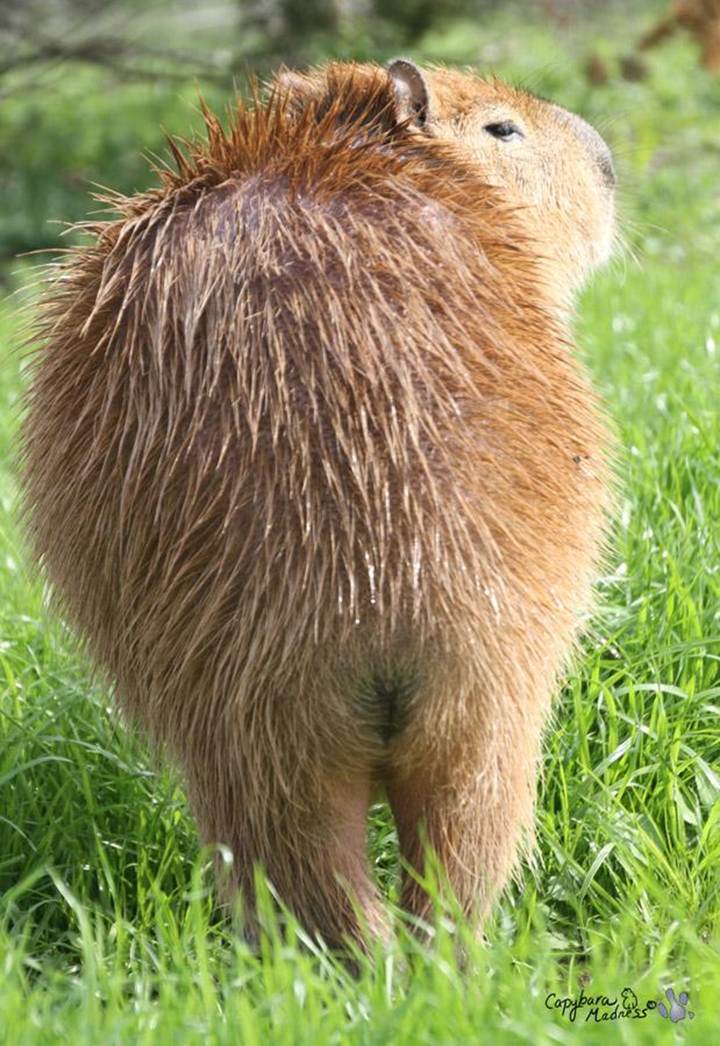
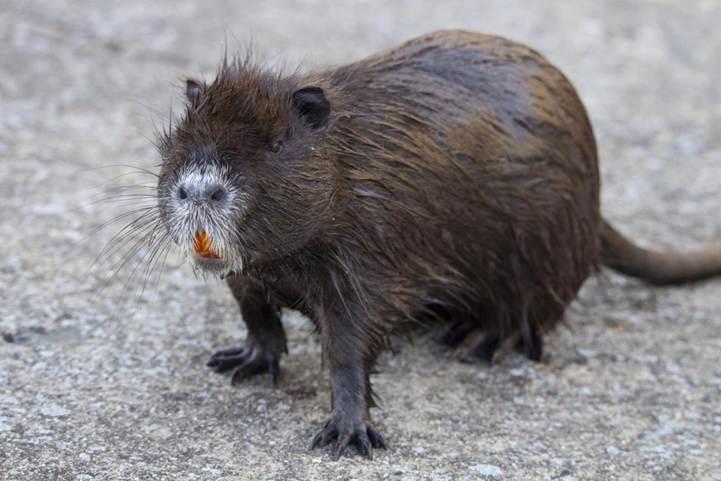
This is one of the clearest identification features, especially on land.
- Capybara: Almost no visible tail (vestigial)
- Nutria: Long, rounded, rat-like tail, sparsely haired
Expert Tip:
See a long tail? → Nutria
No visible tail? → Capybara
Fur Color & Texture (Helpful at Medium Distance)
- Capybara: Coarse, bristly, and sparse, usually reddish-brown to gray
- Nutria: Dense and soft, typically dark brown to black, often with a lighter belly
Expert Tip:
Rough, lighter coat → Capybara
Dark, thick, plush coat → Nutria
Size & Posture (Big vs Compact)
- Capybara: Massive, often over 100 lbs, with a rounded, barrel-chested body
- Nutria: Much smaller (12–20 lbs), often hunched, especially while feeding
Expert Tip:
If it looks like a giant, relaxed rodent → Capybara
If it looks compact and hunched → Nutria
Eye Placement (Subtle but Powerful Clue)
- Capybara: Eyes are high-set and on the sides, adapted for staying mostly submerged
- Nutria: Eyes are smaller and more forward-facing
Expert Tip:
If the animal can peek above water with just eyes/nose → Capybara
Swimming Style & Movement
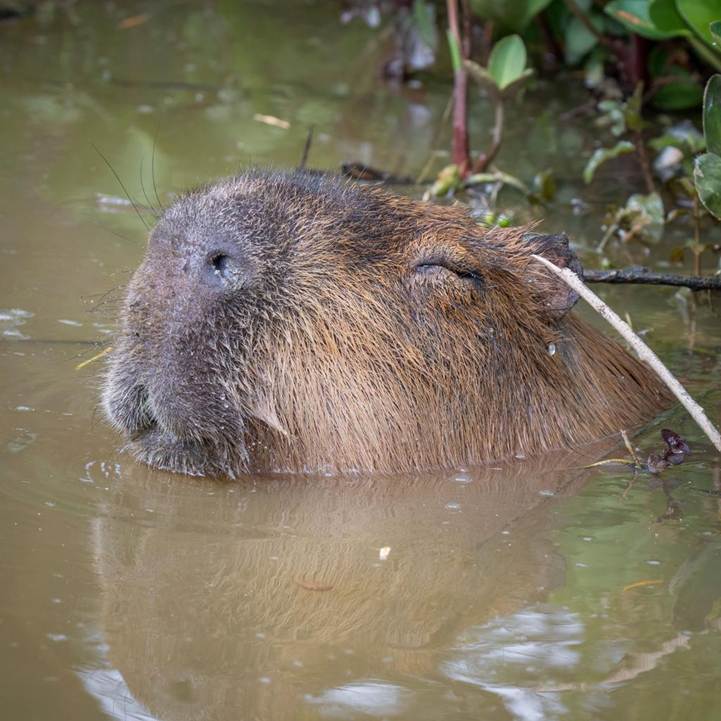
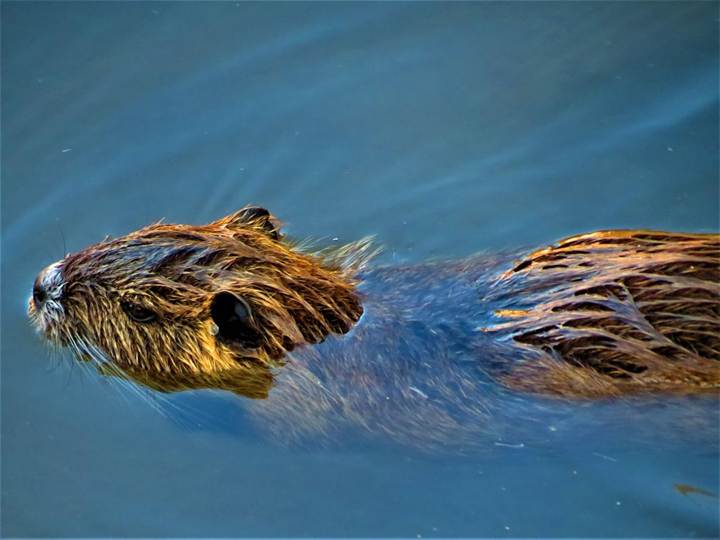
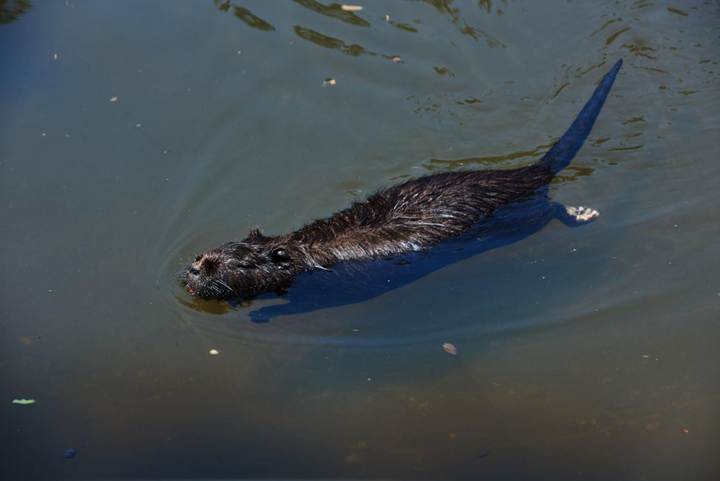
Both species are semi-aquatic—but their swimming style differs.
- Capybara: Smooth, graceful swimmers, often with only eyes and nostrils visible
- Nutria: More active, sometimes “dog-paddling”, with more of the head and back visible
Expert Tip:
Low-profile, calm swimmer → Capybara
More visible movement, higher in water → Nutria
Webbing (A Subtle Confirmation Feature)
Both animals have partially webbed feet, which helps them swim efficiently.
- Capybara: Webbing is present but less obvious unless closely observed
- Nutria: Also webbed, sometimes more noticeable on the hind feet
Expert Tip:
Use this as a supporting clue, not a primary identifier.
Real-World Field Identification Strategy
When identifying in the wild, don’t rely on just one feature. Instead, combine 2–3 quick observations:
✔ Snout shape
✔ Tail presence
✔ Size & posture
This layered approach ensures accuracy—even in poor visibility or brief sightings.
Interactive Learning Idea: “Spot the Difference”
For best results, practice with side-by-side wildlife images:
- Compare snout shapes
- Look for tail visibility
- Observe ear size and placement
A labeled or interactive gallery (with click-to-reveal features) can dramatically improve recognition speed—especially for beginners.
Habitat & Geographical Range: Where You’ll Find Them
Understanding where you are is often the fastest way to solve the capybara vs. nutria confusion. In many cases, location alone can give you the answer before you even analyze physical features.
Native Ranges
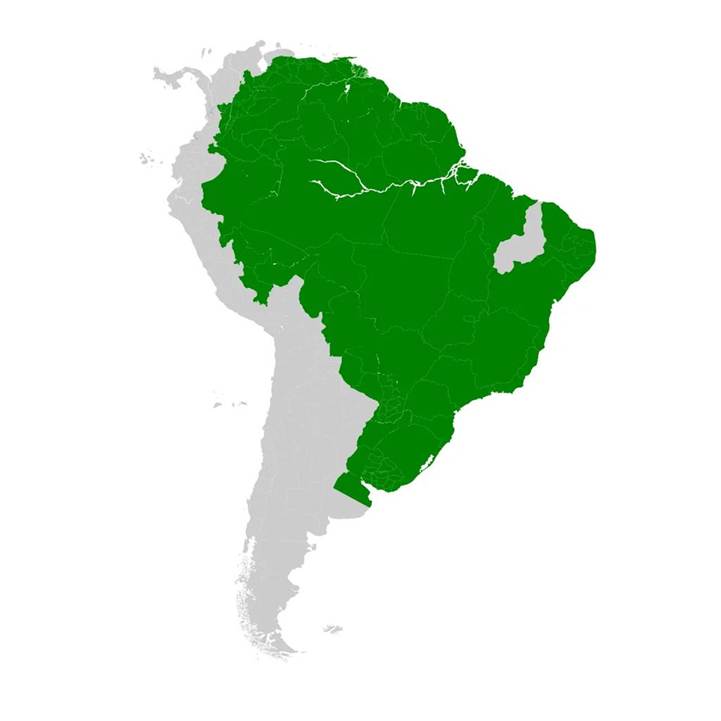
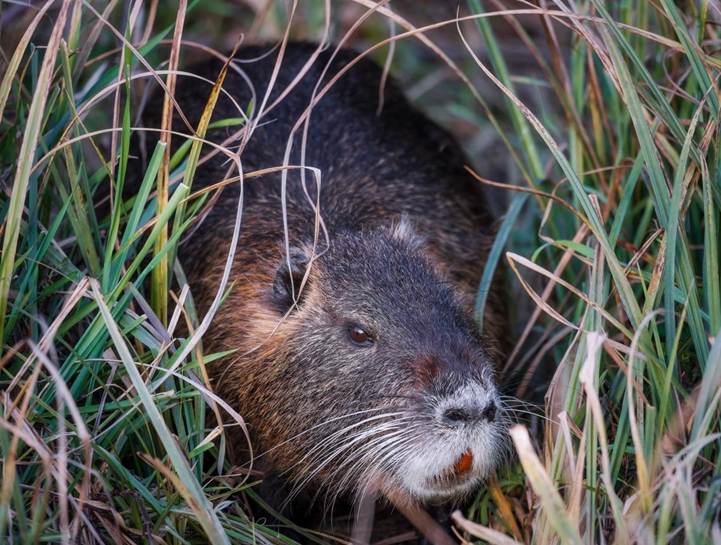
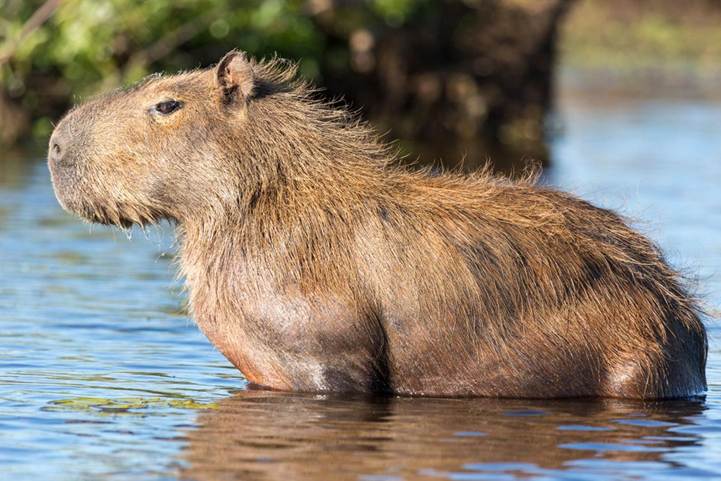
Capybara (Native Range)
Capybaras are exclusively native to South America, with a wide but clearly defined distribution.
Countries include:
- Venezuela
- Colombia
- Ecuador
- Peru
- Brazil
- Bolivia
- Paraguay
- Uruguay
- Argentina
They are found across savannas, wetlands, and dense forests, but always close to water such as rivers, lakes, and marshes.
👉 Key takeaway:
Capybaras are naturally restricted to South America (with only rare, localized exceptions).
Nutria (Native Range)
Nutrias are also native to South America, but primarily in temperate regions.
Core native areas include:
- Southern Brazil
- Bolivia
- Paraguay
- Uruguay
- Argentina
- Chile
They originally inhabited:
- Marshes and swamps
- Slow-moving rivers and lakes
👉 Key takeaway:
Both animals share a South American origin—but their global presence today is very different.
Introduced & Invasive Ranges (Where Confusion Happens)
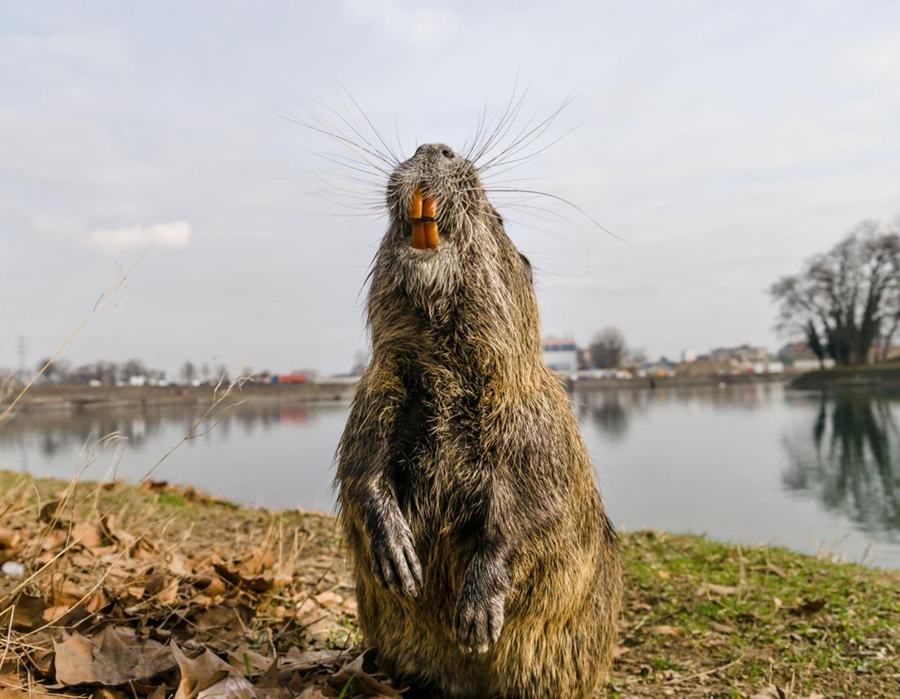
Nutria (Global Expansion)
Nutrias have been widely introduced around the world, mainly due to the fur trade. Many escaped or were released, forming wild populations.
Today, they are considered invasive in many regions, including:
North America:
- Gulf Coast (Louisiana, Texas, Florida)
- Atlantic Coast
- Pacific Northwest
Europe:
- UK, France, Germany, Italy, Eastern Europe
Asia:
- Japan and parts of Central Asia
Africa:
- Present in some regions (less widespread)
👉 Why they spread:
- Escaped fur farm animals
- Intentional introduction for vegetation control
- Lack of natural predators
Impact of Introduced Ranges
Nutria populations outside South America are not just “out of place”—they can be environmentally destructive.
- Destroy wetland vegetation
- Cause erosion through burrowing
- Compete with native species
Government and conservation agencies classify them as harmful invasive species due to these impacts.
Geographical Range as a Key Identifier
🧭 Expert Tip: Location Can Solve the Mystery Instantly
- In South America? → Could be either capybara or nutria
- Outside South America? → Almost always a nutria
👉 Example:
If you see a large semi-aquatic rodent in the United States or Europe, it is almost certainly a nutria, not a capybara.
While rare escapee capybaras exist, they are extremely uncommon in the wild compared to widespread nutria populations.
Practical Field Strategy
When identifying in real life, start with this simple decision path:
- Where are you?
- Outside South America → Likely Nutria
- Then confirm with features:
- Long tail? → Nutria
- No tail + very large size? → Capybara
This approach saves time and increases accuracy.
Interactive Learning Ideas (For Better Understanding)
🌍 Use Interactive Range Maps
Explore tools from wildlife organizations (like government conservation sites or biodiversity databases) to:
- Visualize native vs invasive ranges
- Understand overlap zones
- Improve geographic awareness
🧠 Regional Identification Flow (Simple Quiz Logic)
Try this quick mental checklist:
- What continent are you on?
- Is there a long, rat-like tail?
- Is the animal unusually large (over 100 lbs)?
➡️ These 2–3 questions can help you identify the species in seconds.
Behavioral Differences: Clues Beyond Appearance
When visibility is low—or you only have a few seconds to observe—behavior can be just as revealing as physical traits. By watching how these animals move, interact, and feed, you can often identify them without needing a perfect visual.
Social Structure (Group vs. Lone Behavior)
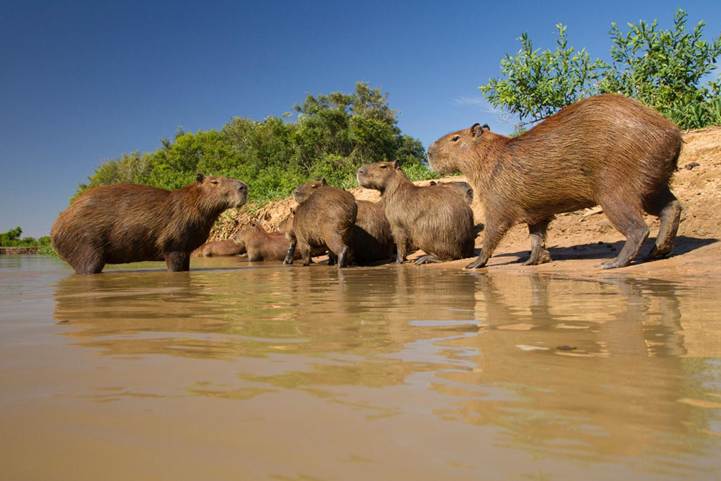
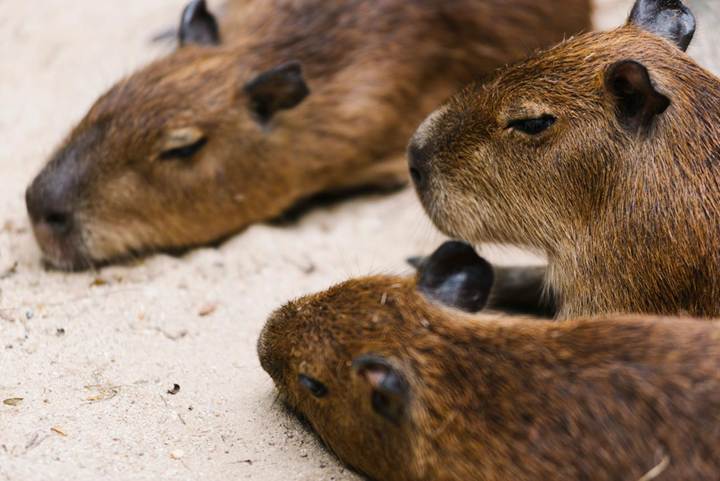
Capybara:
Capybaras are highly social animals, typically living in tight-knit groups of 10–20 individuals, sometimes even larger in ideal conditions. These groups have:
- Clear social hierarchies
- Strong bonding behaviors (resting, grooming together)
- Shared vigilance against predators
They often move, feed, and rest together, making them easy to spot as a group.
Nutria:
Nutrias are far less social. They:
- Often appear alone or in small, loose groups
- Lack the strong cohesion seen in capybaras
- Show less coordinated movement or interaction
Expert Tip:
If you see a large, relaxed group → Capybara
If it’s alone or just a few individuals → likely Nutria
Activity Patterns (When Are They Active?)
- Capybara: Mostly diurnal (active during the day), often seen:
- Grazing in daylight
- Resting near waterbanks
- Socializing in open areas
- Nutria: Typically crepuscular or nocturnal, especially in areas with human presence:
- Most active at dawn, dusk, or night
- Daytime sightings are possible but less common in busy areas
Field Insight:
If you consistently see activity in broad daylight → more likely Capybara
If sightings happen at dusk/night → consider Nutria
Vocalizations (What Do You Hear?)
Capybara:
They are surprisingly vocal animals, especially in groups. Their sounds include:
- Barks (alarm signals)
- Whistles (contact calls)
- Purrs (contentment)
- Clicks and chirps
These sounds are often heard when the group is interacting or sensing danger.
Nutria:
Much quieter overall. They may produce:
- Grunts
- Squeals (usually when threatened or distressed)
Expert Tip:
Frequent, varied sounds → Capybara
Mostly silent, occasional grunt/squeal → Nutria
Foraging & Feeding Habits (Clean vs. Destructive Feeding)

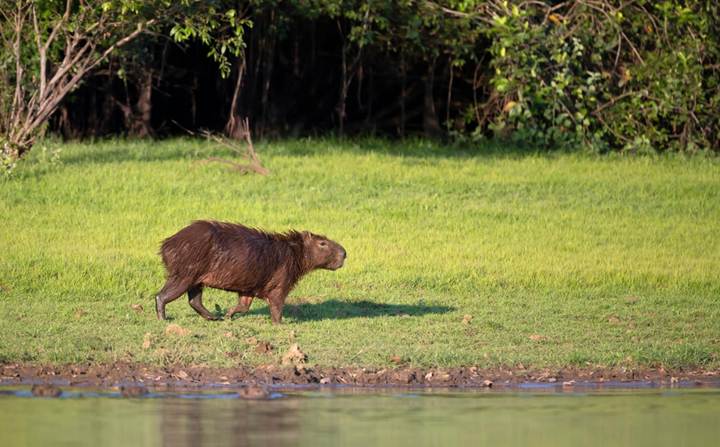
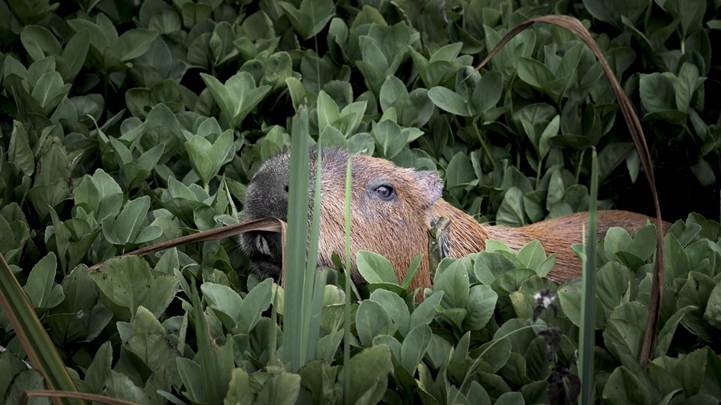
Capybara:
- Grazers that feed mainly on grasses and aquatic plants
- Use a methodical clipping motion
- Leave vegetation relatively intact and evenly trimmed
Nutria:
- Aggressive feeders that dig for:
- Roots
- Tubers
- Rhizomes
- Often uproot entire plants, leaving:
- Bare soil patches
- Damaged wetlands
Expert Tip:
Neatly grazed vegetation → Capybara
Disturbed soil and uprooted plants → Nutria
Beyond the Look: Behavioral Identification in Action
Sometimes, you won’t get a perfect visual. That’s where behavior becomes your backup identification system.
Quick Field Checklist:
- Group size? (Large group vs. solitary)
- Time of activity? (Day vs. night)
- Sounds? (Vocal vs. quiet)
- Feeding signs? (Grazed vs. destroyed plants)
➡️ Combine just 2–3 of these clues, and you can confidently identify the species—even from a distance.
Ecological Impact: Why Identification Matters
Understanding the differences between capybaras and nutria isn’t just a matter of curiosity—it has real-world consequences for ecosystems, conservation, and human livelihoods. Misidentification can mean overlooking serious environmental threats or failing to appreciate native ecological balance.
Capybara’s Native Ecological Role
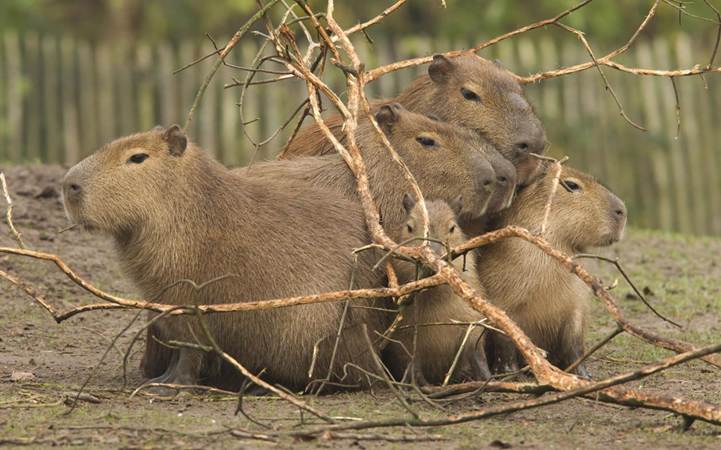
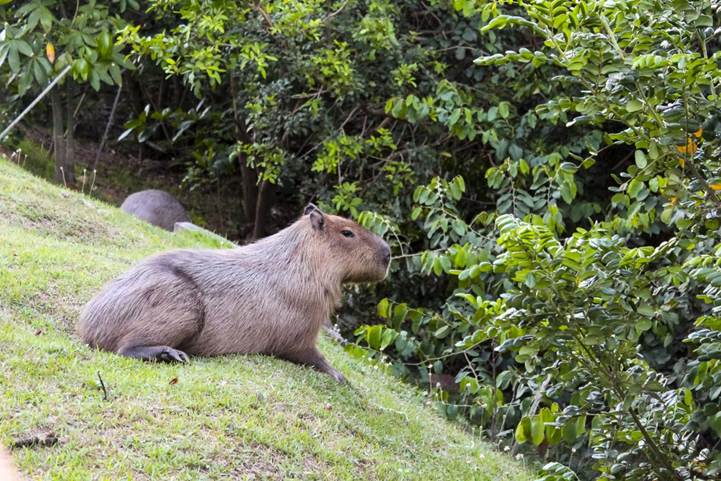
Capybaras are key ecological players in South American wetlands, performing several critical functions:
- Keystone Species: Their grazing patterns maintain open spaces in dense vegetation, which supports a diversity of plant and animal life.
- Seed Dispersal: By consuming a variety of plants, they help spread seeds across their habitats, promoting plant regeneration.
- Food Web Contribution: Capybaras are an important prey species for native predators such as jaguars, caimans, and anacondas.
- Microhabitat Creation: Their burrows and wallows can provide shelter for smaller animals, amphibians, and invertebrates.
Takeaway:
Capybaras contribute to the health and stability of their ecosystems—a well-functioning wetland relies on their presence.
Nutria’s Invasive Ecological Damage


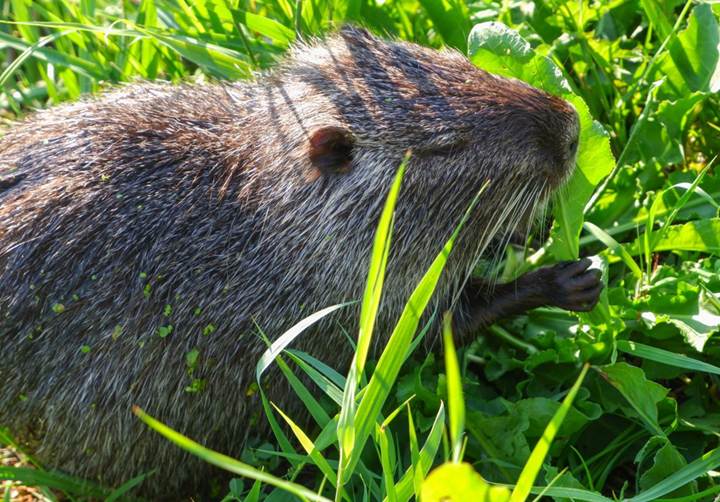
Nutrias, when introduced outside their native range, become a major ecological problem. Their behaviors contrast sharply with the constructive role of capybaras:
1. Wetland Destruction
- Their voracious feeding on roots, tubers, and rhizomes leads to large “eat-outs” in marshes.
- Entire wetland areas can be stripped of vegetation, destroying habitats for birds, fish, amphibians, and invertebrates.
2. Erosion and Infrastructure Risk
- Burrowing along riverbanks, levees, and dikes destabilizes soil, leading to increased erosion and higher flood risks.
- Coastal wetlands are particularly vulnerable, which threatens both ecosystems and human settlements.
3. Agricultural Damage
- Nutria consume crops like corn, rice, and sugarcane, resulting in significant economic losses for farmers.
- Their feeding habits can make wetlands near farmland almost unusable.
4. Competition with Native Species
- Nutria outcompete native herbivores for both food and habitat, altering local food webs.
- Their rapid reproduction accelerates population growth, intensifying ecological pressures.
Expert Tip:
Seeing a large rodent in North America or Europe? Think nutria, not capybara—the ecological stakes are high if their presence goes unchecked.
Conservation Status & Human Interaction
Understanding how humans interact with capybaras and nutria—and their conservation statuses—is crucial for both ethical wildlife observation and environmental management. These differences further highlight why accurate identification matters.
Capybara
Conservation Status:
- Listed as “Least Concern” on the IUCN Red List due to their wide distribution and stable population trends across South America.
- Populations are generally resilient, though localized hunting can create pressures in certain regions.
Human Interaction:
- Hunting: In some South American countries, capybaras are hunted for meat and hide, often for subsistence or traditional purposes.
- Pet Trade: They have gained attention in the exotic pet trade, raising ethical and welfare concerns, as they require complex social and environmental care.
- Ecotourism: Capybaras are increasingly popular attractions for wildlife watchers and ecotourists, who enjoy observing their social behaviors and semi-aquatic lifestyle in the wild.
Expert Tip:
When encountering capybaras, observe from a distance to avoid disturbing their social groups, especially during feeding or resting periods.
Nutria
Conservation Status:
- Not considered at risk; no global conservation concern.
- In introduced ranges, nutria are classified as an invasive pest species due to their destructive ecological impact.
Human Interaction:
- Fur Farming: Historically farmed extensively for their soft fur, which led to widespread escapes and subsequent invasive populations.
- Control Programs: In North America, Europe, and parts of Asia, nutria are actively managed through eradication and population control programs, including trapping and regulated hunting.
- Hunting & Meat: In some areas, nutria are hunted for sport or meat, providing a dual purpose of population control and resource use.
Expert Tip:
If you encounter a nutria in an invasive range, reporting the sighting to local wildlife management authorities can help control their population and mitigate ecological damage.
Quick Identification Checklist & What To Do If You Spot a Nutria
When time is short or conditions are tricky, a rapid field checklist can help you distinguish capybaras from nutria and take appropriate action if you encounter an invasive species.
Field Identification Checklist
| Feature | Capybara | Nutria |
| Size | Massive, 100+ lbs (45+ kg) | Medium-sized, 12–20 lbs (5–9 kg) |
| Tail | Virtually absent, vestigial | Long, rat-like, sparsely haired |
| Snout | Broad, blunt, almost square | Pointed, triangular with prominent white whiskers |
| Ears | Small, round, set high, visible | Tiny, often embedded in dense fur |
| Geographical Location | South America (native) | North America, Europe, Asia, Africa (introduced/invasive) |
| Behavior | Large social groups (10–20+) | Solitary or small, loose groups |
| Vocalizations | Barks, whistles, purrs, clicks | Grunts, squeals (mostly quiet) |
Expert Tip: Combine 2–3 of these traits for quick, confident identification in the field.
What To Do If You Spot a Nutria
- Do NOT approach or attempt to interact with the animal—it can be defensive and may carry diseases.
- Document safely:
- Take a photo or video if possible.
- Note the exact location, ideally using GPS coordinates.
- Report the sighting:
- Contact your local wildlife authority, state department of natural resources, or invasive species council.
- Provide all details: location, number of animals, behavior, and photos/videos.
- Understand the impact:
- Reporting helps track invasive populations.
- Early detection and management reduce wetland destruction, agricultural damage, and habitat loss for native species.
- Use identification tools:
- Apps like iNaturalist or local field guides can assist in real-time species ID and reporting.
Conclusion: Empowering Responsible Wildlife Observation
Conclusion: Empowering Responsible Wildlife Observation
Distinguishing between capybaras and nutria may seem tricky at first, but armed with key visual and behavioral clues, accurate identification becomes straightforward. Remember the critical features:
- Size: Capybaras are massive, nutria are much smaller.
- Tail: Capybaras have a vestigial tail; nutria possess a long, rat-like tail.
- Snout: Capybaras have a broad, blunt snout; nutria’s snout is pointed with prominent white whiskers.
- Ears: Capybara ears are visible and set high; nutria ears are tiny and embedded in fur.
- Geographical Range: Capybaras are native to South America, whereas nutria are invasive in North America, Europe, Asia, and parts of Africa.
The Importance of Accurate Identification
Correctly identifying these species is not just a matter of curiosity—it is essential for conservation. Capybaras play a vital role in maintaining healthy wetland ecosystems, while nutria, as an invasive species, can cause severe environmental damage, including wetland destruction, erosion, and agricultural losses. Misidentification could delay management actions, worsening ecological impacts.
Promote Responsible Wildlife Viewing
Ethical observation is key:
- Maintain a safe distance.
- Avoid disturbing natural behaviors.
- Photograph and document without interference.
Responsible wildlife viewing protects both the animals and their habitats.
Final Call to Action
Use your newfound knowledge to:
- Confidently identify capybaras and nutria in the wild.
- Spread awareness among friends, family, and local wildlife communities.
- Report invasive species sightings to authorities to aid conservation and habitat protection.
By combining keen observation, ethical practices, and proactive reporting, you contribute directly to preserving ecosystems and supporting informed wildlife management.