Hello world!
March 1, 2026
Capybara vs Wombat: The Ultimate Guide to Their Unique Worlds
March 14, 2026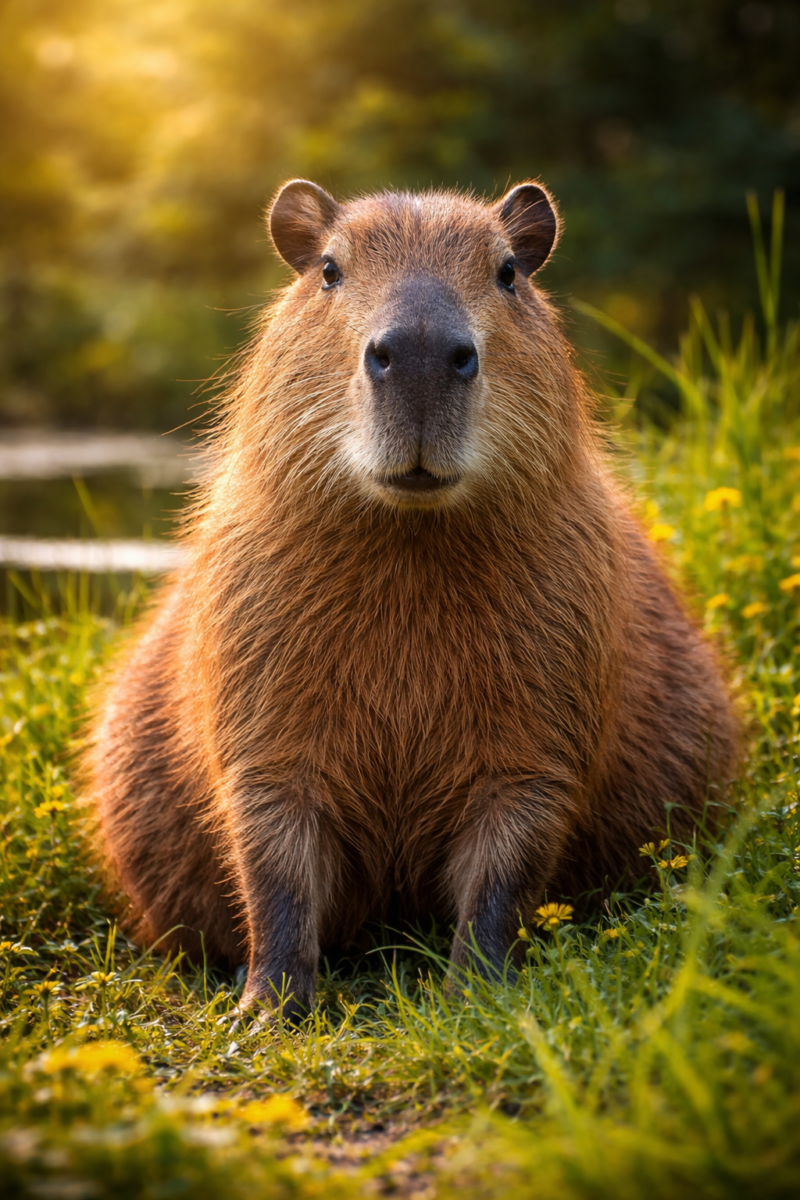
Introduction
The capybara, often hailed as the "world's largest rodent" and an internet sensation for its remarkably calm demeanor, is far more than just a viral meme. This semi-aquatic giant captures hearts with its unique appearance and surprising interactions with other species. Yet, beneath its seemingly placid exterior lies a complex biology, intricate social structure, and a vital role in its ecosystem.
While many people know the capybara as a cute and laid-back animal, there is so much more to discover about it. From its habitat to its social bonds, and from its remarkable physical adaptations to its behavior in the wild, the capybara is an extraordinary creature that plays a key role in its environment. In this comprehensive guide, we’ll uncover the scientific truths, dispel common myths, and explore the fascinating life of the capybara. Along the way, we’ll provide you with verifiable facts, stunning insights, and a deeper appreciation for this remarkable animal.
What Exactly is a Capybara? The World's Largest Rodent Revealed
Quick Facts Table
|
Attribute |
Detail |
|
Scientific Name |
Hydrochoerus hydrochaeris |
|
Family |
Caviidae (same family as guinea pigs) |
|
Type |
Mammal, Rodent |
|
Average Weight |
35-66 kg (77-146 lbs) |
|
Average Length |
106-134 cm (3.5-4.4 ft) |
|
Lifespan (Wild) |
8-10 years |
|
Lifespan (Captivity) |
10-12 years |
|
Diet |
Herbivore (primarily grasses, aquatic plants) |
|
Habitat |
Wetlands, savannas, dense forests near water in South America |
|
Social Structure |
Highly social, living in groups |
|
Conservation Status |
Least Concern (IUCN Red List) |
Physical Characteristics and Identification
Size and Build
The capybara is a strikingly large rodent, with a robust, barrel-shaped body that sets it apart from most other rodents. Weighing between 35 to 66 kg (77-146 lbs) and measuring 106 to 134 cm (3.5-4.4 ft) in length, it is truly a mammoth by rodent standards. Its body is perfectly adapted to its semi-aquatic lifestyle, with short limbs that support its strong, heavy frame. These physical attributes allow the capybara to navigate both land and water with ease, which is essential for its survival in its natural habitats.
For comparison, the capybara is far larger than many other rodents. While a typical guinea pig weighs just about 1 kg (2.2 lbs), the capybara dwarfs it in both size and weight, highlighting the incredible scale of this giant rodent.
Distinctive Coat
The capybara’s coat is an essential adaptation for life near water. Its fur is coarse, sparse, and ranges in color from reddish-brown to grayish, which helps it blend into its environment. This fur is not just for warmth; it's an evolutionary feature designed for quick drying. Given the capybara's frequent swims, having a coat that dries fast allows it to avoid staying damp and cold for long periods, which could be detrimental in its humid, wetland environment.
Unique Facial Features
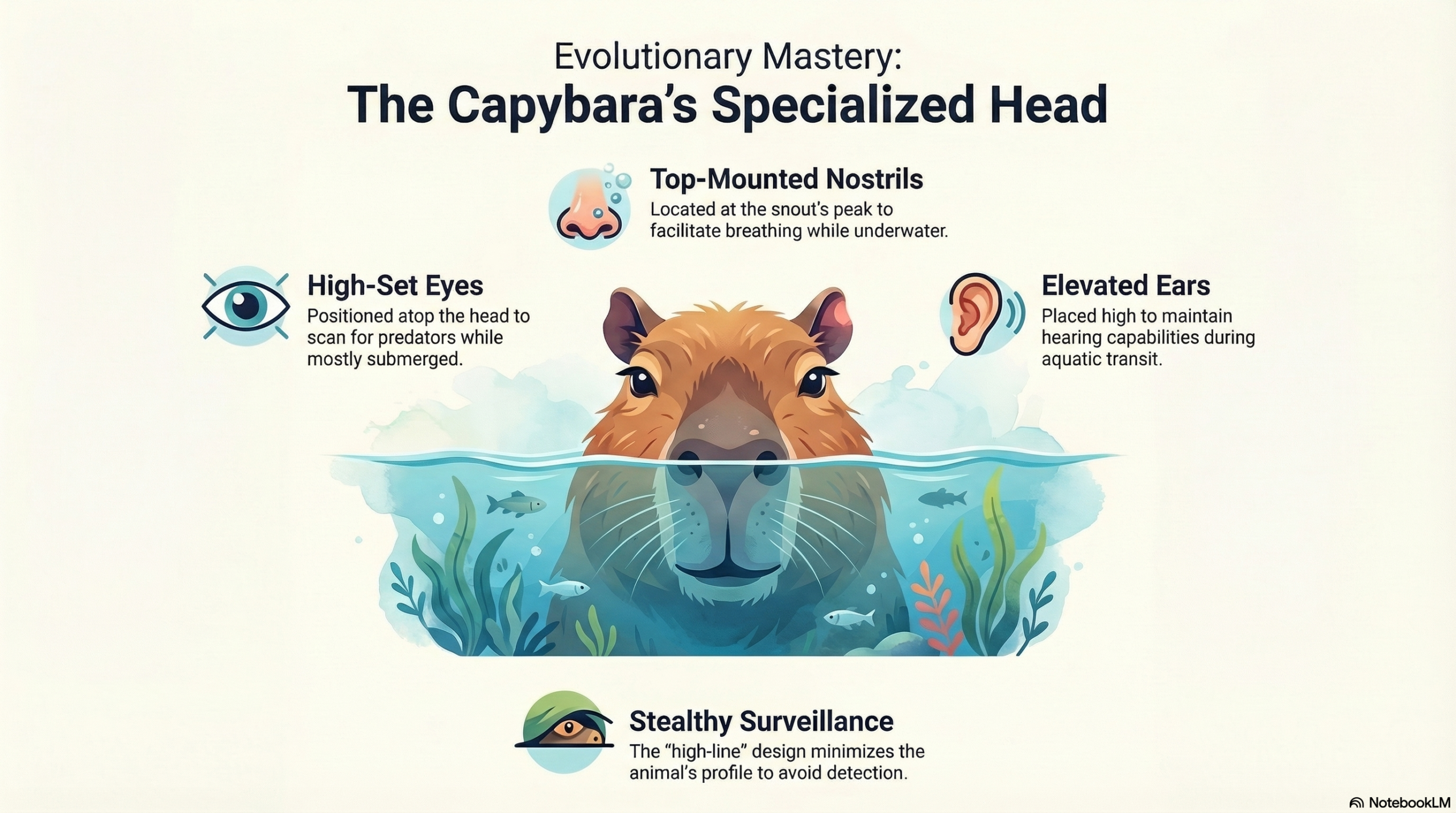
The capybara’s face is as unique as its body. The high-set eyes, ears, and nostrils are a direct adaptation to its aquatic lifestyle, allowing it to see, hear, and breathe while submerged in water. This positioning gives the capybara an excellent field of vision above the water’s surface, while the rest of its body stays below. Its large, blunt snout is another distinctive feature, perfectly suited for grazing on tough vegetation such as grasses and aquatic plants.
[Visual Suggestion: A close-up of a capybara's head, highlighting its high-set eyes, ears, and nostrils.]
Dentition
As with all rodents, the capybara has prominent, ever-growing incisors that continuously grow throughout its life. These teeth are essential for cutting through the tough plant material that makes up most of its diet. The capybara also has molars designed for grinding vegetation, making it well-equipped to process its primarily herbivorous diet of grasses and aquatic plants.
Feet and Locomotion
The capybara’s feet are another specialized adaptation. Its partially webbed feet and short, strong claws are ideal for both swimming and walking on land. The webbing between its toes aids in efficient swimming, while its sturdy claws help it navigate the terrain of wetlands and savannas. These adaptations make it a highly versatile animal, able to move smoothly between water and land without difficulty.
Where Do Capybaras Call Home? Habitat and Distribution
Capybaras are true natives of South America, and their distribution across the continent is both wide and closely tied to water-rich environments. These semi‑aquatic herbivores thrive in landscapes where water and vegetation meet, weaving their lives around rivers, marshes, and flooded grasslands.
Geographic Range Across South America
Capybaras are found throughout nearly all South American countries east of the Andes, making them one of the most widely distributed large mammals on the continent. Their range stretches from tropical lowlands near the Amazon Basin down toward northern Argentina and Uruguay, covering countries such as:
- Brazil
- Venezuela
- Colombia
- Peru
- Bolivia
- Paraguay
- Uruguay
- Argentina
- Guyanas (Guyana, Suriname, French Guiana)
This expansive range reflects their adaptability within suitable watery habitats, though they’re rarely found far from water sources and are absent from extremely arid regions like Chile’s interior.
Preferred Habitats: The Importance of Water
Capybaras are semi-aquatic specialists—water isn’t just part of their habitat, it defines it. Their bodies, behavior, and daily routines are shaped around this need:
- Wetland Dependence
These rodents are found almost exclusively in environments near permanent water bodies such as:
- Rivers and streams
- Lakes and ponds
- Swamps and marshes
- Flooded savannas and estuaries
Water provides multiple survival advantages: a place to cool off, evade predators, and access abundant aquatic vegetation—an essential food source. Their remarkable swimming ability (they can stay submerged for several minutes) and high‑set eyes, ears, and nostrils help them make the most of these watery environments.
- Associated Landscapes
While water is central, capybaras also occupy adjacent terrestrial landscapes, including:
- Savannas and grasslands
- Dense forests near water
- Flooded meadows and wet lowlands
These areas provide rich grazing grounds, shelter from heat and predators, and safe resting spots when not submerged.
Water is so critical that in dry seasons, capybaras often aggregate around shrinking ponds and rivers, increasing group sizes and influencing their movement patterns.
Capybara’s Role as an Ecosystem Engineer
Capybaras do more than just live in wetlands—they shape them in meaningful ways:
- Grazing Patterns
By feeding intensively on grasses and aquatic plants, capybaras help maintain vegetation balance. Their grazing prevents certain fast‑growing species from dominating, encouraging a mix of plant life that supports diverse wildlife. - Path Creation
As they move through dense vegetation and wetlands, capybaras carve paths and channels that are subsequently used by other animals. These natural “trail networks” facilitate movement and access to water and food for a range of species. - Seed Dispersal
Their diet and movements also make capybaras important seed dispersers. Seeds that pass through their digestive systems are deposited elsewhere in nutrient‑rich feces, promoting plant spread and helping maintain plant community dynamics.
All of these contributions make capybaras ecological keystones in many wetland systems. Healthy populations often indicate a well‑functioning wetland ecosystem—rich in biodiversity and critical for everything from water purification to flood mitigation.
Expert Tip: Supporting wetland conservation isn’t just important for capybaras—it protects countless species that depend on these habitats, including fish, birds, amphibians, and other mammals.
What’s on the Menu? Diet and Digestive Adaptations
Capybaras are herbivores, and their diet is mainly composed of grasses and aquatic plants. These semi-aquatic giants are specially adapted to survive and thrive on plant-based food sources found in their wetland habitats.
Primary Food Sources
- Strict Herbivores
Capybaras are strict herbivores, which means they rely entirely on plant matter to fuel their large bodies. Their primary food sources include:
- Grasses: Capybaras are particularly fond of grasses such as paspalum and ryegrass, which are abundant in wetlands and savannas.
- Aquatic Plants: When in or near water, capybaras consume a variety of aquatic plants including water lilies and sedges.
These plants are rich in fiber and provide the bulk of the capybara’s nutritional needs, particularly for their high-energy grazing lifestyle. Their bodies are specially adapted to process tough, fibrous plants, which are a challenge for many other animals to digest.
- Seasonal Variations
During the wet season, capybaras can easily access fresh, tender grasses, which are abundant and nutritious. However, during the dry season, their diet may change significantly due to the scarcity of their preferred plants. During these times, they often have to forage for less palatable vegetation, such as:
- Bark
- Fruits (where available)
- Dried grasses and reeds
In these seasons, capybaras may adjust their grazing patterns to maximize the available food resources and meet their nutritional needs, though the quality of food may not be as high as during wetter months.
- Foraging Behavior
Capybaras typically graze during the early morning and late evening when temperatures are cooler. They are grazing animals that tend to stay close to water sources, which provides them with easy access to food and a quick escape route if predators are near. Grazing near water also means capybaras can stay in their preferred environment and avoid the intense heat of midday.
Unique Digestive System Adaptations
Capybaras have evolved remarkable digestive adaptations to efficiently process their fibrous, tough plant diet. These adaptations are key to their survival, allowing them to extract the maximum nutritional benefit from plants that many other animals would struggle to digest.
- Hindgut Fermenters
Capybaras are hindgut fermenters, meaning they have a large, specialized large intestine and cecum that enable them to ferment and break down cellulose—the tough, fibrous material found in plants. This process occurs after the food has passed through the stomach and into the large intestine, where it undergoes microbial fermentation.
This fermentation process allows capybaras to break down the cellulose into volatile fatty acids and other nutrients, which they can then absorb into their bloodstream. Since plant matter is rich in fiber but poor in digestible energy, fermentation is crucial for capybaras to extract sufficient calories and nutrients from their plant-based diet.
The importance of this adaptation lies in the fact that cellulose is difficult to digest, and without the ability to ferment it, capybaras would not be able to survive on a diet solely of grasses and tough plants. Fermentation in the large intestine allows for maximum nutrient extraction, making it a crucial part of their digestive system.
- Coprophagy
To further extract nutrients from their food, capybaras practice coprophagy—the practice of re-ingesting their own feces. This might seem unappealing to us, but it’s an important evolutionary behavior.
Just like rabbits, capybaras need to reprocess their food to maximize nutrient absorption. When they eat their feces, they are ingesting soft, nutrient-rich pellets that haven’t fully broken down in the gut. This allows the capybara to reabsorb the nutrients that were left behind in the first pass through their digestive system.
By re-consuming fecal matter, capybaras gain an additional opportunity to extract nutrients that are essential for their growth and health, which is critical in a diet based on hard-to-digest plant matter.
The Ultimate Socialites: Capybara Social Structure and Behavior
Capybaras are not just known for their serene demeanor, but also for their incredibly strong social nature. They are, in essence, the ultimate socialites of the animal kingdom. Their intricate social structure and behavior allow them to thrive in the wild, and their cooperative relationships are a vital part of their survival.
Group Dynamics and Social Bonds
- Highly Gregarious
Capybaras are highly social animals, spending the majority of their lives in groups. They form tight-knit family units, with individuals working together for mutual benefit. Their social behavior is key to their survival, as it helps them detect predators, find food, and raise young. - Typical Group Size
The average capybara group consists of 10 to 20 individuals, though temporary herds of 50 to 100+ can form during the dry season when resources become scarce. This larger group size helps to ensure that the capybaras have enough eyes on the lookout for predators and enough individuals to share grazing areas. - Dominance Hierarchy
Capybara groups operate under a dominance hierarchy, with a dominant male at the top. This male is typically the leader of the group, and his role involves protecting the group, leading in foraging, and defending against threats. Females are usually in charge of raising the young, while subordinate males may engage in social play or help protect the group. The juvenile capybaras, like in many social species, are guided and cared for by the whole group, learning through observation and interaction. - Benefits of Group Living
Group living brings several benefits to capybaras, including:
- Enhanced predator detection and defense: With many eyes scanning the environment, the group is better able to detect predators early. Capybaras will often use alarm calls to warn each other, and in the event of a predator approach, they’ll take to the water as a group for safety.
- Improved foraging efficiency: Grazing together allows capybaras to cover more ground in search of food and provides the group with more opportunities to find rich, nutritious plants.
- Communal raising of young: Capybaras are known for their cooperative parenting style. Females often assist one another in raising young, and the communal care ensures that the juveniles are nurtured and protected while learning important skills.
Communication Methods
Capybaras, despite their calm demeanor, have a sophisticated communication system that includes vocalizations, scent marking, and visual cues. These methods are essential for maintaining their social structure and reinforcing their bonds.
- Vocalizations
Capybaras are not silent creatures—they communicate through a variety of vocalizations that serve different social purposes. Some of the most common sounds include:
- Purring: When content or relaxed, capybaras produce a soft purr, much like a domestic cat, signaling calm and comfort.
- Grunts: These are used as social greetings between individuals in the group, reinforcing social bonds.
- Barks: Capybaras emit loud, sharp barks to signal alarm when they detect a predator or potential threat.
- Whistles: These are high-pitched sounds often used to call out to others in the group or communicate from a distance.
Visual Suggestion: A short video clip showcasing capybara vocalizations with on-screen text explaining what each sound means can help readers better understand their communication style.
- Scent Marking
Scent marking plays a significant role in capybara communication. Males possess a specialized gland located on their morrillo (a large, fleshy area on the nose), which they use to mark their territory and signal their presence to other capybaras. Additionally, capybaras also use their anal glands for marking and reinforcing their social relationships. Scent marking helps establish dominance, identify individuals, and define group boundaries.
E-E-A-T Consideration: Scent marking is more than just a way to claim territory—it also plays a vital role in maintaining social cohesion and ensuring reproductive success. The ability to identify individuals and their social status through scent is an important tool for managing the complex dynamics within capybara groups.
- Visual Cues
Capybaras also communicate through body language, especially in their ears and posture:
- Flattened ears typically indicate contentment or relaxation. Capybaras often lie on their sides or huddle together when feeling safe and at ease.
- Alert ears mean the capybara is on high alert, listening for potential danger. This is usually accompanied by a more upright posture.
- Tail and Body Language: Capybaras may also use their body and tail to indicate emotions, such as fear or excitement, though they generally have more subtle movements compared to other animals.
Expert Tip: When observing capybaras, look for their ear movements. Flattened ears usually indicate harmony, while alert ears suggest caution or curiosity. This simple behavior cue can reveal a lot about their mood and social interactions.
Daily Rhythms: A Day in the Life of a Capybara
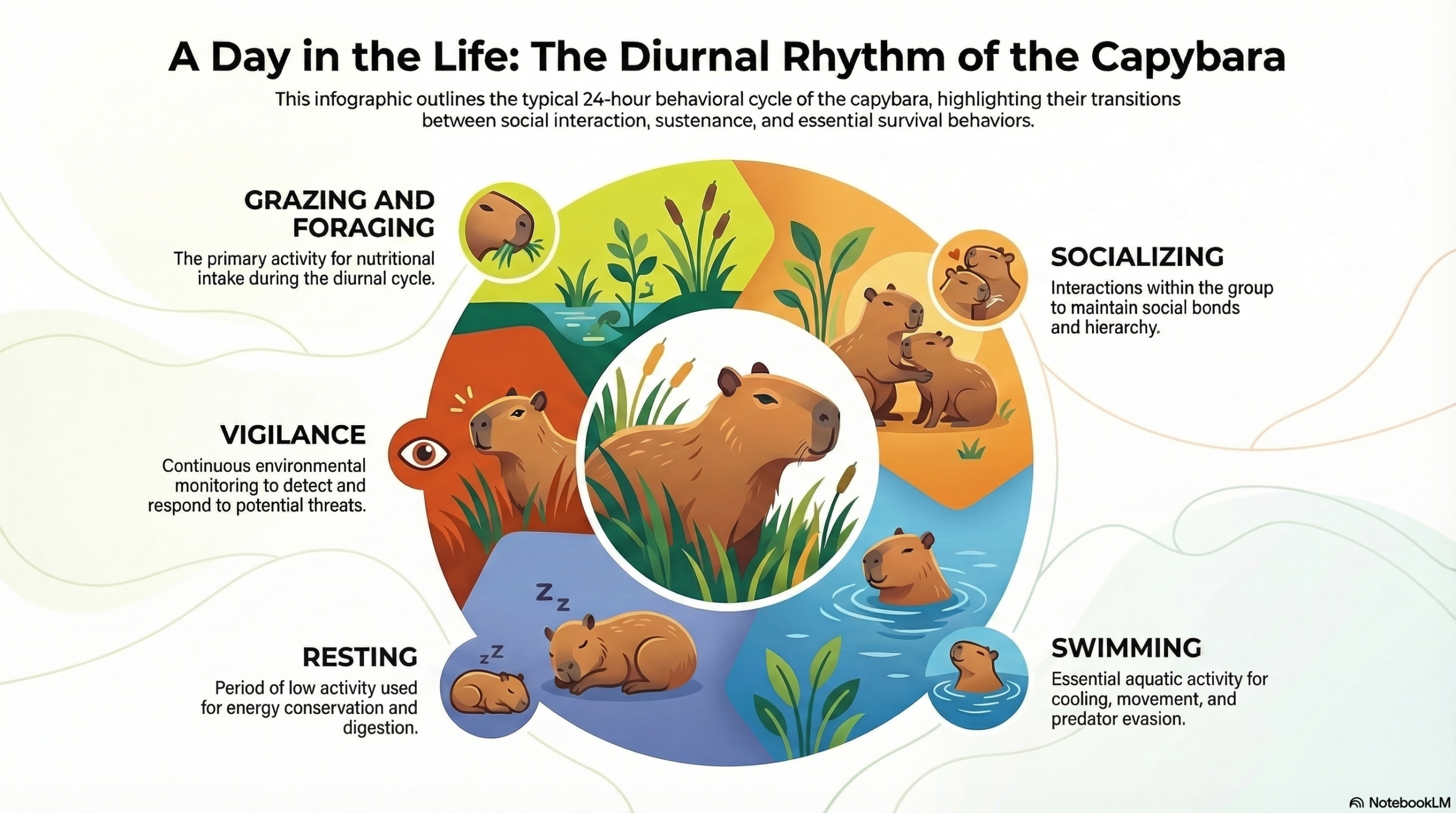
Capybaras lead a rhythmically structured life that revolves around the need for food, social bonding, and protection from the elements. Their activities vary throughout the day, with specific routines and rituals that support their well-being and survival in the wild.
Morning Activities
As dawn breaks, the capybara’s day begins with grazing in open pastures, where they often move away from the water’s edge to feed on fresh grasses. This early activity allows them to enjoy the cool morning air and access tender vegetation before the heat of the day sets in. Social grooming is also an important part of their morning routine, where capybaras engage in mutual grooming to reinforce social bonds. After grooming, capybaras often bask in the early sunlight to warm up their bodies. Sunbathing not only helps them maintain body temperature but also offers an opportunity to relax and strengthen group connections.
Midday Rituals
As the day heats up, capybaras begin to seek refuge from the sun in the water or shaded areas. Their thermoregulation needs are critical, so they frequently take a dip in rivers, lakes, or ponds to cool down and stay hydrated. The capybara’s semi-aquatic nature allows them to retreat into the water, where they can keep cool and avoid overheating.
In addition to cooling off, capybaras often engage in wallowing in mud, a behavior that serves multiple purposes. Mud bathing helps capybaras regulate their temperature, keep parasites at bay, and maintain their skin’s health. This midday rest period allows them to recharge for the more active parts of the day.
Afternoon/Evening
As the temperature drops, capybaras begin their more intensive foraging activities. They head back to grazing areas to consume large amounts of grass and aquatic plants to fuel their bodies. This period of feeding is vital for capybaras, as they need to accumulate enough energy to sustain them through the night.
The evening is also a time for increased social interaction and play. Capybaras are highly social animals, and the cooler hours of the evening offer a chance to engage in playful behavior. They often interact in pairs or groups, chasing one another or simply relaxing together, reinforcing their bonds and enjoying their family structure.
Predator Awareness
Even while grazing or playing, capybaras remain constantly vigilant, as they are prey animals with many predators in their environment, such as jaguars, caimans, and large birds of prey. Predator awareness is especially heightened during feeding times, where capybaras must balance the need to eat with the need to remain alert to any potential threats. Their ability to detect predators early is key to their survival.
This 24-hour cycle reflects the capybara’s finely-tuned routine of grazing, socializing, and staying alert, all supported by their strong need for water and their remarkable social structure. The infographic below provides a visual representation of their daily rhythms, showcasing their typical activities and the important balance they maintain between rest, foraging, and vigilance.
Visual Suggestion: You can view the infographic titled "A Day in the Life of a Capybara" which illustrates the capybara’s activities throughout the day, from morning grazing to evening play, and includes reminders about their constant vigilance against predators.
Masters of the Water: Aquatic Adaptations and Swimming Prowess
Capybaras, with their strong connection to water, have evolved a series of remarkable aquatic adaptations that make them true masters of the wetlands. From their webbed feet to their specialized sensory organs, these adaptations ensure their survival in their watery environments.
Physical Adaptations for a Semi-Aquatic Life
- Webbed Feet
One of the most noticeable features of the capybara is its partially webbed feet. These webbing adaptations are a perfect fit for swimming, giving capybaras powerful and efficient strokes. Their webbed feet act like paddles, helping them glide smoothly through the water, whether they are swimming across a pond or making their way along a riverbank. This adaptation is crucial for capybaras, as it aids in quick escape from predators or allows them to reach feeding grounds in aquatic plants. - High-Set Sensory Organs
Capybaras have their eyes, ears, and nostrils positioned on top of their head, a feature that sets them apart in the animal kingdom. This specialized sensory placement is crucial for survival in their semi-aquatic habitats. It allows them to stay almost entirely submerged in the water while still being able to see, hear, and breathe.
- Seeing: Capybaras can keep most of their body underwater while watching the surroundings above the surface, enabling them to spot predators or other threats at a distance.
- Hearing: Their high-set ears allow them to catch sounds above water while minimizing disturbance from the surrounding environment.
- Breathing: The nostrils placed near the top of their head let them inhale and exhale without fully exposing themselves above the water, which is an essential tactic for predator evasion.
E-E-A-T Consideration: This sensory adaptation enables capybaras to remain alert and aware while submerged, a crucial tactic to avoid danger. By keeping most of their body hidden underwater, they reduce their vulnerability to aerial or land-based predators, like jaguars, caimans, and anacondas, that might otherwise spot them easily.
- Breath-Holding Ability
Capybaras can hold their breath and remain submerged for up to five minutes. This ability is essential not only for evading predators but also for their survival in the wild. When threatened, capybaras can dive into deeper water, hiding beneath the surface until the danger passes. Their ability to remain calm and still underwater adds to their remarkable predator avoidance tactics. - Dense Fur
Although not waterproof, the capybara's fur is dense, which aids in buoyancy and helps them stay afloat in water. This dense fur also provides some protection from the cold and ensures that they don’t become too waterlogged during extended periods in the water. While it doesn’t repel water completely like some fully aquatic animals, the fur's structure is an adaptation that helps them manage their semi-aquatic lifestyle.
Expert Tip: Capybaras are perfectly adapted to their semi-aquatic environment. Each of these physical traits—webbed feet, high-set sensory organs, breath-holding capacity, and dense fur—work together to help them thrive in wetland ecosystems, allowing for survival, predator evasion, and comfort in their watery habitats.
Reliance on Water for Survival
- Predator Escape
Capybaras rely heavily on water to escape terrestrial predators. While they are well-adapted to move swiftly on land, their primary refuge from threats like jaguars, caimans, and anacondas is the water. Once in the water, capybaras can either swim to safety or dive beneath the surface, making it difficult for predators to reach them. This aquatic haven offers them an almost immediate escape route when danger strikes. - Thermoregulation
Given the hot, humid climate of their South American habitats, capybaras often use water as a way to cool down during the scorching midday heat. By submerging themselves in the cool waters of rivers, lakes, and ponds, they can avoid overheating, which is crucial in the often sweltering conditions of their environments. - Access to Food
Water plays a crucial role in their feeding habits as well. Capybaras graze on aquatic vegetation, including water grasses and water lilies, that are abundant in wetland ecosystems. Their aquatic lifestyle ensures that they have constant access to this nutrient-rich food source, which is a significant part of their diet.
Water is not only a sanctuary from predators and the heat but also an essential part of their feeding and social routines. Capybaras’ relationship with water is central to nearly every aspect of their survival.
From Mating to Maturity: Capybara Reproduction and Life Cycle
Capybaras, like many animals, have a fascinating reproductive cycle that is intricately tied to their environment and social structure. From courtship to caring for their young, these animals exhibit behaviors and adaptations that help ensure the survival of their species in predator-rich environments.
Mating Rituals and Seasons
- Courtship in Water
Capybaras' courtship and mating typically take place in water, where the animals feel most comfortable. Males will approach females, often displaying a variety of behavioral cues such as chasing, nuzzling, and vocalizations, to signal their interest and readiness to mate. The water offers a protective environment for the mating process, as it provides easy escape routes from potential predators. - Breeding Season
Capybaras can breed year-round, but the breeding season often peaks during the rainy season, when food is abundant and the environmental conditions are optimal. The wet season ensures that there is ample vegetation for feeding, providing the mothers with the nutritional resources they need to support the growing fetuses. While breeding can happen at any time, the rainy season is when the conditions are most favorable for the young to be born.
Gestation and Birth
- Gestation Period
The gestation period for capybaras lasts approximately 150 days, or about five months. During this time, the female will seek out a safe and secluded spot near water to carry her young, ensuring she has easy access to both food and protection from predators. - Typical Litter Size
Capybara litters typically consist of 2 to 8 pups, with an average of 3 to 4 pups per birth. The size of the litter can vary depending on environmental conditions, with larger litters often born during times of abundant food and resources. - Precocial Young
One of the most remarkable features of capybara reproduction is that their young are precocial, meaning they are born well-developed and able to adapt to life quickly. At birth, capybara pups are already covered in fur and have their eyes open, allowing them to start grazing shortly after birth. This rapid development provides them with a significant evolutionary advantage in a predator-rich environment. By being able to move and feed shortly after birth, pups have a better chance of surviving in the wild, where predators like jaguars and caimans are a constant threat.
E-E-A-T Consideration: The precocial nature of capybara pups allows them to be more self-sufficient in their early days, which is vital in a world full of potential predators. The ability to graze soon after birth helps them gain strength and better evade predators, which would be much more difficult if they were born helpless and dependent.
Parental Care and Development
- Communal Care
Capybaras exhibit a strong communal care system where females often share the duties of nursing and looking after the young. This cooperative behavior ensures that the young are well-protected and have access to the nourishment they need for healthy growth. Additionally, the entire group contributes to protecting the pups, with the adults taking turns to remain vigilant against predators. This shared responsibility enhances the chances of survival for the young capybaras. - Rapid Growth
Capybara pups experience rapid growth during their first months, quickly gaining the strength and size necessary to keep up with the group. Within just a few weeks, they are able to graze alongside the adults, though they will continue to nurse for several months. They reach sexual maturity at around 18 months, at which point they are fully integrated into the social structure of the group. - Lifespan
Capybaras can live for an average of 8 to 10 years in the wild and 10 to 12 years in captivity. In both environments, their lifespan is influenced by factors such as food availability, predator pressure, and social bonds within the group. In the wild, capybaras face more immediate risks from predators, while in captivity, their lifespan is often longer due to better protection and consistent food sources.
The 'Friendliest' Rodent? Interactions with Other Animals
Capybaras have earned a reputation as the "Zen masters" of the animal kingdom, known for their remarkably calm demeanor and their ability to tolerate and even invite interactions with other species. This laid-back attitude has made them popular across the globe, especially in viral videos where capybaras are seen calmly sharing space with various animals, from birds to monkeys and even caimans. But what’s behind this unusual behavior? Let’s explore the biological and ecological factors that contribute to these serene interactions.
Unusually Calm Demeanor: The 'Zen Master' of the Animal Kingdom
- Unique Angle: Explore the Biological and Behavioral Reasons Behind Their Viral Interactions
Capybaras’ calm demeanor isn’t just a cute quirk—it’s deeply rooted in their biology and behavior. As a social species, capybaras have evolved to maintain peaceful relationships with others in their group and the animals around them. This non-aggressive nature is likely a result of their need for cooperation and group cohesion, which is essential for their survival in predator-rich environments. Their ability to tolerate other species is a survival mechanism, ensuring that their energy is spent on immediate needs, such as feeding and staying vigilant, rather than on fighting or defending territory. - Observed Interactions
Capybaras are often seen allowing birds, monkeys, and even caimans to rest on their backs or near them without showing signs of aggression. These inter-species interactions are part of what makes capybaras so fascinating. Some of the most common sightings include:
- Birds like cattle egrets perched on a capybara’s back, picking off ticks and other parasites.
- Monkeys can be seen grooming or sitting on capybaras, sometimes even using them as mobile resting spots.
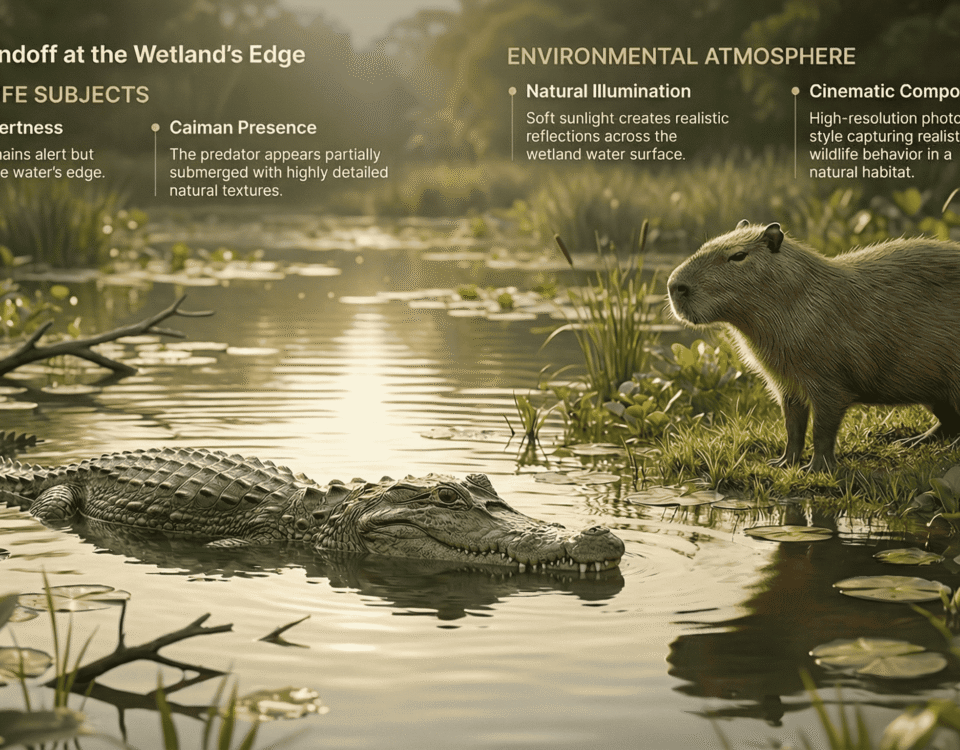
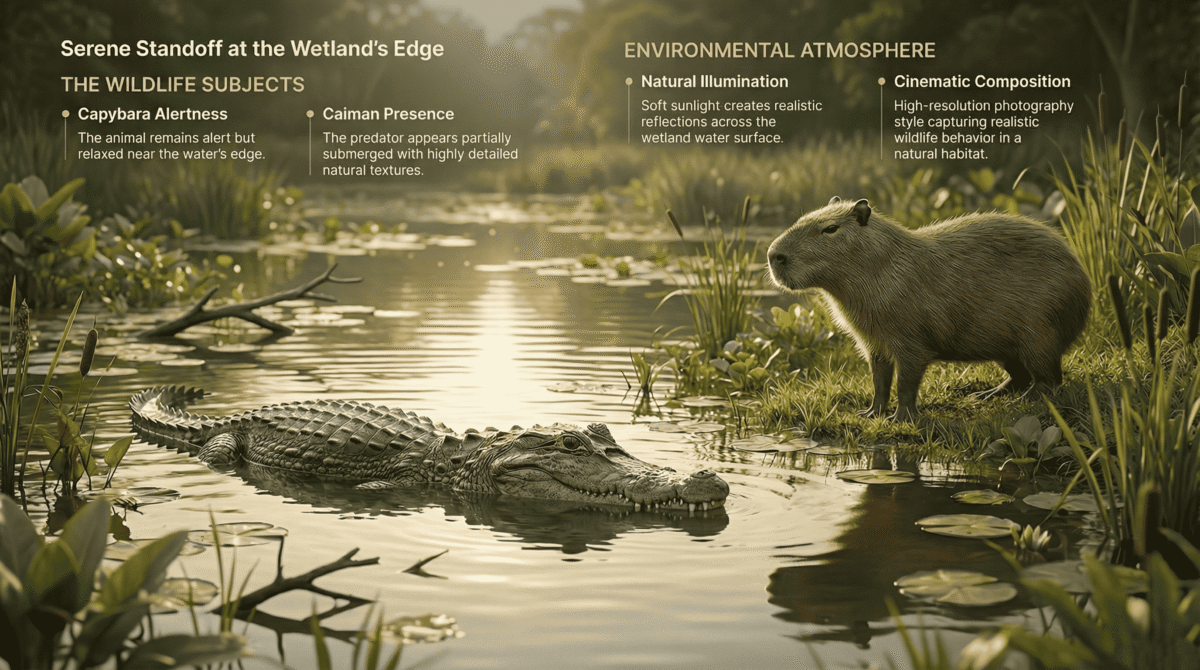
- Caimans have been observed resting calmly beside or even on capybaras, with little apparent conflict. While this is a rare occurrence, it highlights the capybara’s non-aggressive nature even in the face of potential predators.
Visual Suggestion: A charming image of a capybara with multiple birds (e.g., cattle egrets) perched on its back, showcasing its tolerance and calm demeanor.
- Scientific Theories
Several scientific theories can help explain why capybaras are so tolerant of other animals:
- Lack of Perceived Threat: Capybaras generally view smaller animals as non-threatening. Their gentle nature means they don’t feel the need to protect themselves aggressively, even when approached by animals that might otherwise be considered "pests" or "predators."
- Mutualistic Relationships: Many of the interactions between capybaras and other animals are mutualistic, benefiting both parties. For example, birds such as the cattle egret eat ticks, parasites, and other insects off the capybara’s fur, benefiting from an easy meal while helping the capybara remain healthy.
- Non-Aggressive, Social Nature: Capybaras are naturally social creatures that live in group settings, where cooperation and tolerance are key. This naturally extends to their interactions with other species, making them peaceful participants in a larger web of ecological relationships.
Ecological Significance of Their Interactions
Capybaras aren’t just passive recipients of other species’ company; their interactions also play an important role in the broader ecosystem.
- Symbiotic Relationships
One of the best-known symbiotic relationships capybaras have is with birds, like the Wattled Jacanas and cattle egrets, that help keep them free of parasites. These birds perch on the capybara’s back and eat ticks, larvae, and other pests. This is a classic example of mutualism, where both species benefit:
- Birds get a steady food source.
- Capybaras benefit from pest removal, which helps keep them healthier and more comfortable.
This relationship benefits capybaras by reducing the number of parasites they carry, which is vital for their health, as parasites can weaken the immune system and cause illness.
- Broader Ecosystem Role
While capybaras are best known for their social and peaceful nature, they also serve as an important food source in their ecosystem. As prey animals, capybaras are hunted by top predators like jaguars, caimans, and anacondas, forming a key link in the food chain. Their relatively large size makes them a highly valuable meal for predators, and their constant vigilance ensures they are an integral part of the predator-prey dynamic.
Expert Tip: Capybaras’ calm behavior and ecological significance highlight their position as crucial prey for top predators. Their role in the food chain reinforces the interconnectedness of ecosystems, where each species, whether predator or prey, plays a part in maintaining balance.
Capybara Myths vs. Facts: Setting the Record Straight
Capybaras have become internet sensations, celebrated for their calm demeanor and peaceful interactions with other animals. However, as their popularity has grown, so have the myths surrounding them. In this section, we’ll address some of the most common misconceptions about capybaras, providing clarity and fostering a deeper understanding of these unique creatures.
Myth 1: Capybaras Make Easy, Low-Maintenance Pets
- Fact: While capybaras may appear easy-going, they are complex wild animals with very demanding needs. These animals require extensive care that most people are not prepared for. They are not domestic pets in the traditional sense and require specialized environments to thrive.
- Space Needs: Capybaras are large, semi-aquatic animals that need plenty of space to roam, as well as access to a large water source for swimming and cooling off. Keeping them in confined spaces is detrimental to their physical and mental well-being.
- Diet and Health Care: Their diet consists primarily of grasses and aquatic plants, and they require a specific diet to maintain optimal health. Additionally, capybaras need access to specialized veterinary care—something many pet owners may not be able to provide.
- Legal Considerations: Many regions have legal restrictions on owning capybaras as pets. Permits and licenses may be required, and in some places, they are prohibited as household pets altogether due to their wild nature and the potential risks associated with their care.
Expert Tip: If you're considering a capybara as a pet, remember that they have unique needs and require an environment that mimics their natural habitat. Ethical pet ownership means considering whether you can provide them with the space, diet, and veterinary care they deserve.
Myth 2: Capybaras Are Just Giant Guinea Pigs
- Fact: Although capybaras and guinea pigs both belong to the Caviidae family, they are distinct species with vastly different behaviors, sizes, and environmental requirements.
- Size and Behavior: Capybaras are much larger than guinea pigs, weighing between 35-66 kg (77-146 lbs) and measuring up to 4 feet long, while guinea pigs typically weigh about 1 kg (2.2 lbs). This size difference means that capybaras have different space and social needs compared to their smaller cousins.
- Social Structure: Capybaras are highly social animals that live in large groups and require constant interaction with others of their kind to maintain emotional well-being. Guinea pigs, while also social, do not exhibit the same complex social structures or group behaviors.
- Adaptations: Capybaras are semi-aquatic and have specialized adaptations such as webbed feet and high-set sensory organs to live in wetland environments. Guinea pigs, on the other hand, are terrestrial and lack these unique adaptations, making capybaras much more reliant on water.
Myth 3: They Are Always Friendly and Harmless to Humans
- Fact: While capybaras are generally docile and non-aggressive, they are still wild animals. As with any wild animal, their behavior can be unpredictable, and they can bite if threatened or cornered.
- Wild Instincts: Capybaras have natural instincts to protect themselves and their territory. If they feel threatened or stressed, especially by a human approaching too closely, they may bite in self-defense.
- Human Interaction: Despite their social nature, capybaras do not always tolerate close interaction with humans, particularly in the wild. While they may appear calm, they can become startled or uncomfortable, leading to defensive behavior.
Expert Tip: If you encounter a capybara in the wild or in captivity, always observe respectfully from a distance. Never attempt to feed, approach, or handle them. Respect their space and understand that their calm demeanor does not guarantee they will tolerate close contact.
E-E-A-T Consideration: It's important to distinguish between the tolerance capybaras show to other species and their behavior toward humans. While capybaras are famously non-aggressive toward animals like birds or monkeys, their interactions with humans should not be oversimplified or anthropomorphized. Their calmness toward other species does not mean they are always friendly to humans, especially in situations that could cause them stress.
Capybara vs. Nutria: A Comparative Look
Capybaras and nutria (also known as coypus) are often confused due to their similar habitats and semi-aquatic lifestyles. However, despite some visual resemblances, these two rodents are quite distinct from one another. This section will help clarify their differences, providing key visual and behavioral distinctions to avoid confusion.
Distinguishing Features: Capybara vs. Nutria (Coypu)
|
Attribute |
Capybara |
Nutria (Coypu) |
|
Size |
Much larger (world’s largest rodent) |
Medium-sized (smaller than capybara) |
|
Tail |
Vestigial, almost no visible tail |
Long, round, scaly tail |
|
Snout |
Broad, blunt snout |
Smaller, more pointed snout |
|
Teeth |
Yellowish-white incisors |
Prominent, bright orange incisors |
|
Ear Placement |
High on head |
Lower on head, often hidden by fur |
|
Fur |
Coarse, sparse, reddish-brown to grayish |
Dense, soft underfur with coarse guard hairs |
|
Feet |
Partially webbed |
Webbed hind feet, unwebbed front feet |
|
Body Shape |
Barrel-shaped, robust |
More rat-like, slender |
Expert Tip: Capybaras and nutria (or coypus) are often misidentified due to their similar semi-aquatic habits and large, brown bodies. It's important to focus on subtle visual distinctions—like tail shape, snout shape, and teeth color—to avoid confusion between these two species.
Why the Confusion?
The confusion between capybaras and nutria arises from several factors:
- Shared Semi-Aquatic Lifestyle
Both capybaras and nutria are semi-aquatic rodents, commonly found in wetlands, rivers, lakes, and marshes. Their similar habitats and reliance on water for foraging, cooling down, and escaping predators contribute to the frequent misidentification. - General Appearance
Both animals are large and brown, with similar body shapes and often found in the same environments. Their semi-aquatic nature makes them seem alike, especially when viewed from a distance. - Geographical Overlap
While capybaras are native to South America, nutria have been introduced to other parts of the world. In South America, both species can coexist in overlapping regions, increasing the likelihood of confusion.
Capybaras in Captivity & as Pets: Ethics and Responsibilities
Capybaras are remarkable animals that thrive in social and aquatic environments. While they are often seen in zoos, sanctuaries, and occasionally as pets, it's important to understand the complexities involved in their care. Keeping capybaras—whether in a sanctuary or as a pet—requires careful consideration of their needs, ethics, and responsibilities. This section will delve into the role of capybaras in captivity and the reality of owning them as pets.
Role in Zoos and Wildlife Sanctuaries
- Conservation and Education
Accredited zoos and wildlife sanctuaries play a significant role in the preservation of capybaras, particularly those that face threats in the wild. These institutions contribute to species preservation through breeding programs, support scientific research, and raise public awareness about the importance of capybaras in their natural ecosystems.
- Enrichment and Habitat Mimicry: Zoos and sanctuaries work hard to create environments that mimic the capybara’s natural habitat. This includes providing ample water sources for swimming and grazing areas similar to those found in their wild wetlands.
- Educational Opportunities: These institutions offer an invaluable opportunity for the public to learn directly from animal care experts, observe capybaras in a controlled setting, and understand the species' behavioral and social needs.
Expert Tip: When visiting zoos with capybara exhibits, engage with the zookeepers and animal care staff to learn more about the species. Observing capybaras in a safe, well-maintained environment will provide insight into their natural behaviors and their needs for social interaction and space.
The Reality of Capybara Pet Ownership
While capybaras may seem like the perfect pet due to their calm demeanor, there are serious challenges and ethical considerations to owning them as pets. Here’s what you need to know:
- Legal Restrictions
The legal status of owning a capybara varies widely by region. In some places, they are considered exotic pets, and you may be required to obtain special permits or licenses to keep them. Other areas have outright bans on owning capybaras, due to their wild nature and the specialized care they require. It's crucial to research the legal requirements in your area before considering capybara ownership. - Extensive Space Requirements
Capybaras are large animals that require ample space to move freely. They need a large outdoor enclosure with both grazing space and a substantial water source like a pond or pool. Without the ability to swim and graze over large areas, capybaras can become stressed, which may lead to health issues or behavioral problems. Keeping a capybara in a small, confined space—such as an apartment—is not suitable for the species. - Specialized Diet and Veterinary Care
Capybaras are herbivores that require a specialized diet consisting mainly of grasses and aquatic plants. Their diet needs to be well-balanced to avoid health issues, such as obesity or malnutrition. Moreover, they need access to veterinarians who are experienced in caring for exotic species, as their medical needs are different from those of traditional pets. - Social Needs
Capybaras are highly social animals that naturally live in large groups. Keeping a single capybara can cause stress, leading to behavioral issues such as aggression or depression. It’s recommended to have at least two capybaras to meet their social needs and ensure they thrive. A single capybara, without companions, may exhibit signs of loneliness and anxiety. - Potential Challenges
Owning a capybara also comes with some practical challenges:
- Destructive Chewing: Capybaras have a natural instinct to chew on objects, which can lead to damage in your home or property. They need access to appropriate chew toys and structures to prevent destruction.
- Difficulty with House-Training: Unlike domesticated pets, capybaras may be difficult to house-train due to their wild instincts and natural behaviors. This can lead to litter box issues or accidents around the home.
- Strong Territorial Instincts: Capybaras can become territorial, especially if they are kept in small spaces or if other animals are introduced to their environment.
Expert Tip: Owning a capybara requires commitment, space, and knowledge. It’s crucial to provide an environment that meets their social and environmental needs, as well as ensure they have access to proper veterinary care.
- Ethical Concerns
There is a growing debate around the ethics of keeping capybaras as pets. While they may appear docile and friendly, they are still wild animals with complex needs that can be difficult to meet in a home setting. Many argue that capybaras should be allowed to live in their natural environments, where they can socialize, graze, and swim freely. Keeping them as pets can lead to health problems for the animals and ethical dilemmas for owners who may struggle to meet their needs.
Conservation Status: Beyond 'Least Concern'
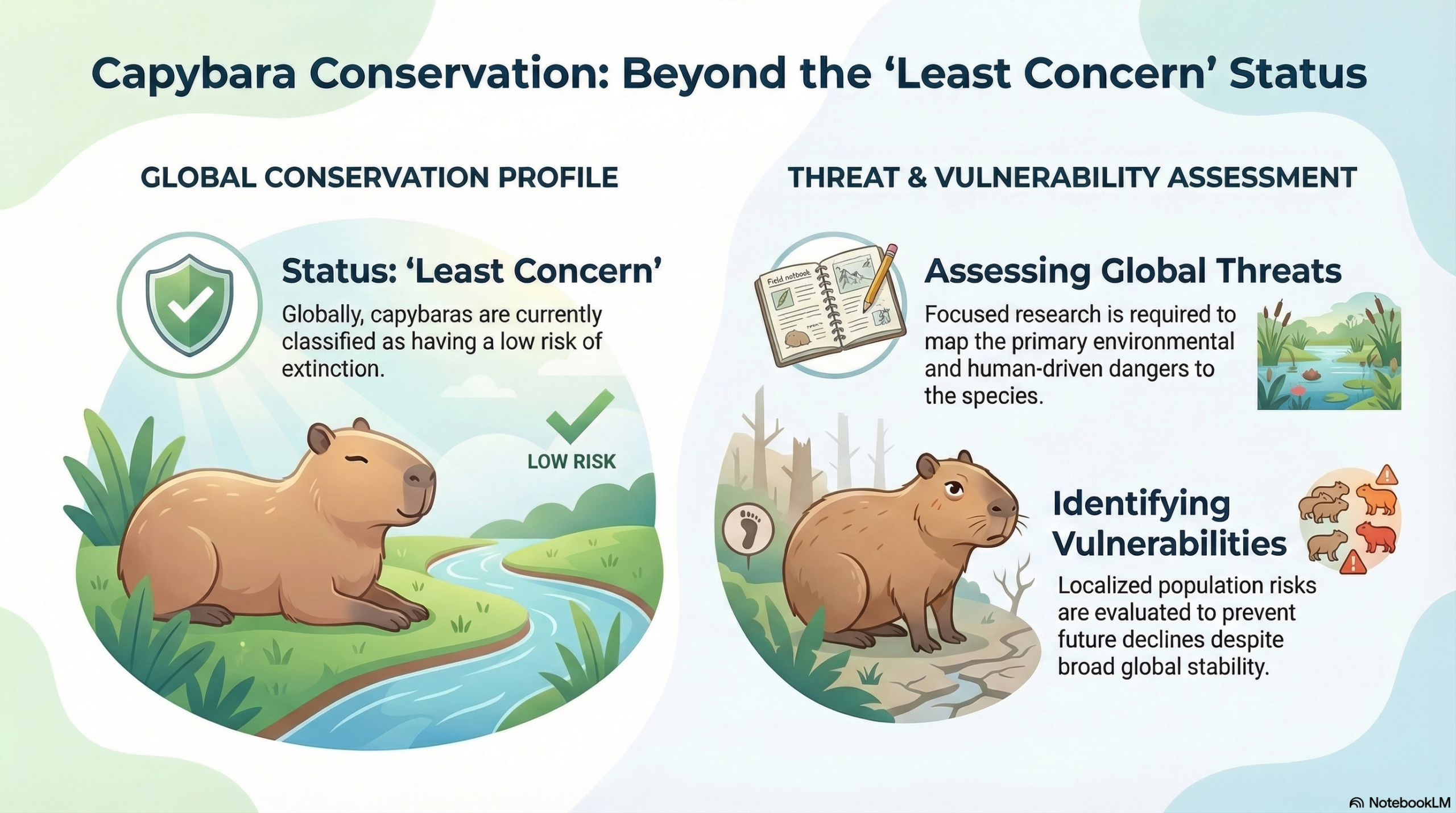
Capybaras are often classified as “Least Concern” by the IUCN Red List of Threatened Species, which means that, on a global scale, their populations are not facing immediate risk of extinction. However, this classification does not tell the whole story—there are specific localized threats that can still have a significant impact on capybara populations, particularly in certain regions.
Current IUCN Status and What It Means
- "Least Concern":
The IUCN Red List designates capybaras as "Least Concern", indicating that they are widespread and abundant across most of their range in South America. This means that, overall, the species is not at risk of extinction globally, and populations appear to be stable in many areas.
- Global Distribution: Capybaras are found throughout South America, including in countries like Brazil, Venezuela, and Argentina. Their presence in diverse habitats, including wetlands, savannas, and dense forests, helps maintain their large, healthy populations.
E-E-A-T Consideration: The information is sourced directly from the IUCN Red List, a respected and authoritative source that tracks the status of species worldwide. This ensures that the data is credible and up to date regarding the capybara's conservation status. You can always refer to the IUCN Red List for the most accurate and detailed information about species' conservation statuses.
Localized Threats: The Hidden Dangers
While capybaras are not globally threatened, several localized threats are still impacting their populations, and these issues can vary depending on the region. It is crucial to consider these factors when assessing their long-term survival.
- Habitat Loss and Fragmentation
The conversion of wetlands into agricultural land, urban areas, and ranches is one of the primary threats to capybara populations. Wetlands are their natural habitat, providing food sources, shelter, and access to water. However, as human activity expands, these critical habitats are being lost or fragmented, leading to the disruption of capybara movement patterns and breeding grounds.
- Impact on Connectivity: The fragmentation of wetlands and forests reduces habitat connectivity between populations, making it more difficult for capybaras to interact, migrate, and find mates. This isolation can result in genetic bottlenecks and weakened populations over time.
- Hunting
In some regions, hunting remains a threat to capybaras. They are hunted for their meat and hide, particularly in rural areas where they are considered a food source. While not a widespread issue in every country, hunting pressures in certain regions can reduce local populations, especially if illegal hunting occurs at unsustainable levels. - Pollution
Water contamination is another localized threat that impacts capybaras' health and habitat quality. Agricultural runoff, including pesticides and fertilizers, can pollute rivers and lakes, contaminating the water sources capybaras depend on. Additionally, industrial waste can compromise the cleanliness and safety of the water they inhabit, impacting both their health and the availability of food.
- Impact of Pollution: These pollutants can have direct effects on the capybara’s health, causing diseases, reduced fertility, and other physiological issues, while also making the environment unsuitable for feeding and living.
- Road Accidents
As human infrastructure, such as roads, railways, and urban areas, expands into capybara habitats, the risk of road accidents increases. Capybaras, like many wildlife species, are often forced to cross roads when traveling between fragmented habitats or in search of food and water.
- Increased Risk: Capybaras are slow-moving and spend much of their time near water, making them vulnerable to vehicle collisions. This threat is particularly pronounced in areas where wetlands and roads intersect, posing a danger to both capybaras and other wildlife.
Fascinating Facts & Deep Dives (Beyond the Basics)
Capybaras are full of surprises. While they may seem like simple, laid-back creatures, their behaviors, adaptations, and social interactions are both fascinating and complex. In this section, we’ll explore some of the lesser-known aspects of capybara life, revealing their unique abilities and surprising functions in their ecosystems.
Why Do They Wallow in Mud?
Capybaras are often seen wallowing in mud, especially during the hotter parts of the day. But this behavior is far more than just a messy indulgence—it serves several important purposes for their survival.
- Thermoregulation:
In hot, humid environments, capybaras use mud to cool down and regulate their body temperature. While their dense fur provides some buoyancy in water, it can also trap heat. By covering themselves in mud, capybaras create a cooling layer that helps them stay comfortable during sweltering days. The mud keeps them insulated from the intense heat of the sun, providing a natural form of heat protection. - Sun Protection:
In addition to cooling them down, mud acts as a natural sunscreen. The mud acts as a barrier, helping to shield their skin from the harsh sun, preventing sunburn or overheating, which can be a concern in their typically hot, tropical habitats. This behavior also helps protect their skin from dryness and chapping. - Parasite Removal:
Capybaras also wallow in mud to help dislodge ectoparasites such as ticks and fleas. The mud's gritty texture can loosen and remove parasites, reducing the burden on their immune system. This is especially important since they are often hosts for ticks, which can carry diseases and weaken their health.
Vocalizations and What They Mean
Capybaras are communicative creatures and use a variety of vocalizations to express themselves. These sounds play a crucial role in their social interactions, helping them communicate within their groups and with other animals.
- Alarm Barks:
When capybaras detect a potential threat, they will emit loud, sharp barks to alert others in their group. This serves as a warning signal, prompting the group to take action—usually by diving into water or seeking shelter. - Social Grunts:
Capybaras also make grunting sounds, which are used in social interactions. These low-pitched grunts are commonly heard during social grooming sessions or when capybaras are establishing communication within the group. - Purrs of Contentment:
One of the most endearing vocalizations is the purr, which is a sign of contentment and relaxation. Capybaras will often purr when they are enjoying the company of others, especially during grooming sessions or when resting peacefully in their social group.
E-E-A-T Consideration: Each of these sounds serves a functional purpose in capybara social structures. The alarm barks help to protect the group, the grunts facilitate social bonding, and the purrs reinforce relationships within the group. These vocalizations play an essential role in maintaining the social cohesion of the capybara community.
Capybara Language: Scent Marking and Social Cues
Capybaras rely heavily on scent marking and visual cues to communicate within their group and establish dominance, territorial boundaries, and social roles.
- Morrillo Gland:
One of the most unique aspects of capybara scent marking is the morrillo gland found on the male’s snout. This specialized scent gland is used during dominance displays and mating rituals. Males often rub their morrillo on objects or other capybaras to mark their territory and signal their presence to other males and females. This scent is an important part of their social interactions and helps define their status within the group. - Anal Glands:
Both male and female capybaras use their anal glands for territorial marking. These glands release a strong-smelling substance that is used to mark their territory or communicate their identity to others. The scent is often left on objects, the ground, or even the water as capybaras travel through their habitat. These markings help capybaras navigate their territory and avoid conflicts with other individuals.
Expert Tip: When observing capybaras, pay attention to their body posture, ear movements, and scent-marking behaviors. These cues provide valuable insight into their dominance structure, mating behaviors, and territorial boundaries within the group.
Capybaras and Ectoparasites
Capybaras are often hosts to various ectoparasites, such as ticks, which are a common problem in wetland habitats. However, their role in the ecosystem goes beyond just being hosts for these parasites.
- Tick Hosts:
Capybaras are frequent hosts for ticks, which are known to attach to their fur and feed on their blood. While ticks are generally harmless to capybaras, they can cause discomfort and transmit diseases. Capybaras’ role as tick hosts makes them important players in the ecosystem, as they provide a food source for other animals that help control the tick population. - Mutualistic Relationships:
Capybaras have a mutualistic relationship with birds, such as cattle egrets, that help remove parasites from their bodies. These birds feed on the ticks and other ectoparasites that infest capybaras, benefiting from the meal while helping capybaras maintain their health by reducing the parasite load.
E-E-A-T Consideration: These mutualistic relationships emphasize the interconnectedness of capybaras with other species in their environment. Their role as hosts for ticks and their relationship with birds showcases how capybaras contribute to the health and balance of their ecosystem.
Conclusion: The Endearing Enigma of the Capybara
The capybara truly stands out as one of nature's most remarkable and endearing creatures. From its status as the world's largest rodent to its sophisticated social structures and unparalleled aquatic adaptations, this “Zen Master” of the animal kingdom continually fascinates. Beyond the viral memes and playful videos, we discover a species that plays a critical role in its ecosystem, faces localized threats, and deserves our deeper understanding and respect.
Capybaras are not only captivating for their laid-back nature and ability to coexist peacefully with other species, but also for their importance in the broader environmental context. Their role in wetland ecosystems, from grazing on vegetation to supporting mutualistic relationships with other animals, is invaluable to maintaining ecological balance. While their global population is "Least Concern", local issues like habitat loss, pollution, and hunting can significantly impact their survival in certain regions.
Key Takeaways
- Capybaras are highly adapted semi-aquatic, social herbivores that rely on their environments for food, water, and social connection.
- Their calm demeanor enables unique interactions with other species, including birds, monkeys, and even predators like caimans.
- While they are "Least Concern" globally, localized threats like habitat destruction, hunting, and pollution pose risks to their populations.
- Responsible interaction and conservation of their wetland habitats are crucial for ensuring the survival and health of capybara populations.
Call to Action
We encourage you to continue exploring the natural world and to support reputable wildlife organizations dedicated to wetland conservation and animal welfare. Understanding the delicate balance of ecosystems and advocating for the preservation of natural habitats ensures that we leave a healthier world for future generations.
When encountering wildlife, remember to observe respectfully from a distance. Always enjoy the beauty of nature without disrupting the animals' natural behaviors or habitats.
Sources
To ensure the accuracy and credibility of the information provided in this article, the following reputable sources have been used:
- IUCN Red List of Threatened Species
- Source for global conservation status, including the Least Concern classification for capybaras.
- Link: IUCN Red List
- WWF (World Wide Fund for Nature)
- Source for conservation information, habitat data, and the ecological role of capybaras.
- Link: WWF Capybara Information
- National Geographic
- Source for detailed capybara behavior, social structures, and ecological importance.
- Link: National Geographic Capybara Facts
- Animalia Bio
- Source for general biological information and species characteristics, including size and habitat preferences.
- Link: Animalia Bio Capybara
- Cokesmith Wildlife
- Source for additional insight into the semi-aquatic lifestyle of capybaras and their interaction with other species.
- Link: Cokesmith Wildlife Capybara
- Encyclopedia Britannica
- Source for taxonomic classification and broader biological insights into the capybara’s role in ecosystems.
- Link: Encyclopedia Britannica - Capybara