
The Enigma of the Albino Capybara: Unveiling Nature’s Rare White Wonders
March 28, 2026
Discover 500+ unique capybara names, tips, and quizzes to match personality, traits, and heritage for your gentle giant companion.
April 4, 2026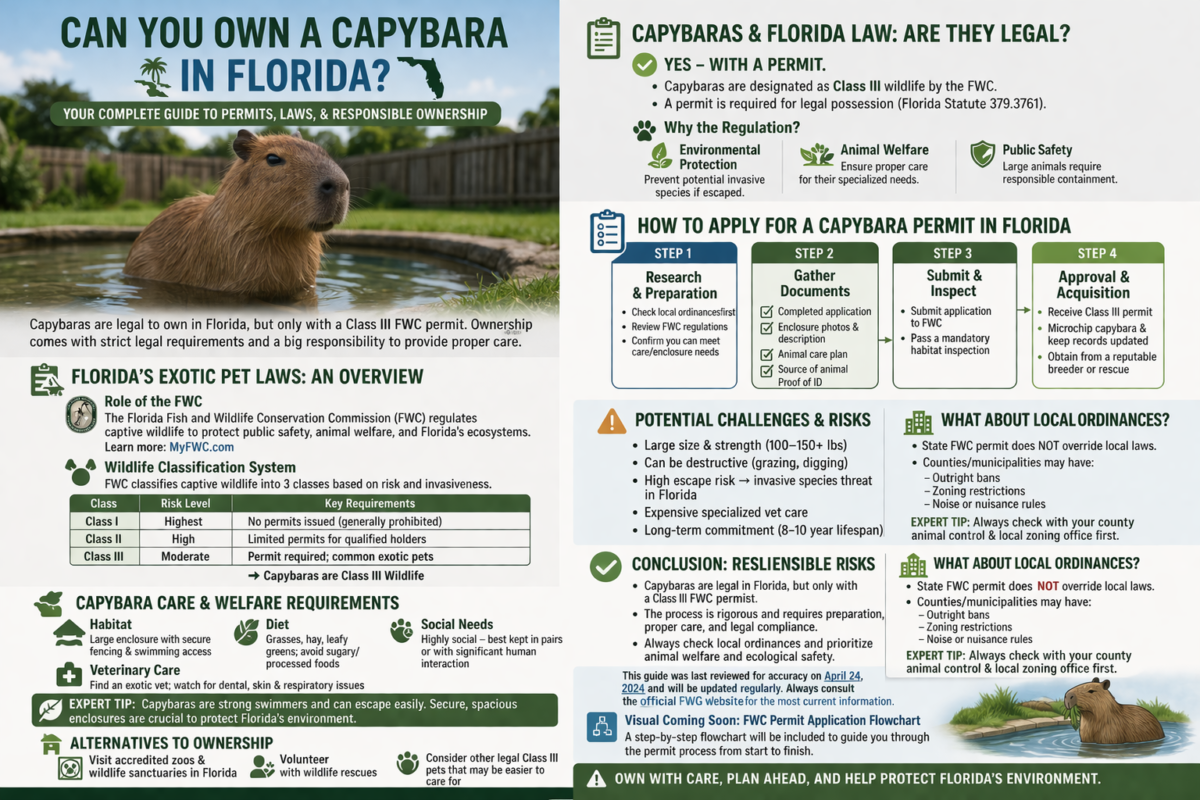
Introduction
Are you one of the many Floridians fascinated by the gentle, almost zen-like nature of capybaras? It’s easy to see why. These social, water-loving animals—native to countries like Brazil and Venezuela—have gained global popularity for their calm temperament and unique charm. For many, the idea of having one as a backyard companion feels like a dream come true.
But here’s the reality: owning a capybara in Florida isn’t as simple as bringing one home. What seems like an exciting idea quickly becomes complicated when you encounter the state’s strict wildlife regulations, detailed permit requirements, and the real responsibilities of caring for an exotic animal. Many prospective owners find themselves confused, frustrated, and unsure where to even begin.
That’s exactly why this guide exists.
Instead of navigating confusing legal language or outdated information, you’ll get clear, accurate, and practical guidance based on how things actually work in Florida. From understanding whether capybaras are legal, to learning how to apply for permits, to knowing what responsible ownership truly looks like—you’ll have everything you need in one place.
By the end of this guide, you’ll have:
- A clear answer to whether you can legally own a capybara in Florida
- A step-by-step breakdown of permits and regulations
- Essential insights into care, costs, and ethical responsibility
So before you take the leap into capybara ownership, let’s make sure you’re fully prepared—legally, practically, and responsibly.
Florida's Exotic Pet Laws: An Overview
Understanding whether you can legally own a capybara starts with one key authority: the Florida Fish and Wildlife Conservation Commission (FWC). This agency is responsible for regulating all captive wildlife in Florida—including exotic pets like capybaras.
The Role of the Florida Fish and Wildlife Conservation Commission (FWC)
If you’re feeling overwhelmed by legal uncertainty, you’re not alone. Florida’s wildlife laws can seem complex at first—but they’re built around three clear priorities:
- Public safety – Protecting people from potentially dangerous animals
- Animal welfare – Ensuring exotic animals are properly cared for
- Environmental protection – Preventing non-native species from harming local ecosystems
The FWC oversees permits, enforces regulations, and sets standards for housing, transport, and care of exotic animals. In simple terms: they decide what you can own, and under what conditions.
For the most accurate and up-to-date rules, always refer directly to the official FWC website:
👉 https://myfwc.com/license/captive-wildlife/
About the FWC:
The FWC was established to manage and conserve Florida’s fish and wildlife resources. Over time, as exotic pet ownership increased, their role expanded to include strict oversight of non-native and captive wildlife, ensuring that private ownership doesn’t create risks for people, animals, or Florida’s delicate ecosystems.
Classification System for Captive Wildlife in Florida
One of the biggest sources of confusion is Florida’s wildlife classification system. Every exotic animal is placed into one of three categories based on risk level.
Understanding this system is essential—because it directly determines whether you can legally own a capybara and what you must do to stay compliant.
Understanding Class I, II, and III Wildlife
The FWC classifies animals based on factors like:
- Potential danger to humans
- Likelihood of escape and survival in the wild
- Risk of becoming invasive
- Complexity of care
Here’s a simplified comparison:
|
Classification |
Description |
Example Animals |
Key Requirements |
|
Class I |
Extremely dangerous wildlife |
Big cats, bears, chimpanzees |
Private ownership generally prohibited |
|
Class II |
Potentially dangerous animals requiring experience |
Wolves, certain primates |
Permit required + documented experience + strict housing |
|
Class III |
Animals that pose lower risk but still require regulation |
Capybaras, sloths, foxes |
Permit required, basic caging and care standards |
👉 Important: Capybaras fall under Class III Wildlife in Florida.
What This Means for You
Here’s where many people get it wrong:
Just because capybaras are not in the most dangerous category does NOT mean they are unregulated or easy to own.
Even as a Class III animal, you must:
- Apply for and receive an FWC permit
- Meet enclosure and care requirements
- Follow transport and record-keeping rules
Failing to comply can lead to fines, confiscation of the animal, or legal penalties.
Why This Matters Before You Go Any Further
At this stage, the key takeaway is simple:
✔ Capybaras are legal—but regulated in Florida
✔ The FWC is the authority you must comply with
✔ Understanding classification is your first step to responsible ownership
Capybaras and Florida Law: Are They Legal?
Direct Answer: Yes — But Only with a Permit
Let’s clear up the biggest question right away:
👉 Yes, you can legally own a capybara in Florida—but only if you have the proper permit.
Under Florida law and regulations enforced by the Florida Fish and Wildlife Conservation Commission, capybaras are classified as Class III wildlife. This classification is supported by statutes such as Florida Statutes Chapter 379.3761, which governs the possession and regulation of captive wildlife in the state.
What this means for you:
- You cannot legally own a capybara without an approved permit
- You must comply with FWC rules on housing, care, and record-keeping
- You may be subject to inspections or additional local regulations
So while ownership is allowed, it is not casual or unrestricted.
What Does “Class III” Really Mean?
The “Class III” label often gives people a false sense of simplicity.
Yes, it’s the least restrictive category compared to Classes I and II—but it still comes with real responsibilities. For capybara owners, this typically includes:
- Applying for a No-Cost Class III Permit from the FWC
- Providing an enclosure that meets minimum size and safety standards
- Demonstrating the ability to provide proper diet, water access, and enrichment
- Maintaining compliance with transport and documentation rules
In short: Class III doesn’t mean “easy”—it means “regulated with responsibility.”
The “Why” Behind the Regulation
At first glance, capybaras seem harmless. They’re calm, social, and rarely aggressive. So why does Florida regulate them at all?
The answer comes down to risk prevention—not reaction.
- Environmental Impact (Invasive Species Risk)
Florida has a long history of dealing with invasive species—from Burmese pythons to iguanas. Even non-aggressive animals can become a serious ecological problem if they escape and adapt.
Capybaras:
- Thrive in warm, wet climates (like Florida)
- Reproduce efficiently in the right conditions
- Could potentially disrupt native ecosystems
FWC’s goal: Prevent another invasive species situation before it starts.
- Animal Welfare Concerns
This is one of the most overlooked issues.
Capybaras are not low-maintenance pets. They require:
- Large outdoor enclosures
- Constant access to clean water for swimming
- A specialized herbivorous diet
- Companionship (they are highly social animals)
Without proper care, they can suffer from stress, illness, and behavioral problems.
FWC’s goal: Ensure owners are prepared to meet these complex needs.
- Public Safety (Even if Risk is Low)
Capybaras are generally docile—but they are still:
- Large (up to 150+ pounds)
- Strong
- Equipped with sharp teeth
In rare situations, especially if stressed or mishandled, they can cause injury.
FWC’s goal: Minimize any potential risk to people and communities.
What This Means for You
If you’re serious about owning a capybara, here’s the reality:
✔ It is legal in Florida
✔ It requires official approval
✔ It comes with real responsibility—legally and ethically
Many people get excited about the idea—but pause when they realize the level of commitment involved. That’s actually a good thing. These regulations exist to protect you, the animal, and the environment.
Understanding the FWC Class III Wildlife Permit
Once you know capybaras are legal with a permit, the next big question is: what does that permit actually involve?
In Florida, the Florida Fish and Wildlife Conservation Commission issues what’s known as a Class III Wildlife Permit—and this is your legal gateway to owning a capybara.
Purpose of the Class III Permit
If the process feels strict, there’s a reason behind it. The permit system is designed to prevent problems before they happen.
The FWC uses this permit to:
- Ensure public safety
Even docile animals can pose risks if improperly handled or housed. - Protect animal welfare
Capybaras have specialized needs—this ensures owners are capable of meeting them. - Prevent disease and invasive species spread
Exotic animals can introduce diseases or disrupt ecosystems if released or escaped. - Maintain official records of captive wildlife
This helps track ownership and enforce accountability across the state.
👉 In simple terms: the permit proves you’re prepared, responsible, and compliant.
Key Requirements for a Class III Permit in Florida
While requirements can vary slightly depending on your situation, here’s a clear, practical breakdown of what you can expect:
FWC Class III Permit Requirements
|
Requirement |
What It Means |
Key Details |
|
Permit Application |
رسمی approval from FWC |
Submit the Class III Wildlife Application through FWC (often called the Personal Use Permit) |
|
Caging/Enclosure Standards |
Safe and appropriate habitat |
Must meet FWC size, strength, and environmental enrichment guidelines |
|
Water Access |
Critical for capybaras |
Must provide a swimming area—this is not optional |
|
Animal Welfare Plan |
Proper daily care |
Includes diet, shelter, hygiene, and enrichment |
|
Record Keeping |
Ownership documentation |
Maintain records of acquisition, sale, or transfer |
|
Transport Compliance |
Safe movement of the animal |
Must follow FWC transport rules if moving the capybara |
|
Local Zoning Approval |
County/city compliance |
Some areas may restrict exotic animals even if FWC allows them |
⚠️ Important: These are general guidelines. The FWC provides detailed and specific standards, and you are expected to meet all of them before approval.
Many applicants overlook this—and it can delay or even block approval.
👉 The FWC may inspect your enclosure before issuing the permit.
To avoid problems:
- Build your enclosure before applying (or be ready to show detailed plans)
- Ensure proper fencing, shelter, and water features
- Include enrichment elements (shade, space to roam, natural behavior support)
Think of it this way:
If your setup wouldn’t keep a capybara healthy and secure long-term, it likely won’t pass inspection.
Costs Associated with Permitting
Here’s some good news—and some reality.
- Permit Fees
- Many Class III personal use permits are free or very low cost in Florida
- However, fees can vary depending on:
- Type of use (personal vs. commercial)
- Number of animals
👉 Always confirm current fees directly with the FWC.
- Real Costs (What Most People Underestimate)
The permit itself is often the cheapest part.
You should realistically budget for:
- Enclosure construction or upgrades
(fencing, water pool, shelter, drainage systems) - Veterinary care
Exotic vets are specialized and can be expensive - Diet and ongoing maintenance
Fresh vegetation, hay, supplements
Inspection readiness
Adjustments if your setup doesn’t initially meet standards
What This Means for You
At this stage, the picture should be much clearer:
✔ The permit is not just paperwork—it’s proof of responsibility
✔ Preparation (especially your enclosure) is critical for approval
✔ Costs go far beyond the application itself
If you’re still committed after understanding this, you’re already ahead of most people—and much closer to being a responsible capybara owner.
Step-by-Step Guide: How to Apply for a Capybara Permit in Florida
If the legal side felt overwhelming before, this is where everything becomes clear and actionable. The process is not complicated—but it does require preparation, accuracy, and patience.
Here’s exactly how to do it right.
Phase 1: Initial Research and Preparation
Before you fill out a single form, this phase determines whether you’ll succeed—or get rejected.
✔ Start with Local Ordinances (Expert Tip)
Even if the state allows capybaras, your county or city might not.
👉 Always check your local zoning laws and animal ordinances first.
Some areas in Florida:
- Restrict exotic animals entirely
- Limit enclosure types
- Require additional permits
Skipping this step is one of the most common (and costly) mistakes.
✔ Review Official FWC Regulations
Next, go directly to the source: the Florida Fish and Wildlife Conservation Commission.
Carefully review:
- Class III wildlife rules
- Caging and enclosure requirements
- Application instructions
👉 Official resource:
https://myfwc.com/license/captive-wildlife/
Focus specifically on:
- “Personal Use” Class III permits
- Housing specifications
- Transport and record-keeping rules
✔ Assess Your Readiness Honestly
This is where many people reconsider—and that’s a good thing.
Ask yourself:
- Can I build a large, secure enclosure with water access?
- Can I afford ongoing care and vet costs?
- Do I have space for at least two capybaras (they are social)?
👉 If the answer is “not yet,” it’s better to prepare now than fail inspection later.
Phase 2: Gathering Documentation
Once you’re confident, it’s time to prepare your application package.
FWC Class III Permit Application Checklist
|
Item |
What You Need to Provide |
Status |
|
Completed Application Form |
Official FWC Class III permit form filled accurately |
Required |
|
Proof of Identity |
Valid ID (driver’s license or equivalent) |
Required |
|
Detailed Enclosure Description |
Size, materials, fencing, water feature, shelter |
Required |
|
Enclosure Photos or Plans |
Clear images or diagrams of your setup |
Required (or strongly expected) |
|
Animal Care Plan |
Feeding, cleaning, enrichment, veterinary care |
Required |
|
Source of Animal |
Where you plan to acquire the capybara (breeder/rescue) |
Required |
|
Local Approval (if applicable) |
Zoning clearance or local permits |
Sometimes Required |
|
Record-Keeping Plan |
How you’ll track ownership and health records |
Required |
⚠️ Important:
FWC requirements can change. Always verify with the latest official forms before submitting.
Phase 3: Submission and Inspection
✔ Submitting Your Application
Once everything is complete:
- Submit your application to the FWC (online or as directed)
- Double-check all details—errors cause delays
✔ Scheduling the Inspection
In many cases, the FWC will:
- Review your application
- Schedule an on-site inspection
👉 This step is critical.
✔ What to Expect During Inspection
An FWC officer will evaluate:
- Enclosure safety (escape-proof, secure fencing)
- Adequate space for movement
- Water access (essential for capybaras)
- Shelter and shade
- Cleanliness and hygiene conditions
💡 Think of it as a real-world test:
“Can this environment safely and humanely support a capybara long-term?”
Failing inspection doesn’t mean rejection—but it will require fixes and re-inspection.
Phase 4: Permit Approval and Acquisition
✔ Receiving Your Permit
Once approved, you’ll receive your Class III Wildlife Permit.
Only after this:
👉 You are legally allowed to possess a capybara.
✔ Microchip and Identification (Expert Tip)
FWC may require proper identification measures.
Best practice:
- Microchip your capybara
- Keep all records updated (ownership, vet visits, transfers)
This protects both you and the animal legally.
✔ Finding a Reputable Source
Now comes the exciting part—but don’t rush it.
Look for:
- Licensed breeders
- Ethical rescues
- Verified health records
Avoid:
- Illegal sellers
- Unverified online listings
👉 A poor source can lead to:
- Legal issues
- Health problems
- Permit complications
What This Means for You
By now, the process should feel much more manageable:
✔ Start with local laws and FWC research
✔ Prepare complete, accurate documentation
✔ Expect and prepare for an inspection
✔ Only acquire your capybara after approval
Capybara Care and Welfare Requirements in Florida
with providing proper care for a capybara every single day. Many first-time owners underestimate this part, which is exactly why Florida regulates them.
Let’s break down what responsible ownership actually looks like in practice.
Habitat and Enclosure Specifics
Capybaras are not indoor pets. They require a large, secure, and enriched outdoor environment that mimics their natural habitat.
✔ Space & Layout Requirements
While exact dimensions depend on FWC guidance, best practices include:
- Large outdoor enclosure (room to roam freely)
- Separate sheltered area (shade + weather protection)
- Access to a swimming pool or pond (essential—not optional)
👉 Think: mini wetland habitat, not a backyard cage.
✔ Materials & Security
Your enclosure must be:
- Built with strong fencing (capybaras can push and chew)
- Escape-proof (including buried fencing to prevent digging out)
- Designed to keep out predators and unauthorized access
✔ Enrichment Needs
Capybaras need both physical and mental stimulation:
- Space to graze naturally
- Water for daily swimming and cooling
- Areas to hide and rest
- Objects or terrain for exploration
Without enrichment, they can become:
- Stressed
- Aggressive
- Physically unhealthy
Dietary Needs and Nutritional Guidance
Capybaras are strict herbivores with very specific dietary needs.
✔ Core Diet
- Fresh grasses (primary food source)
- High-quality hay (Timothy or similar)
✔ Supplements & Treats
- Leafy greens (romaine, kale in moderation)
- Vegetables (carrots, squash occasionally)
- Vitamin C supplementation may be necessary
✔ Foods to Avoid
- Processed human food
- Sugary fruits in excess
- Toxic plants (varies—always verify)
👉 For detailed feeding standards, consult reputable zoological care resources and animal welfare organizations.
Social Needs and Companionship
This is one of the most misunderstood aspects of capybara ownership.
✔ They Are Highly Social Animals
In the wild, capybaras live in groups. Isolation can lead to:
- Depression
- Anxiety
- Behavioral problems
Risks of Keeping One Capybara
Single capybaras often:
- Become overly dependent on humans
- Develop stress-related health issues
- Display abnormal behaviors
👉 Responsible ownership means planning for companionship—not just containment.
Veterinary Care and Health Concerns
Capybaras require specialized veterinary care—and this is where many owners struggle.
✔ Find an Exotic Vet Early (Expert Tip)
Before you even apply for a permit:
- Locate a vet experienced with exotic mammals
- Confirm they can treat capybaras
👉 General vets often lack the training or equipment needed.
✔ Common Health Issues
Capybaras are prone to:
- Dental problems (teeth continuously grow)
- Skin issues (especially in humid environments)
- Respiratory infections
- Nutritional deficiencies
✔ Preventative Care
- Regular health checks
- Proper diet and hygiene
- Clean water access
- Monitoring behavior changes
🩺 “Ask an Exotic Vet” – Expert Insights
Here are realistic, experience-based answers based on veterinary best practices:
Q: What are the most common health problems in pet capybaras?
👉 Dental overgrowth, skin infections from poor hygiene, and diet-related deficiencies are the most frequent issues.
Q: How often should a capybara see a vet?
👉 At least once a year for a full check-up, with additional visits if any behavioral or physical changes occur.
Q: What preventative care is recommended?
👉 Routine parasite control, nutritional monitoring, and dental checks are essential. Vaccination needs vary—consult your exotic vet.
Q: Any concerns specific to Florida’s climate?
👉 Yes. Florida’s humidity increases the risk of:
- Skin infections
- Parasites
- Heat stress (despite their love of water)
Proper shelter, shade, and clean water are critical.
A Day in the Life of a Florida Capybara Owner
To truly understand the commitment, here’s what daily life looks like:
🌅 Morning
- Feed fresh grasses and hay
- Clean enclosure and water area
- Health check (eyes, skin, behavior)
- Social interaction time
☀️ Mid-Day
- Capybaras graze and swim
- Monitor water cleanliness
- Provide enrichment (new food spots, objects)
🌇 Evening
- Second feeding
- Clean and refill water
- Secure enclosure (double-check fencing)
- Quiet bonding time
🌙 Reality Check
Owning a capybara is:
✔ Rewarding
✔ Unique
❗ Time-consuming
❗ Physically demanding
❗ Expensive
What This Means for You
At this point, the picture is very clear:
✔ Capybaras require specialized, daily care
✔ Their needs go far beyond typical pets
✔ Welfare is just as important as legality
Potential Challenges and Risks of Capybara Ownership
What About Local Ordinances?
Even after navigating FWC regulations, there’s another critical layer: local laws. Florida is unique in that state permits do not automatically override county or municipal rules. Ignoring this can lead to fines, confiscation, or permit denial—even if your FWC paperwork is perfect.
Beyond FWC: The Layer of Local Laws
Local governments may impose restrictions that go beyond the state’s Class III regulations, including:
- Outright bans on certain exotic animals
- Zoning restrictions (e.g., no exotic pets in residential neighborhoods)
- Noise ordinances that could affect outdoor enclosures
- Limits on enclosure size or water features
How to Research Local Regulations
A thorough approach includes:
- Contact County Animal Control
- Ask specifically about exotic pet ownership and any additional permits required.
- Check Municipal Codes and Zoning Departments
- Most Florida cities post their ordinances online.
- Look for sections on “exotic animals,” “wildlife,” or “non-native species.”
- Document Everything
- Keep proof of local approvals; it may be required during your FWC inspection.
By starting here, you can avoid legal headaches and wasted time.
Alternatives to Capybara Ownership in Florida
Capybaras are fascinating, but owning one is not the only way to interact ethically with these amazing animals.
Experiencing Capybaras Ethically
- Visit accredited zoos or wildlife sanctuaries in Florida
- Observe capybaras in safe, controlled environments
- Learn about natural behaviors and care standards
- Volunteer at wildlife rescues
- Some facilities care for rescued exotic animals
- Gain hands-on experience without long-term responsibility
- Educational programs
- Schools and wildlife organizations often host interactive sessions
- Great for families or animal enthusiasts
Other Unique, Legal Pets in Florida
If your goal is an exotic pet experience without the complexity of capybaras, consider:
- Certain small primates (Class III, permit required, generally easier to house than capybaras)
- Exotic birds (parrots, macaws—also Class III, require permits but simpler daily care)
⚠️ Always confirm state and local regulations before acquiring any exotic animal.
Takeaway
Local ordinances can make or break your ownership plans, and there are ethical, educational alternatives if capybara ownership isn’t feasible.
Conclusion: Responsible Capybara Ownership is Key
Owning a capybara in Florida can be an incredibly rewarding experience—but only when approached with knowledge, preparation, and dedication. Let’s recap the most important takeaways.
Key Takeaways
- Capybaras are legal in Florida, but only with a Class III FWC permit.
State law requires full compliance with permitting rules, including enclosure, care, and record-keeping standards. - The permitting process is rigorous.
From initial research and documentation to inspections, acquiring a permit demands careful planning and attention to detail. - Responsible ownership is essential.
Capybaras have complex social, dietary, and habitat needs. Prospective owners must be prepared for daily care, companionship requirements, and long-term commitment. - Local ordinances are crucial.
Even with state approval, county or municipal rules may restrict or prohibit capybara ownership. Checking local laws is a non-negotiable step.
Why Responsibility Matters
Legal compliance and dedication to animal welfare are not optional—they’re the cornerstone of ethical capybara ownership. Following regulations protects:
- The capybara’s health and well-being
- Your safety and legal standing
- Florida’s sensitive ecosystems from potential invasive species
Visual & Interactive Learning
For future resources, imagine an interactive FWC permit application flowchart:
- Do you meet age/experience requirements?
- Is your enclosure fully prepared?
- Have local ordinances been checked?
- Ready to apply for the permit—or re-evaluate your readiness?
This type of visual guide would simplify the bureaucratic process and give readers a clear roadmap toward responsible ownership.
Final Note on Accuracy
This guide was last reviewed for accuracy on March 31, 2026 and will be updated regularly to reflect changes in Florida’s dynamic wildlife laws and FWC regulations.
✅ Always consult the official FWC website for the most current information: FWC Captive Wildlife Permits
By approaching capybara ownership thoughtfully, legally, and ethically, you can enjoy the unique joys of these remarkable animals while safeguarding both their welfare and Florida’s environment.